
Most wall art asks very little of the person looking at it. You hang it. You walk past it. Eventually, you stop seeing it.The Taquin collection works differently. It asks you to look, and then to touch, and then to think — and it refuses to let you stop seeing it, because the image in front of you is never quite the same twice. Taquin is a sliding puzzle. It is also, depending on how you approach it, a painting, a game, a meditation on order and disorder, and one of the more genuinely original ideas in contemporary decorative art. It has been part of the Etcheaz collection since the beginning, for the simple reason that nothing else does what it does.
What is a Taquin?
The taquin — known in English as a sliding puzzle — has been around since the late nineteenth century. The original, invented in the 1870s, was a 4×4 grid of numbered tiles with one space missing. The goal was to slide the tiles into the correct sequence. Simple in concept, maddening in practice, and almost impossible to put down once you started.
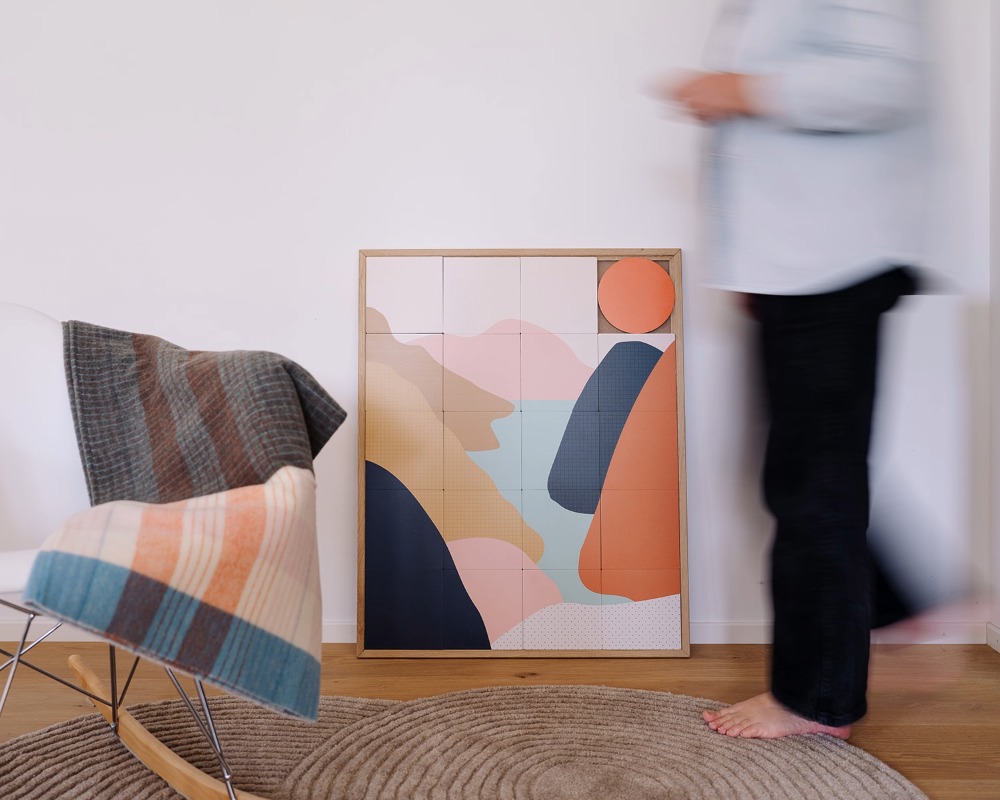
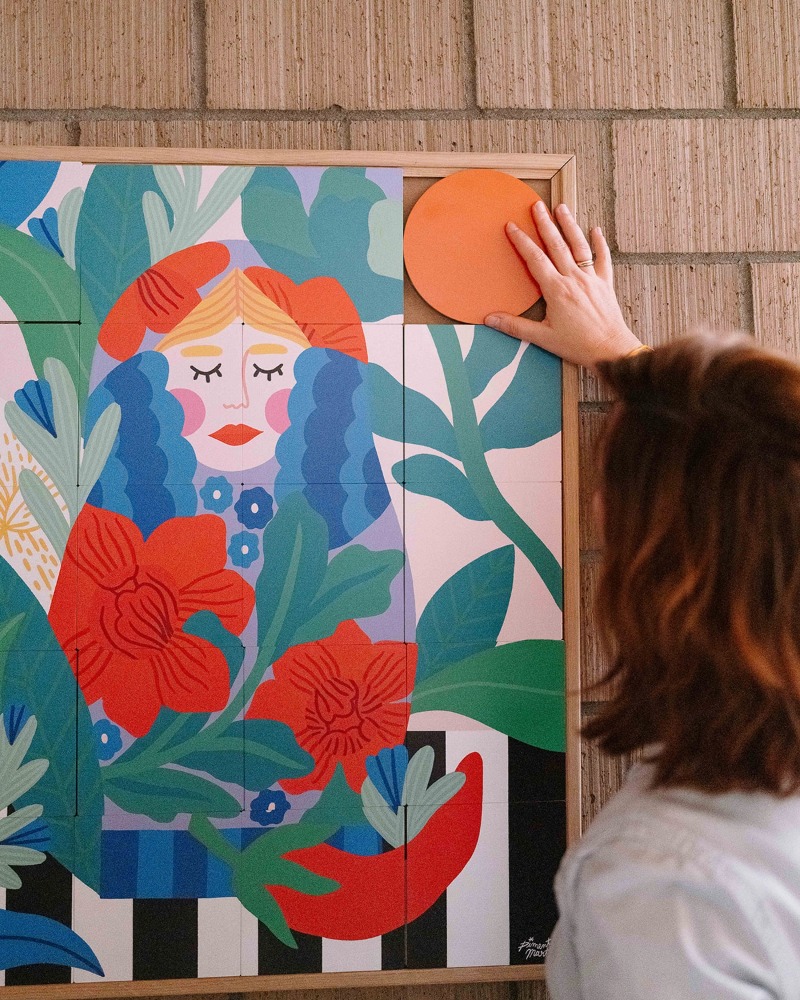
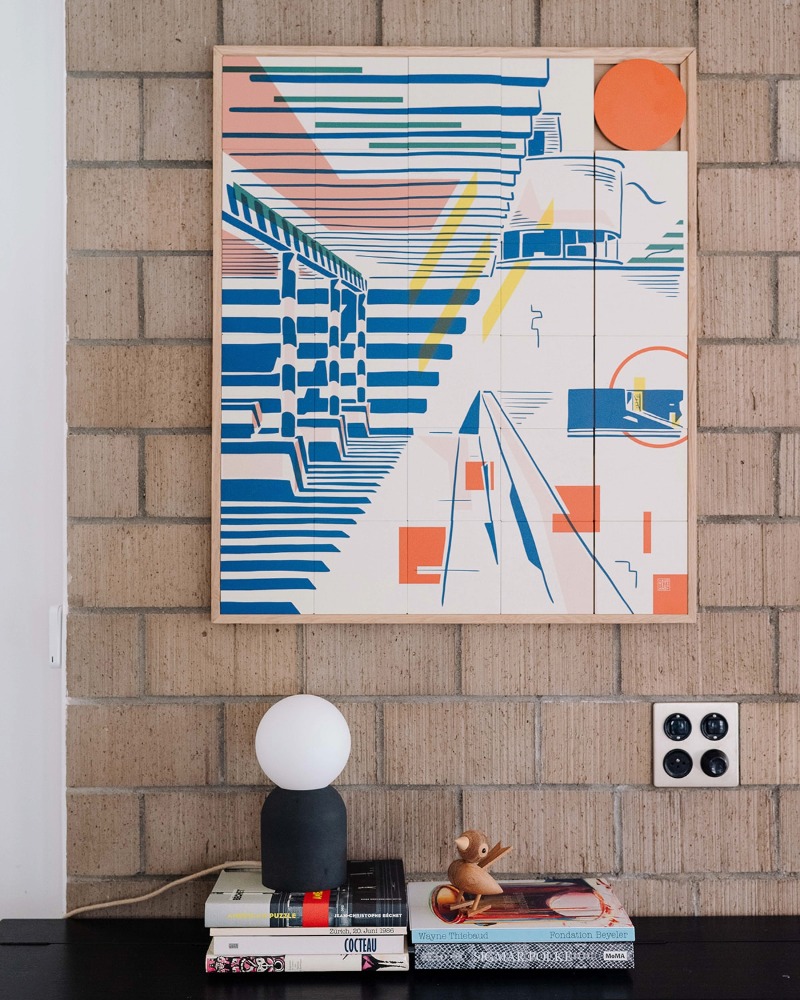
The Taquin collection at Etcheaz takes this mechanism and applies it to something altogether different: a photographic or illustrated image, divided into a grid of moveable wooden tiles, mounted in a frame designed to hang on a wall.
In its solved state, it is a complete image — a piece of wall art like any other. But the tiles move. The image can be shuffled, rearranged, broken apart and reconstructed. What hangs on the wall is not a fixed thing but a variable one — something that changes each time a hand passes over it.
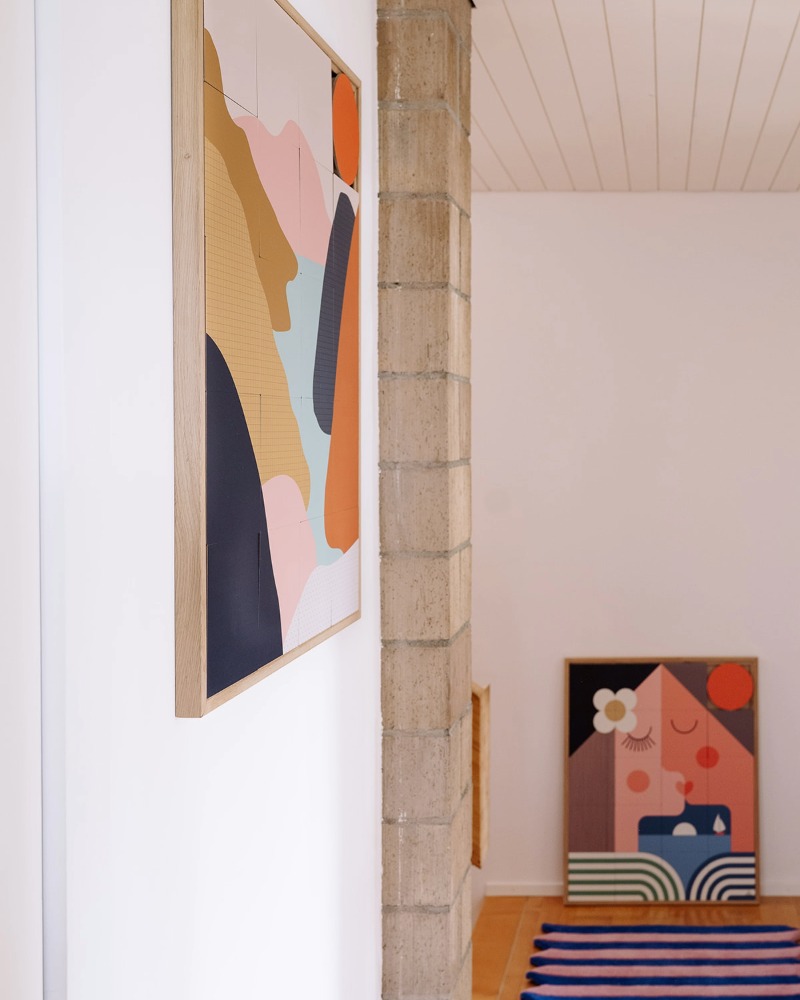
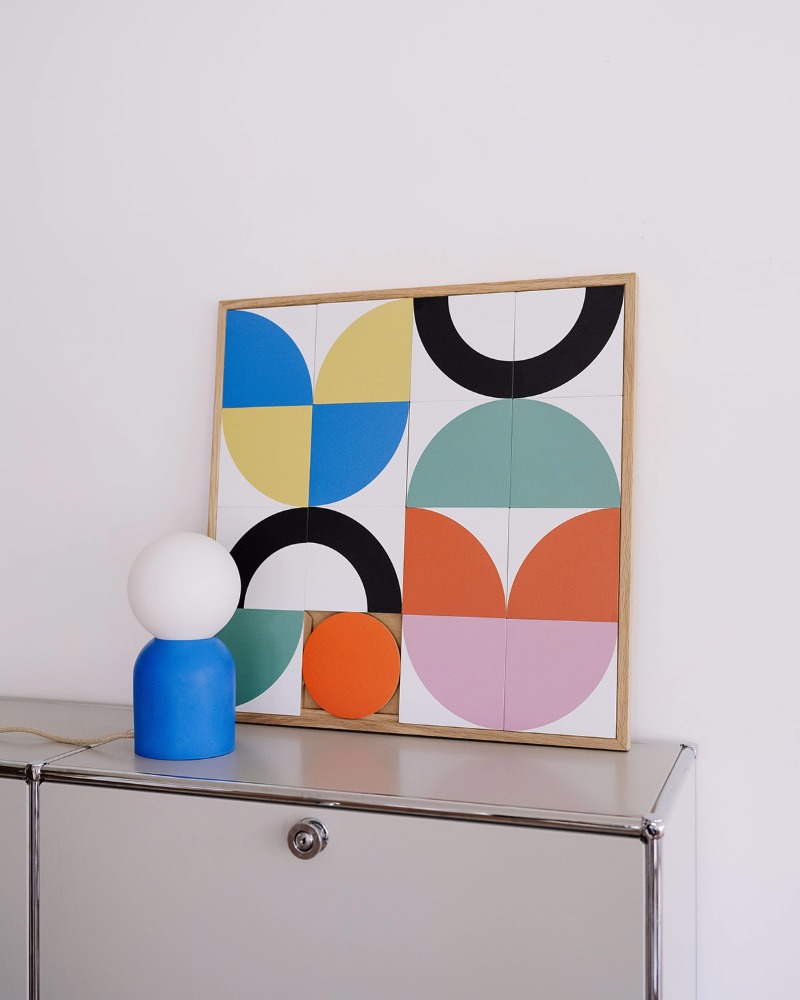
The Taquin collection at Etcheaz comprises seventeen configurations, spread across several image families. Some are photographic — landscapes, architectural details, natural textures. Others are more graphic, working with colour fields and geometric compositions that become almost abstract when the tiles are displaced.
Each piece is produced in a limited edition. The frame is clean and considered, designed to disappear around the work rather than compete with it. The tiles themselves are printed with precision: when the puzzle is solved, the joins between tiles are barely visible. The image holds.
Sizes range from compact desktop pieces — the kind that sit on a shelf and invite the passing hand — to larger wall formats that function primarily as art, with the puzzle element as a secondary pleasure.
All are available at Etcheaz.
The Space it occupies
There is a category problem with the Taquin collection, and it is part of what makes it interesting.
It is not a toy, though it has the mechanism of one. It is not conventional wall art, though it hangs on a wall and holds an image. It is not a game in the competitive sense, though there is a clear objective — return the image to its completed state — and a satisfying difficulty in achieving it.
What it is, more precisely, is an object that changes the relationship between a piece and the person who lives with it. Most decorative objects are passive. They receive your attention and return it unchanged. The Taquin demands something back: an engagement, a decision, a small act of restoration.
For someone who finds pure decoration slightly inert, who wants their home to contain things that do something — this is exactly the point.
A Note on the Name
The word *taquin* is French, and it means something like *teasing* — a gentle, persistent provocation. It is a good name for an object that unsettles a fixed image and then waits for you to restore it.
There is also, in French, the phrase *ne pas être taquin* — to not be a tease, to not withhold. The puzzle, to its credit, withholds nothing. The mechanism is transparent. The challenge is real. The image, when you complete it, is genuinely satisfying.
Behind the Studio: the People who Make Taquin
Taquin did not begin as a product. It began as a question.
What would happen if you took a work of art — something normally hung, protected, and looked at from a respectful distance — and gave people permission to touch it?
The answer started with a meeting. Cécile Makowski, a designer, and Emmanuel Ghillebaert, who runs HELLIN, a family furniture business with its own relationship to craft and material, found that they were asking the same question from different directions. A third voice joined early — bringing operational rigour to what might otherwise have remained a beautiful idea.
The result is a studio with its own design bureau, its own production process, and a very specific way of choosing what goes onto a frame.
How they choose
Every visual that makes it into the Taquin collection has been tested at full scale before a single piece goes into production. The team looks for works that provoke an emotion, tell a story, and hold up — visually and physically — when divided into a grid of moveable tiles.
The artists they work with range from emerging voices to established names: Nina Bruneau, Les Petits Yéyés, Tommy Knuts. And then there are the collaborations that arrive with their own weight — Matisse, Fernand Léger, works that have hung in museums for decades and now find themselves on a shelf, sliding.
These collaborations take us back to museum visits as children — feet dragging, minds elsewhere. Today we love bringing those works into homes differently. More playful. More accessible. Still art.
That last phrase matters. Still art. The Taquin team has no interest in novelty for its own sake. The puzzle mechanism is a means, not an end — a way of changing the relationship between a person and an image, not of replacing the image with a gimmick.
How they make
Production happens one piece at a time, with printing partners located just a few kilometres from the Taquin workshop. Each frame is assembled by hand in their atelier. The joins between tiles, when the puzzle is solved, are barely visible. The image holds.
This is not a coincidence. It is the result of a process that treats each piece as a singular object rather than a unit in a run — local, artisanal, deliberate in a way that leaves a trace in the finished object, even when you cannot see exactly where.
We want people to become co-creators. The Taquin breaks the codes of the traditionally untouchable artwork. Here, you stimulate your own creativity, you take ownership of the visual according to your mood — and nothing is ever fixed.
Nothing is ever fixed. For an object that lives on a wall, that is a remarkably generous thing to offer.
The Taquin pieces at Etcheaz are among the most consistently remarked upon in the showroom. Visitors who come in for something else — a candle, a globe, a cushion — stop at the Taquin display and spend longer there than they planned. The tiles move easily. The impulse to shuffle and re-solve is immediate.
We carry the full range of seventeen configurations, available in store at Seestrasse 155, Küsnacht, and online at etcheaz.ch
Frequently Asked Questions
- What is Taquin wall art?
Taquin wall art is a limited-edition decorative object based on the sliding puzzle mechanism. Each piece consists of a framed image divided into moveable tiles — in its solved state it functions as wall art; the tiles can be shuffled and rearranged, making the image variable. The Taquin collection at Etcheaz comprises seventeen configurations, all limited edition.
- Is Taquin wall art limited edition?
Yes. All pieces in the Taquin collection at Etcheaz are produced in limited editions. Once an edition closes, it is not reprinted.
- Where can I buy Taquin puzzle wall art in Switzerland?
The full Taquin collection is available at Etcheaz — online at etcheaz.com and in person at the showroom at Seestrasse 155, Küsnacht ZH. .
- What sizes does the Taquin collection come in?
The Taquin collection is available in several sizes, from smaller shelf pieces to larger wall-format works. Specific dimensions are listed on each product page at etcheaz.com.
- Is the Taquin collection a good gift?
It is one of the more distinctive gifts in the Etcheaz collection — suitable for people who appreciate objects that combine craft with concept. It works well for design enthusiasts, people with curious minds, and anyone who finds conventional wall art too passive. Presented in its frame, it requires no additional wrapping.