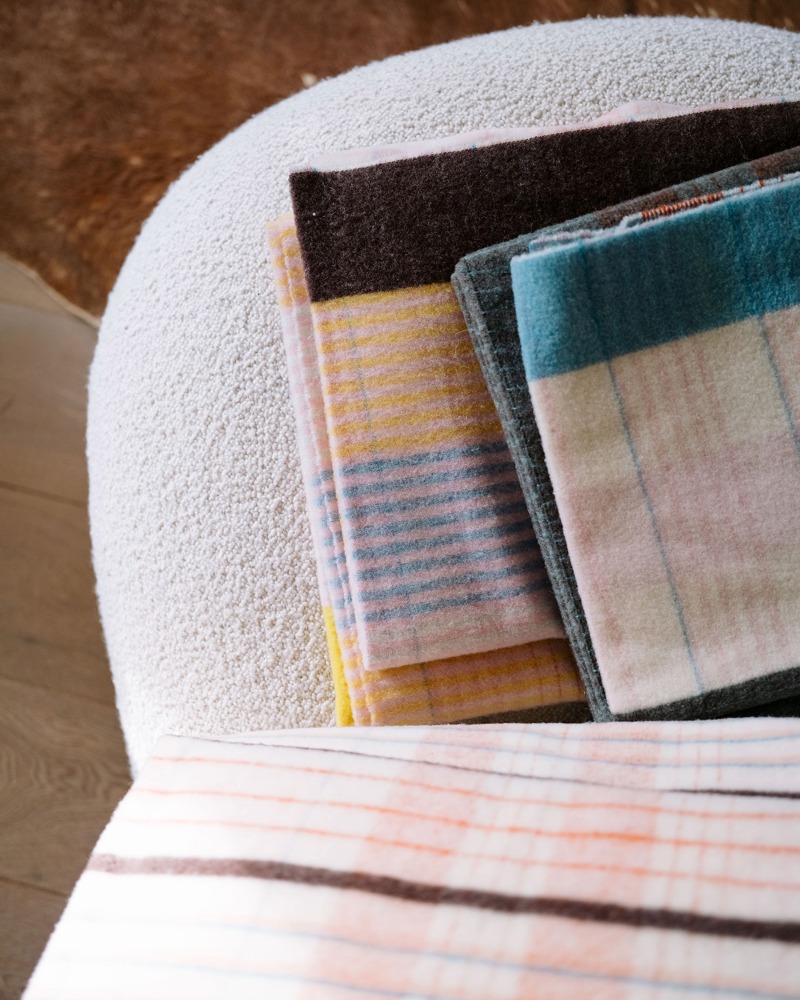
Brun de Vian Tiran, the finest wool in Europe rediscovered
A Manufacture on a River
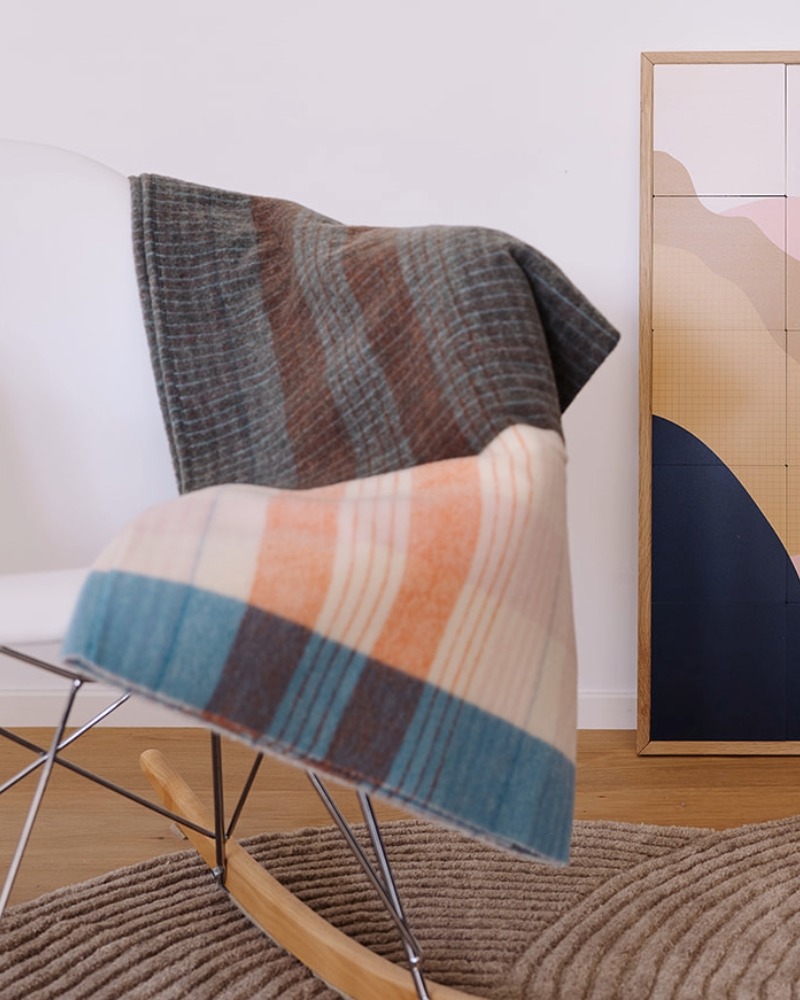
Brun de Vian-Tiran has been making wool cloth since 1808, when Charles Tiran and his son-in-law Laurent Vian set up a fulling mill on the banks of the Sorgue, in Provence. The river did the work the machines couldn’t yet do. The name became complete in 1886, when Vian’s granddaughter married Émile Brun. It has stayed in the family since — eight generations, still in the same town, L’Isle-sur-la-Sorgue.
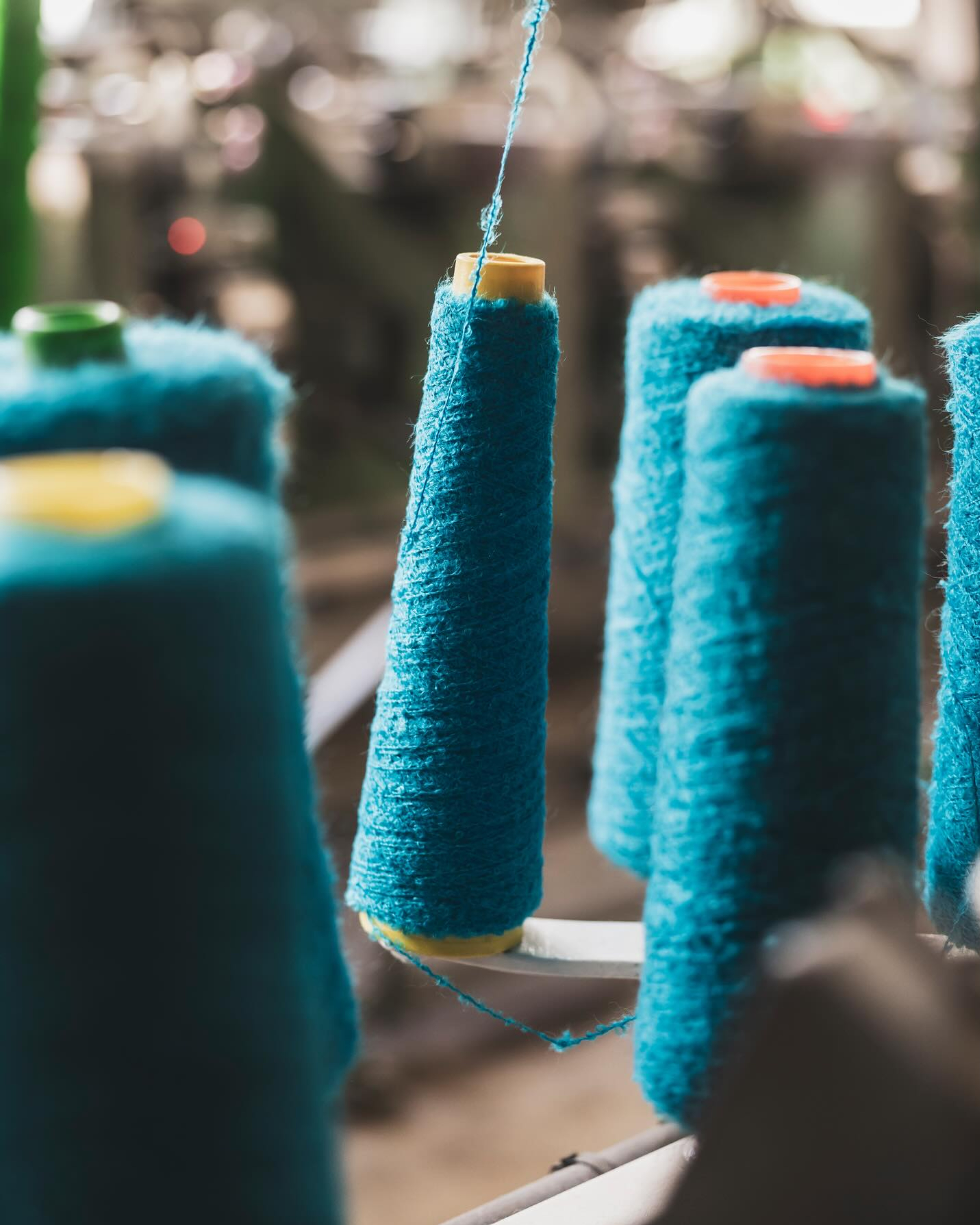
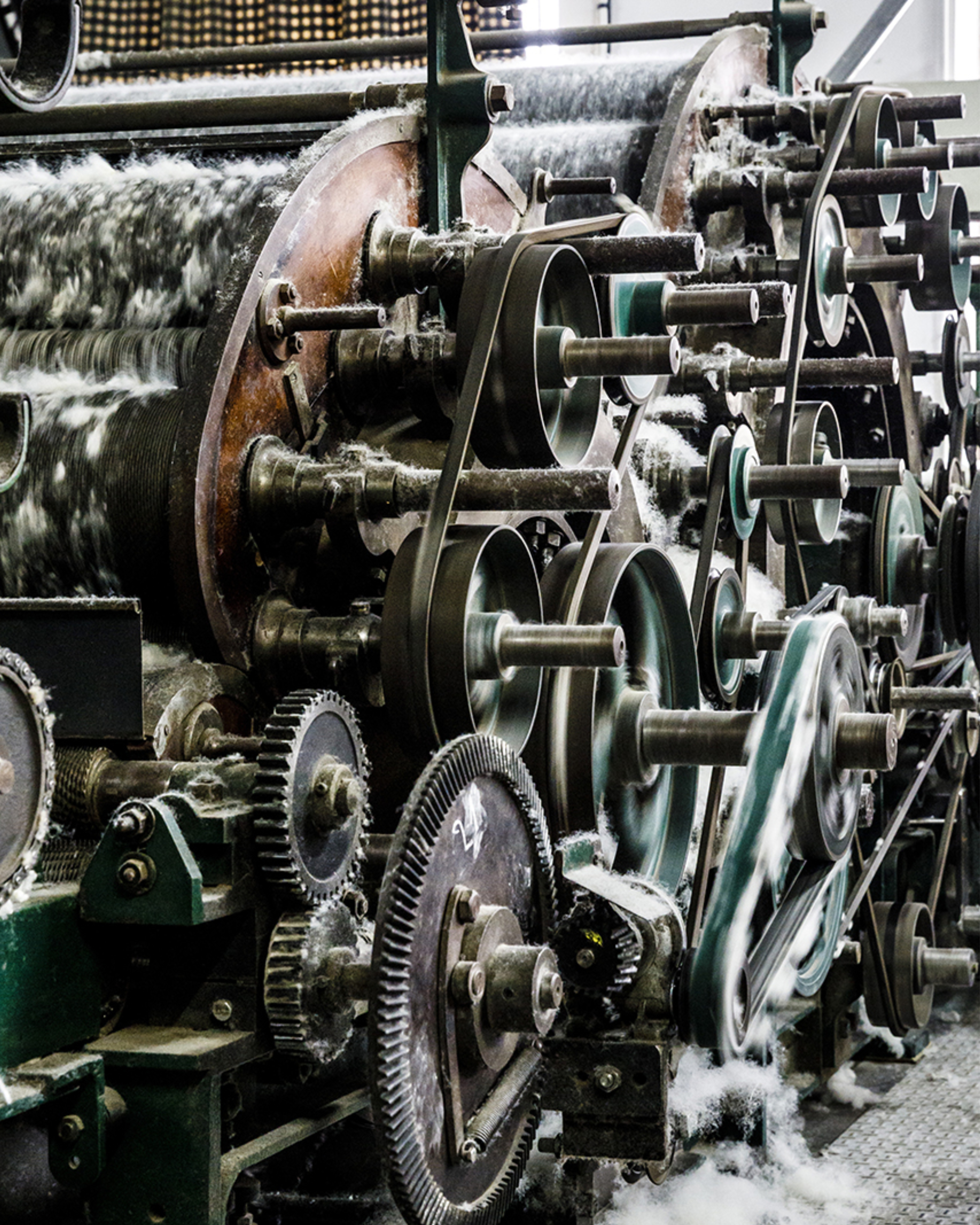
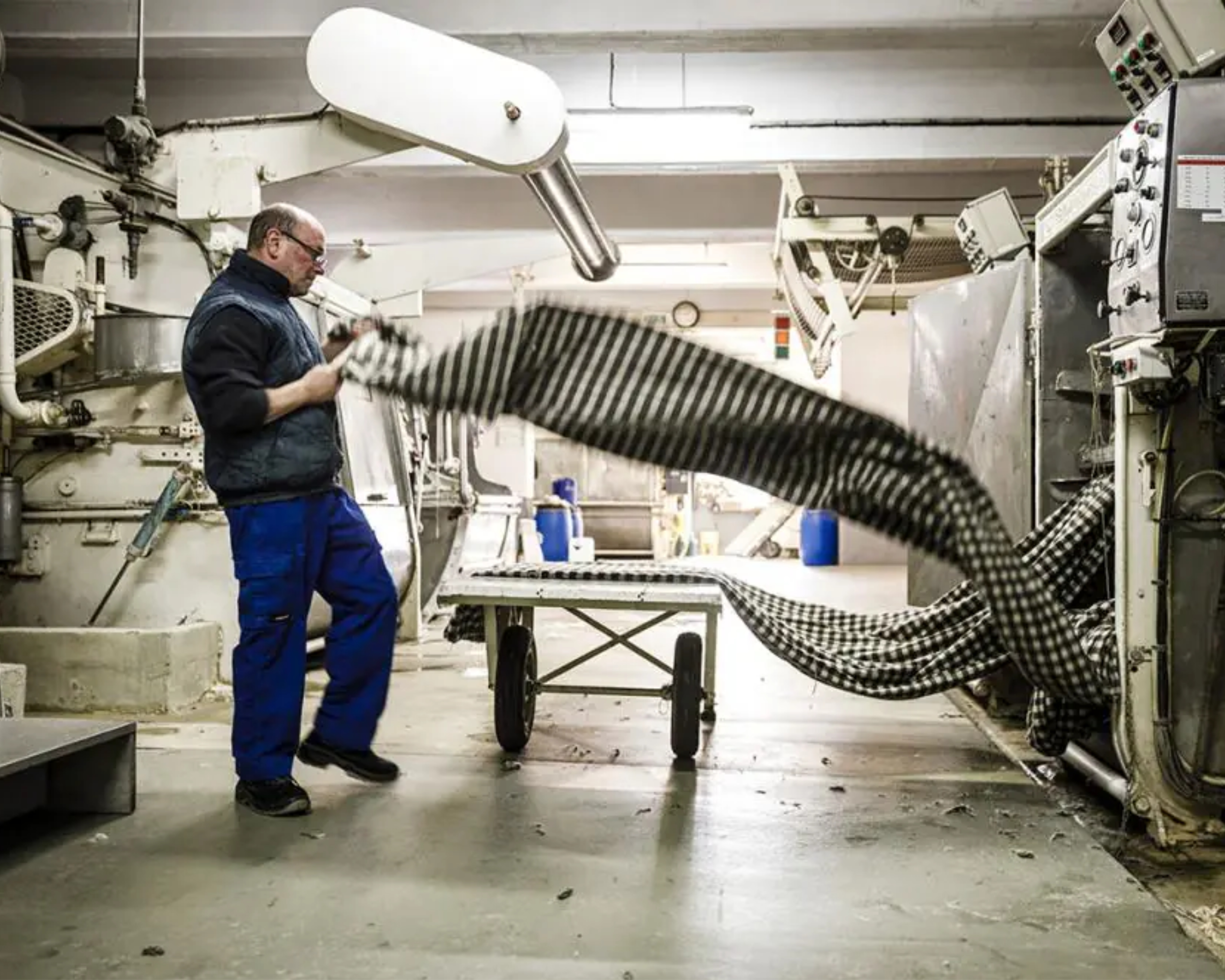
What makes the house unusual isn’t longevity alone. It’s that the manufacture still controls the material itself, from fibre to finished cloth, across fifteen fixed stages of production that haven’t changed in any way that matters.
The Sheep that almost Disappeared
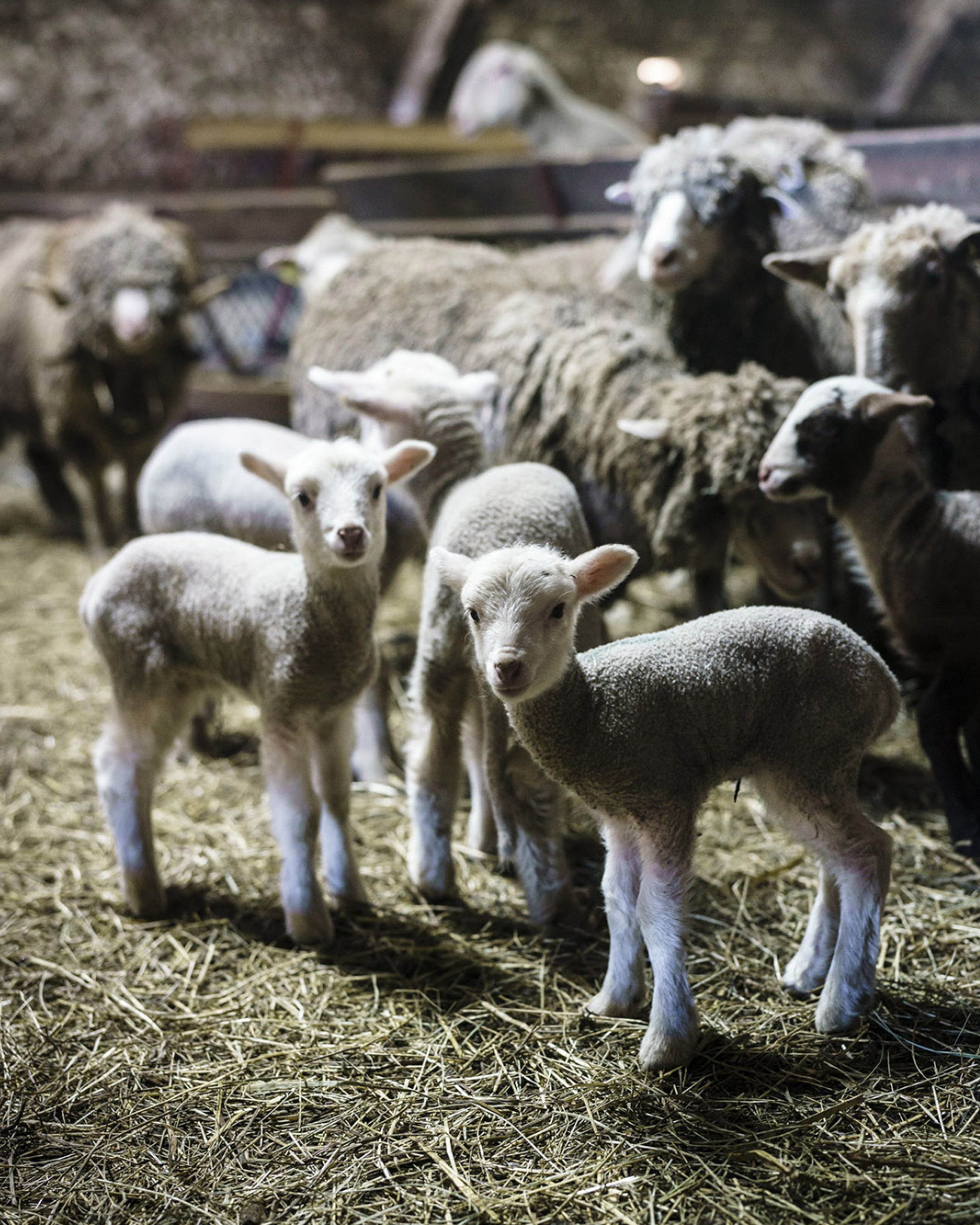
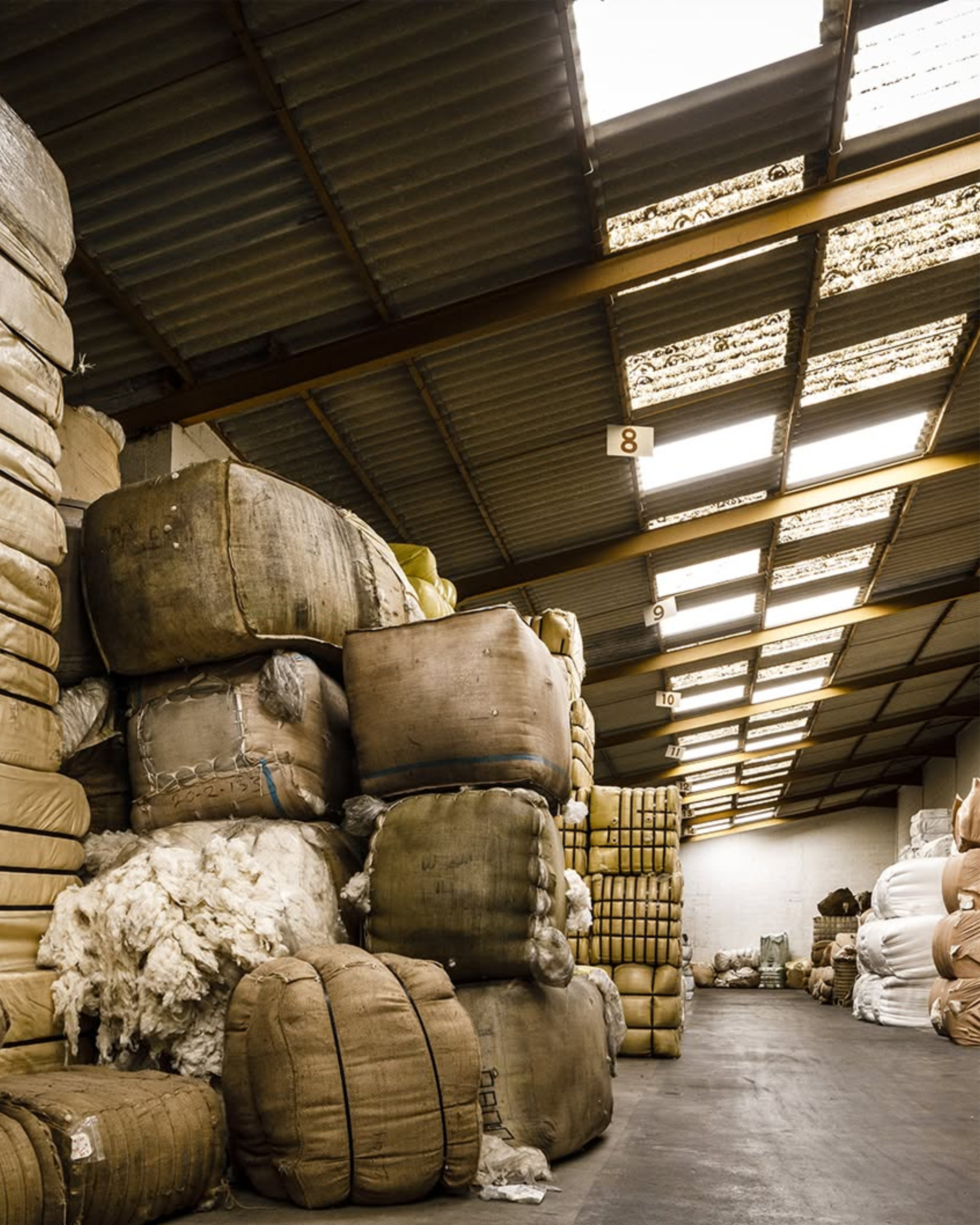
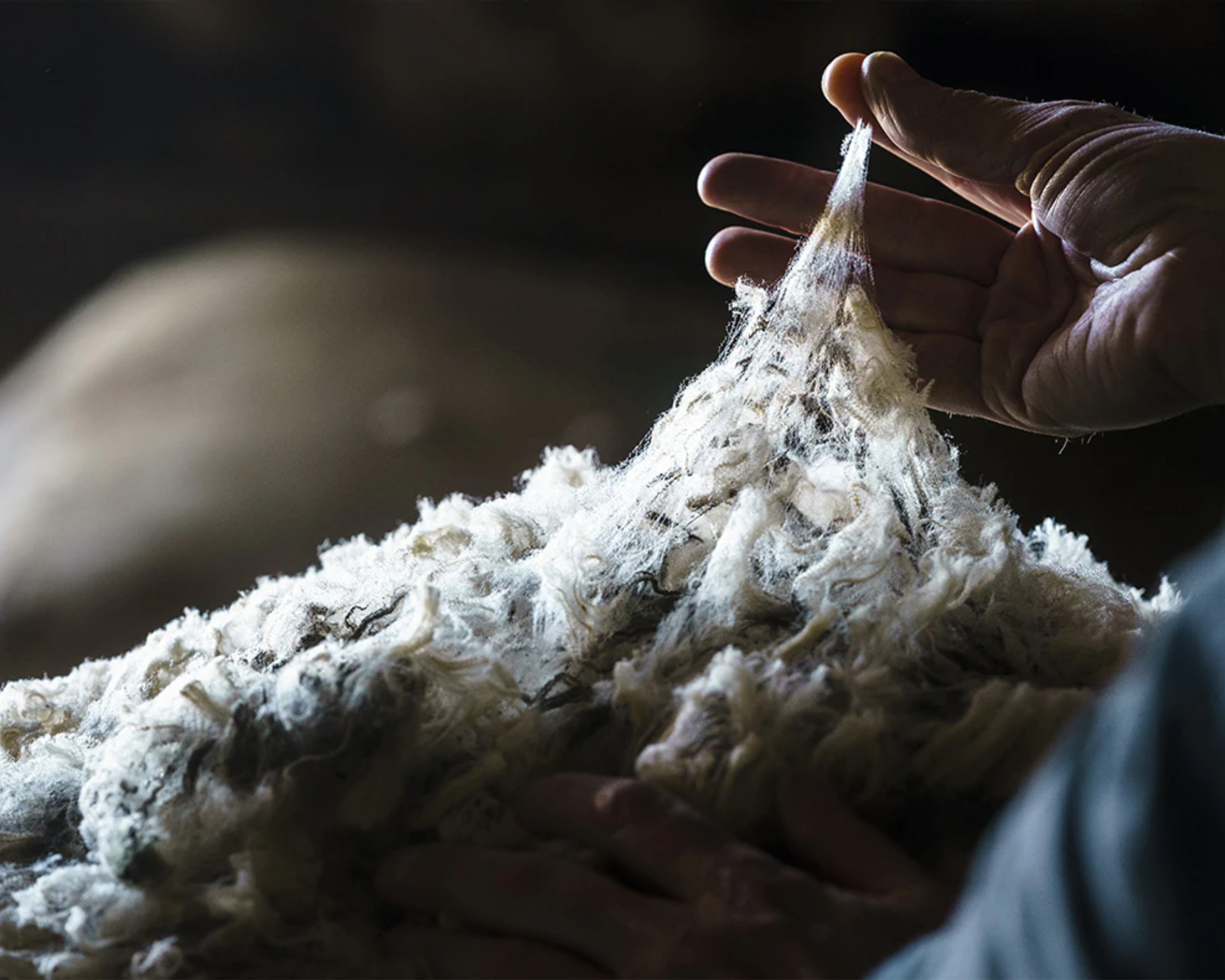
Pierre Brun, seventh generation, spent years trying to answer a specific question: what happened to the merino Louis XVI had wanted? Working with wool trader Claude Gutapfel, he traced the lineage through records and flocks until he found a breeder who had kept the line intact, unmixed, largely unnoticed.
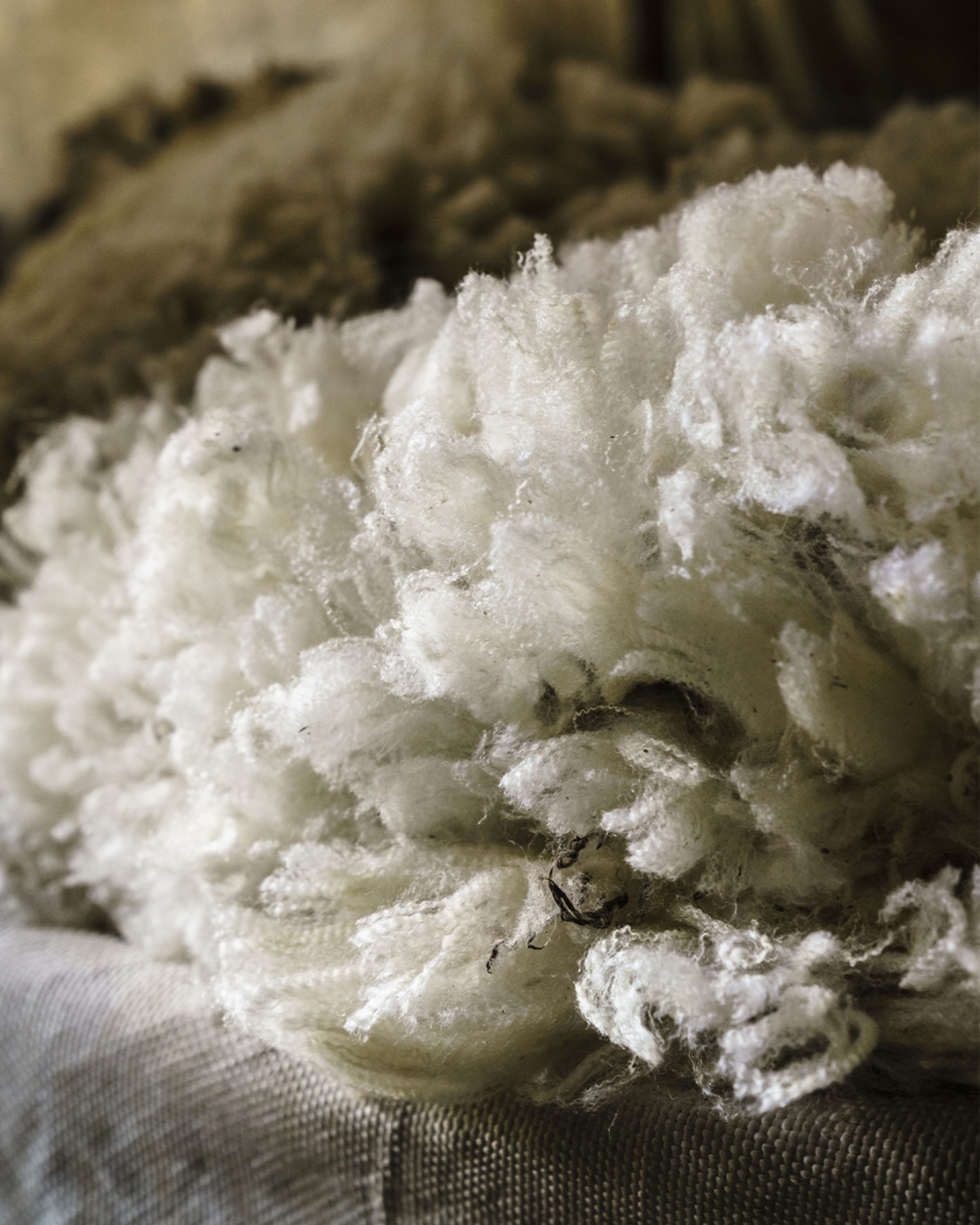
The wool that came from it measured under 20 microns in diameter — finer than most cashmere. Today around fifteen breeders maintain the flock under the name Mérinos d’Arles Antique®, a trademark that exists because a near-extinct sheep breed was found before it was lost for good.
It is, by most measures, the finest wool produced in Europe. It is also, less obviously, a small act of historical repair: a project abandoned by a king, finished by a manufacturer two centuries later.

Why This Matters, Beyond the Story
It would be easy to stop at the anecdote. What’s worth sitting with instead is what it says about how Brun de Vian-Tiran works. The house didn’t invent a marketing angle around heritage — it did the research, over years, with no guarantee of a usable result. The Camargue collection, woven entirely from Mérinos d’Arles Antique®, exists because that research succeeded.
This is the kind of provenance that doesn’t need adjectives. The wool is fine because a specific flock survived. The cloth is what it is because the manufacture chose to spend years finding that out.


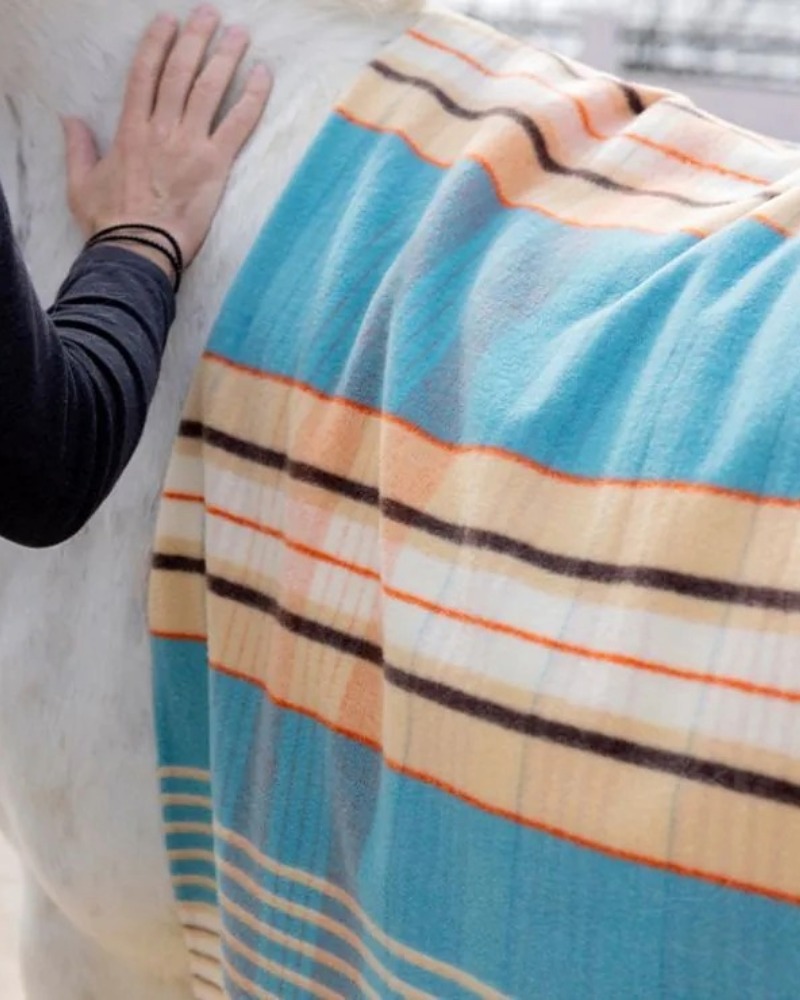
Etcheaz carries pieces from independent European makers whose materials and methods are worth knowing, not just admiring. Brun de Vian-Tiran is one of them.


Frequently Asked Questions
Brun de Vian-Tiran has been manufacturing fine-fibre textiles in France since 1808, and the questions clients ask at the etcheaz showroom tend to circle the same points: what the fibres actually are, how to care for a piece that costs more than a typical throw, and why that’s justified.
Here’s what to know.
- Who is Brun de Vian-Tiran?
Brun de Vian-Tiran is France’s leading manufacturer of natural blankets, running a manufacture more than two centuries old, based in L’Isle-sur-la-Sorgue in Provence. The house works across bedding, fashion accessories, and home decor, but it’s best known for wool and alpaca throws made entirely on-site rather than outsourced. In 2023 the family business was named Most Beautiful Family Business in the World by Primum Familiae Vini, one of several heritage-craft recognitions it holds. - What makes their throws different from a standard wool blanket?Two things: fibre selection and production depth. Brun de Vian-Tiran sources fine fibres and produces its fabrics in-house through fifteen fixed manufacturing steps rather than a shortened industrial process. The Etcheaz alpaca throw, for example, is woven from 100% Andes alpaca, prized for being resistant and lightweight while still remarkably soft — a fibre most mass-market throws don’t use at all because it’s harder to source and work with than sheep’s wool.
- How should I care for a Brun de Vian-Tiran throw?
Dry cleaning is the recommended method, and under normal use once a year is enough to keep it hygienic. For throws used more heavily, the house recommends shaking it out regularly, airing it, and lightly brushing it with a soft rubber brush made for delicate fabrics — natural fibres of this kind don’t hold onto dust or absorb grease easily, so this light maintenance goes a long way. One point worth knowing before you buy: these throws aren’t meant to be sat on, since the mechanical friction causes tangling and pilling; they’re built for draping over a sofa or bed, or wrapping up in, not for use as a cushion. - Is there a guarantee?
Yes — Brun de Vian-Tiran offers a lifetime guarantee, examining any piece regardless of purchase date and repairing or replacing it if a manufacturing defect is found. That guarantee assumes reasonable care on your end, which is part of why the maintenance instructions matter more than they would for a throw you’d replace in a few years anyway. - What sizes and materials does Etcheaz carry?Etcheaz carries a curated selection from the collection rather than the full range — alpaca and merino wool throws are typically in stock, sized around 140 x 180 cm and finished in colourways chosen to suit the shop’s seasonal edits. Each product page lists the exact composition and weight, since fibre and weight vary by piece.
- Why is the price higher than a typical throw?The price reflects the depth of the production process and the fibre itself, not markup for the sake of it — a fifteen-step in-house manufacturing chain and a fibre like Andes alpaca cost more to produce than a mill-finished acrylic blend, and the lifetime guarantee reflects that the maker expects the piece to last accordingly.
- Why buy Brun de Vian-Tiran through Etcheaz?Etcheaz stocks select pieces in Zürich with the option to see and feel the fabric at the Küsnacht showroom before buying — useful given how much the tactile quality matters with a throw at this price point. It’s also available alongside the rest of Etcheaz’s curated collection for anyone building a broader order.

One Blanket, Four Lives: the Engineering behind VOITED’s CloudTouch®
What it actually is
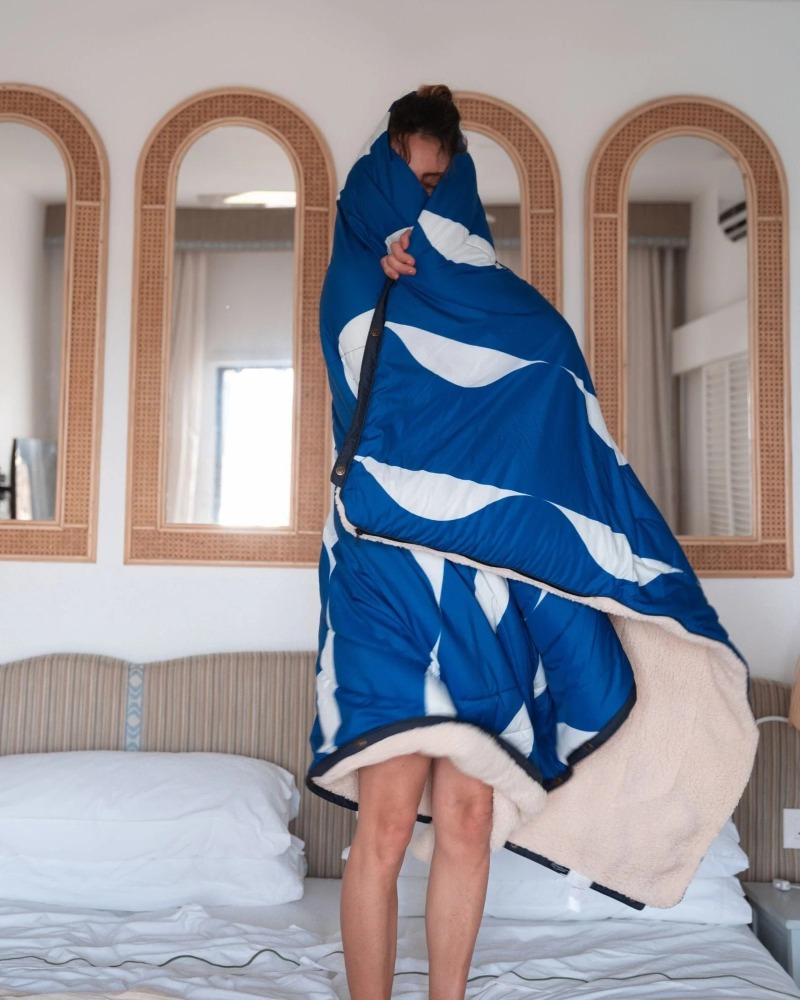
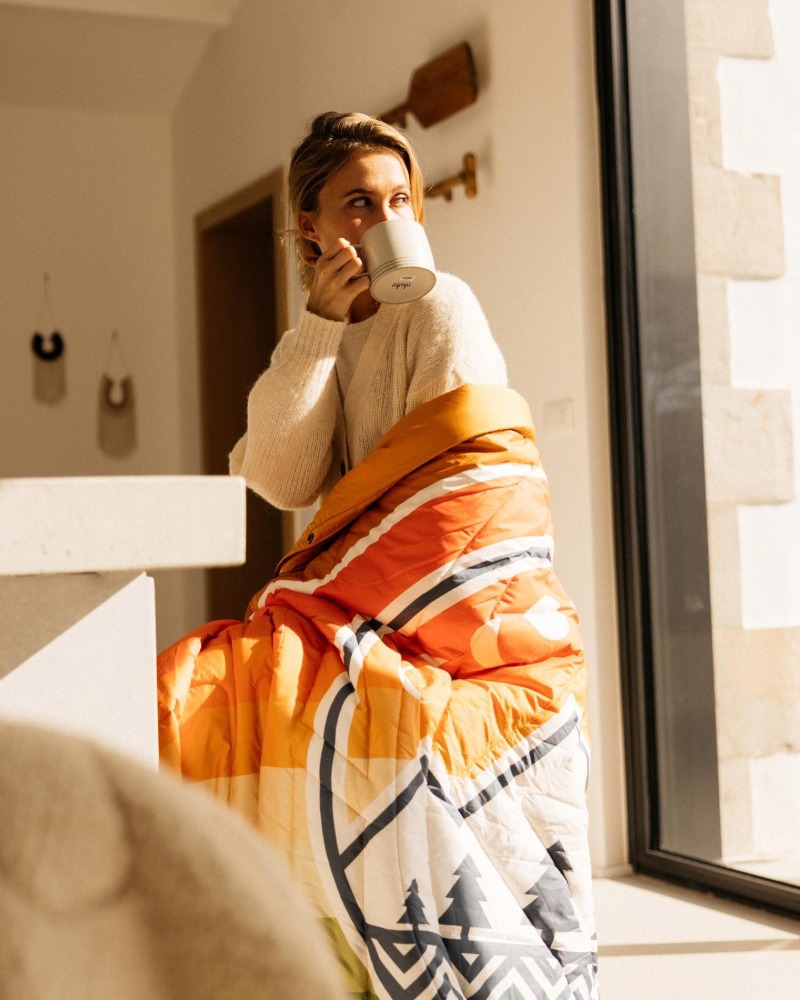
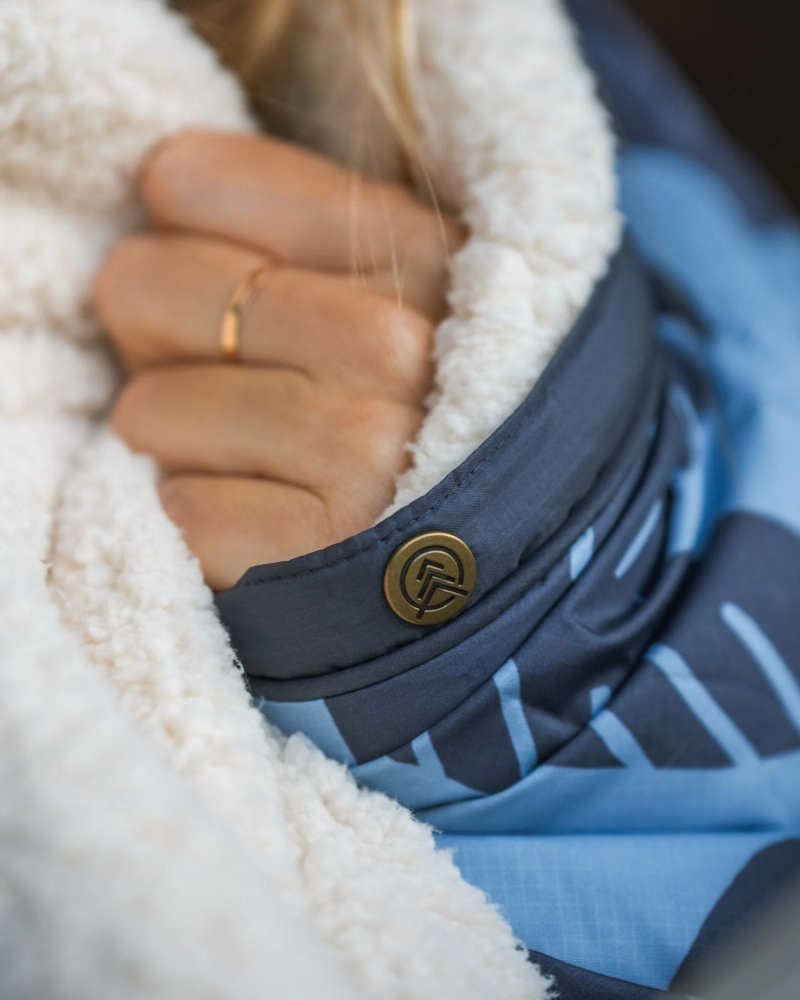
Strip away the marketing and CloudTouch® is a three-layer construction. On the outside: 50-denier REPREVE® ripstop, made from recycled plastic bottles, treated with a fluorine-free water-repellent finish. At the core: a 3D Featherlight Fiber insulation that mimics the loft of down without the bulk. On the inside: a brushed CloudTouch® fleece, also 100% recycled polyester, engineered to feel like sheep’s wool — lighter, faster-drying, machine washable.
The result is a blanket that performs like technical outdoor gear but behaves like a household object. Snap it into a cape and it becomes rain protection. Fold and press-stud it and it becomes a sleep sack. Stuff it into its own pouch and it becomes a pillow.

Where it belongs
This isn’t a camping blanket that happens to look good. It’s built for the terrace at dusk on the Goldküste, for the boat on the lake when the evening cools faster than expected, for the chalet weekend where one good throw replaces three mediocre ones. Outdoor performance, indoor manners.
The colorways
CloudTouch® comes in eight variations, from quiet solids to bolder prints — each one holding the same construction underneath.
VOITED Outdoor Blankets: Frequently Asked Questions
VOITED blankets show up everywhere from Zürich lakeside picnics to festival campsites, and the same handful of questions come up every time. Here they are, answered plainly.

- What is CloudTouch® fabric made of?
CloudTouch® is VOITED’s proprietary recycled fleece, spun primarily from post-consumer plastic bottles. It’s brushed on both sides for softness, then finished to resist pilling under repeated outdoor use. The result reads as a plush picnic blanket but performs like technical outerwear fabric — quick-drying, colourfast, and considerably more durable than a standard cotton throw. - Are VOITED blankets waterproof?
Not fully waterproof, but water-resistant enough to sit on damp grass or morning dew without soaking through in normal use. The fabric sheds light moisture and dries fast in open air. For prolonged rain or wet sand, VOITED’s packable options with a waterproof base layer are the better pick — worth asking about if that’s your primary use case. - How do I clean a VOITED blanket?
Machine wash cold, gentle cycle, no fabric softener — it coats the recycled fibres and dulls the texture over time. Air dry or tumble dry on low. For a quick refresh between full washes, a damp cloth and mild soap on the affected spot works fine; the fabric doesn’t hold odour the way natural fibres do. - What sizes and colourways does Etcheaz carry?
Etcheaz stocks a curated selection of VOITED’s CloudTouch® colourways rather than the full catalogue — chosen for how they read in a Swiss interior as much as outdoors. Sizes run from personal picnic format to larger shareable blankets for groups. Because VOITED runs limited colour drops, some shades sell out and aren’t restocked; the product page notes when a colour is final stock. - Are VOITED blankets actually sustainable, or is that just marketing?
The recycled-fibre sourcing is verifiable and consistent across the CloudTouch® line — it’s not a single “eco edition” set apart from the rest. That said, no textile production is impact-free, and a blanket that lasts years of outdoor use is a more meaningful sustainability claim than the fibre origin alone. VOITED’s build quality supports that longevity in practice. - Can I use a VOITED blanket indoors?
Yes — a fair share of Etcheaz clients buy them as a sofa throw rather than for outdoor use. The weight and texture work well in a Swiss interior through the colder months, and the practical durability is simply a bonus you don’t need outdoors to appreciate. - Why buy VOITED through Etcheaz instead of directly?
Etcheaz carries VOITED alongside a wider selection of independent European design — useful if you’re furnishing a space or building a gift order and want it in one shipment from Küsnacht, with the option to see the blanket in person at the showroom before buying. For a single blanket with no other needs, ordering direct is equally valid.
Renting instead of Buying: How Taquin Rental Works
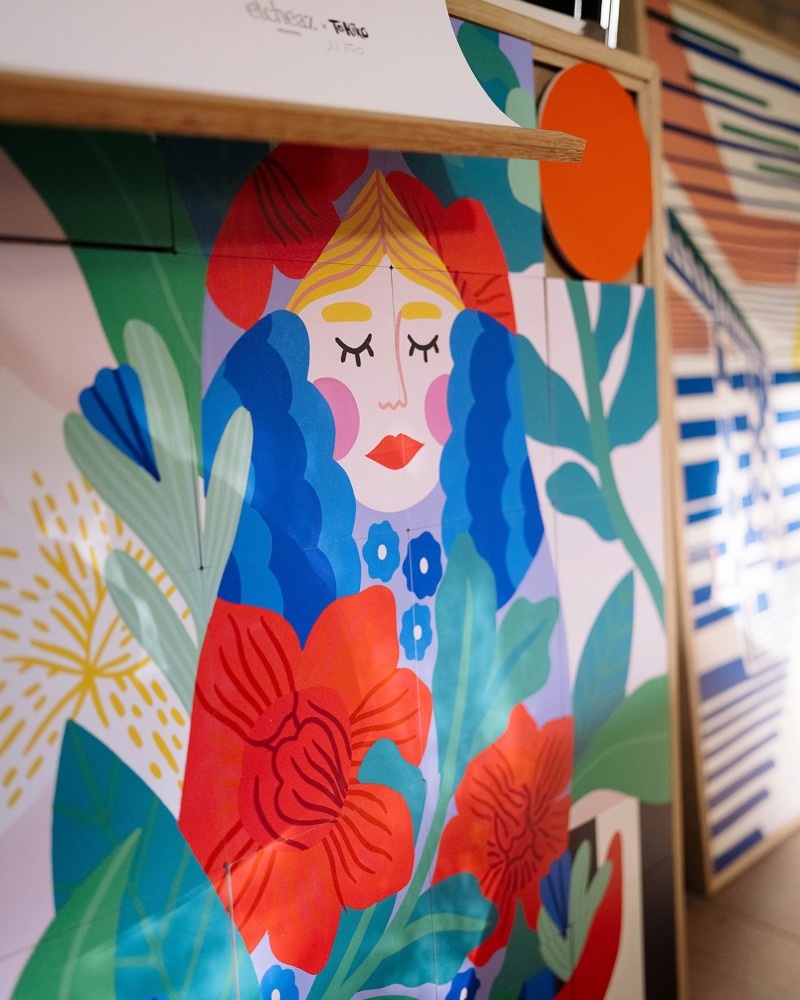
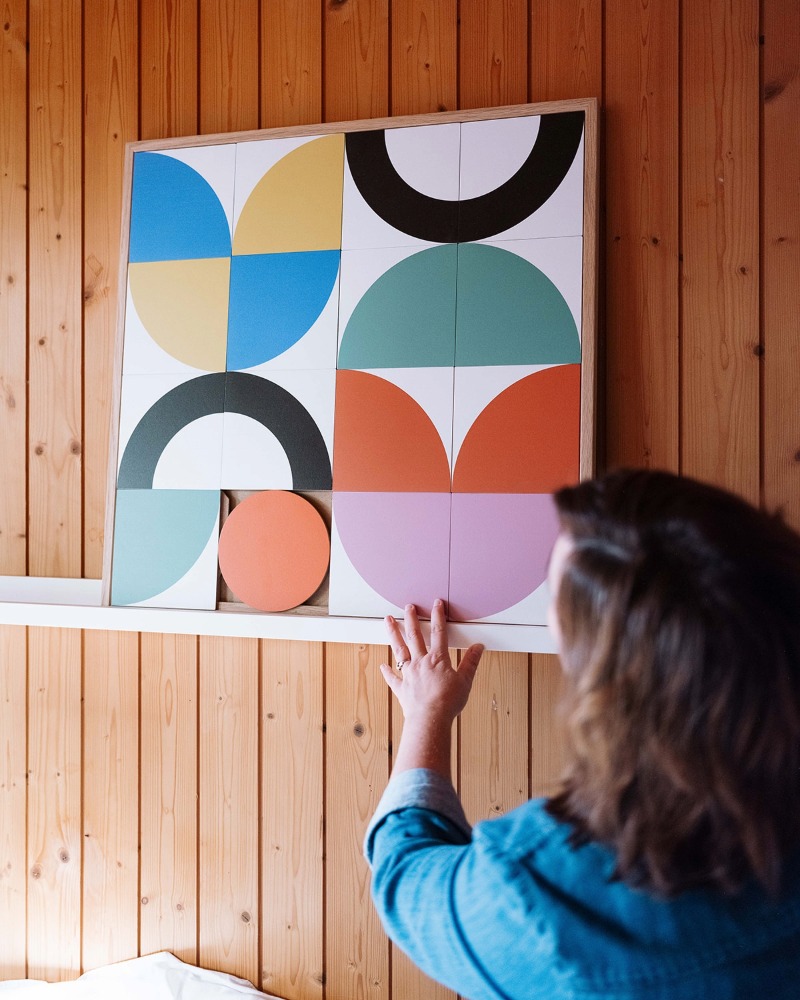
A piece of wall art bought once tends to stay in the same spot for years, mostly because replacing it feels like a decision rather than a small adjustment. Taquin Rental removes that friction: you keep a sliding puzzle piece for a set period, then swap it for another from the collection.
What Taquin actually is
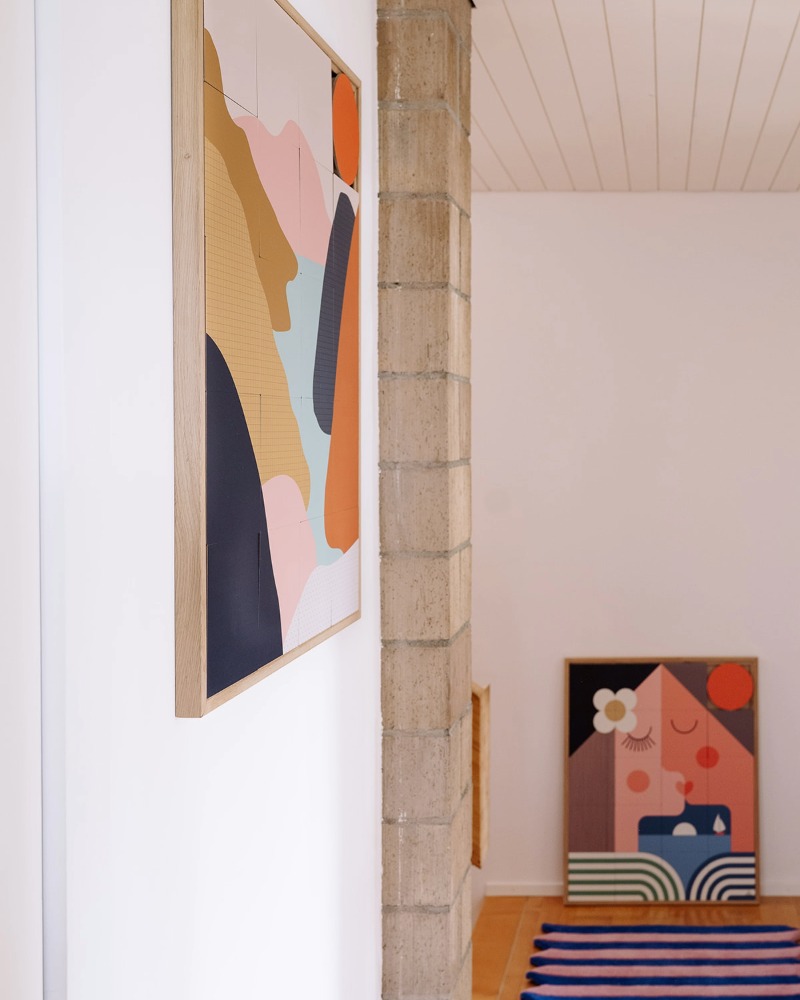
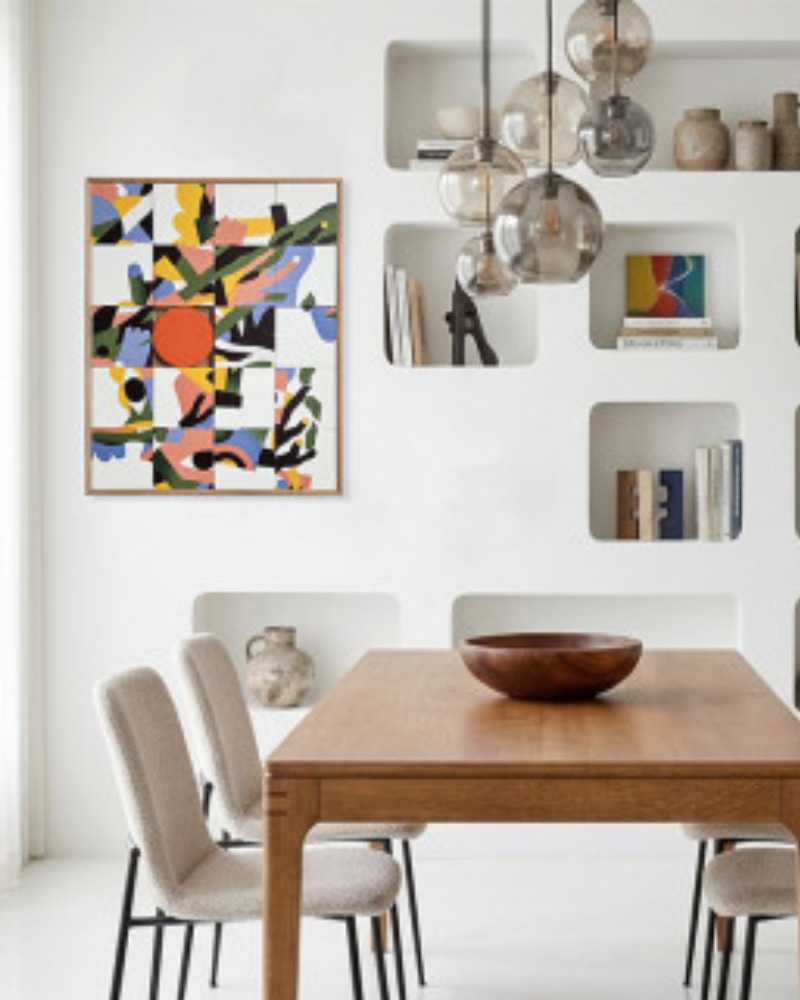
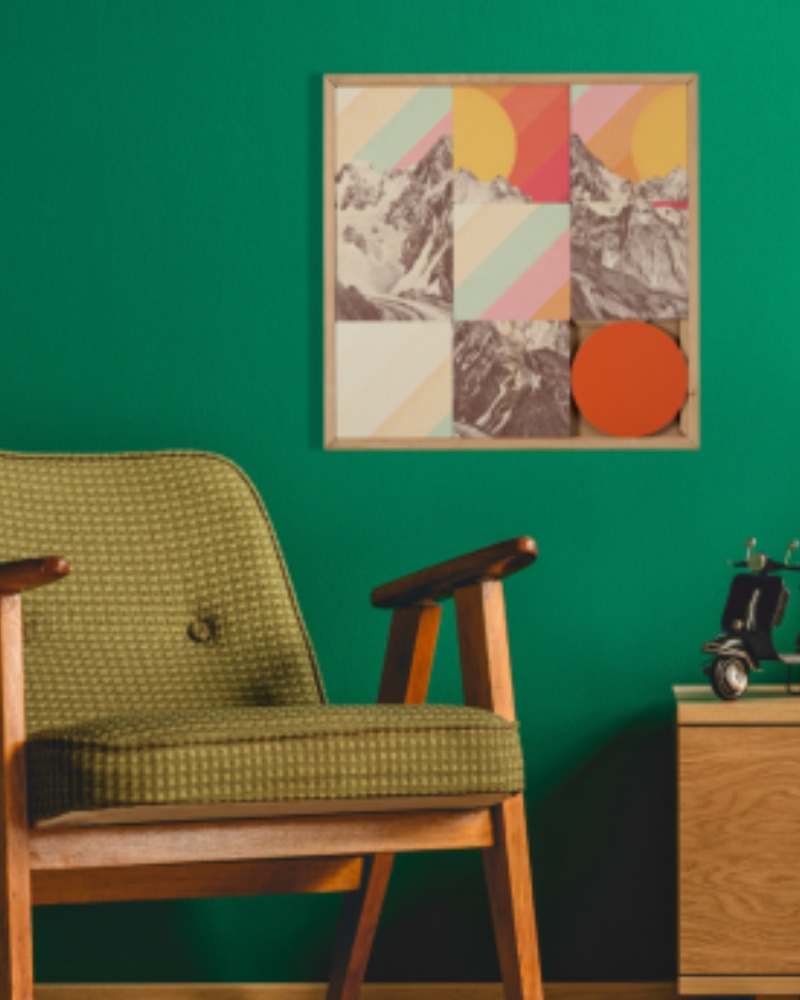
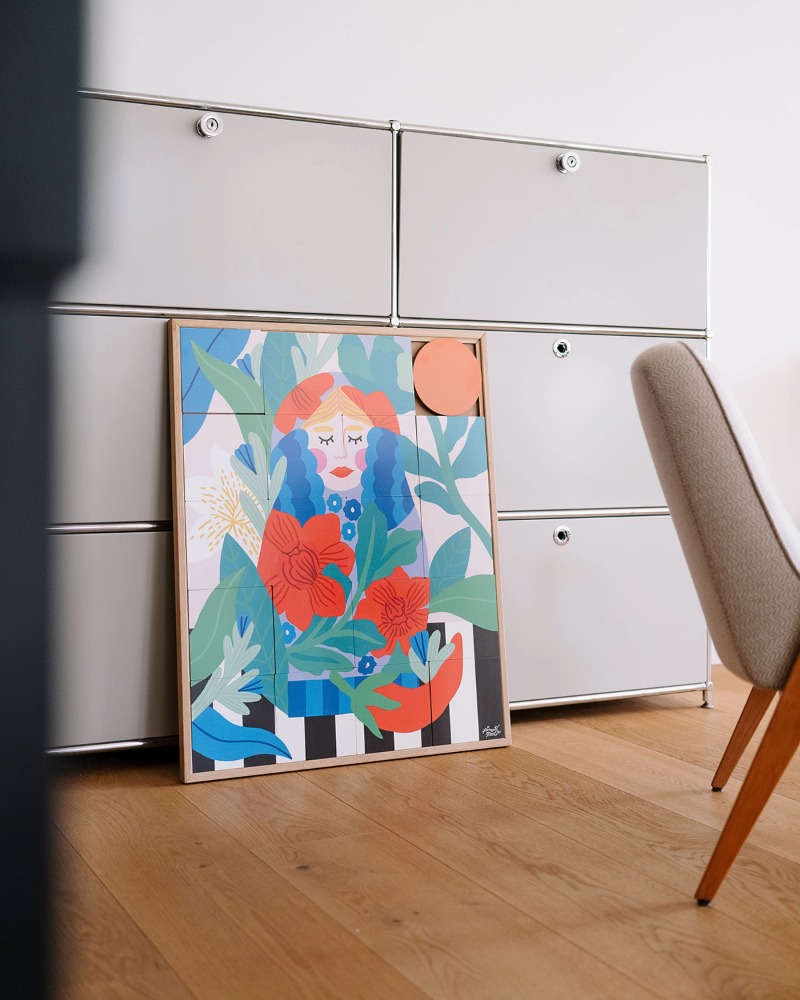
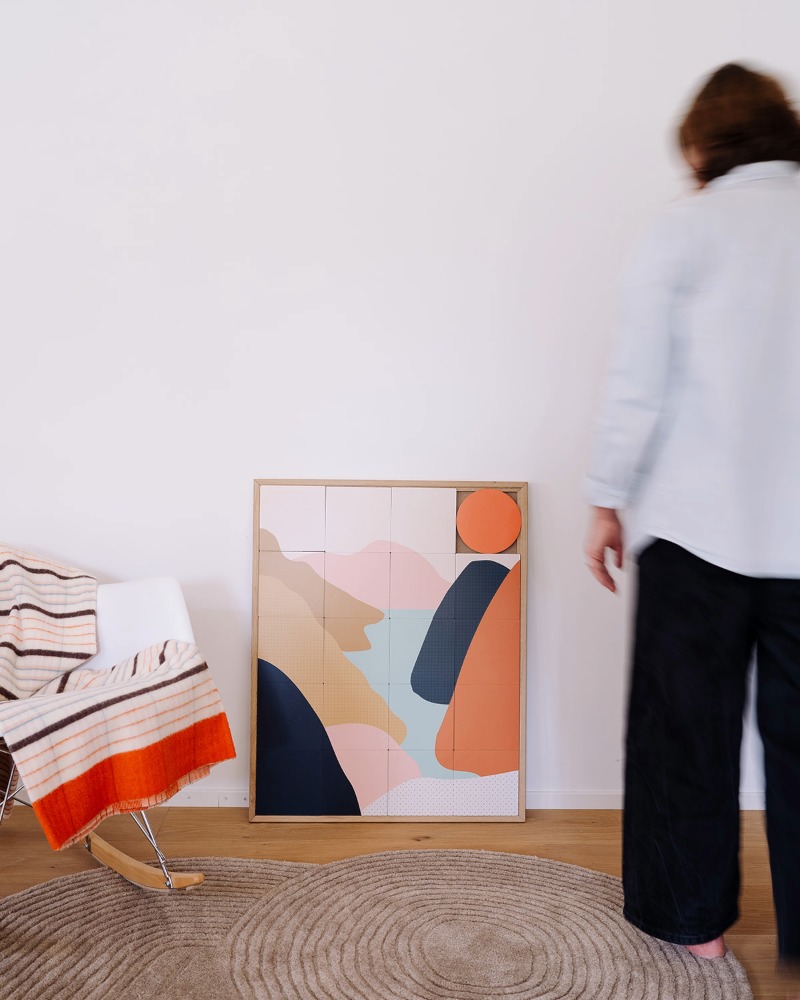
Taquin pieces are sliding puzzle wall art — panels that reference the classic 15-puzzle mechanic, reworked as a fixed decorative object rather than something you actually rearrange. Etcheaz carries several designs from the collection, each with its own colour and pattern language.
Why rent wall art at all
Interiors change faster than most people replace their decor. A new sofa, a repainted wall, a change of season — any of these can make an existing piece feel slightly wrong without justifying a full replacement. Renting solves for that mismatch directly: the art moves, the walls don’t need to accommodate it indefinitely.
It also suits people who simply like variation. Seeing a different piece every few months keeps a space from going static, without the cost or clutter of accumulating art you no longer display.
How the service works
Etcheaz offers a minimum commitment plan of 6-months, with possible extension.
Both include:
• Delivery and installation in the Zürich area, handled by Etcheaz rather than left to the client
• Rotation during the rental period, swapping the piece for another from the current Taquin selection
• A purchase option at any point, if a piece turns out to be a keeper
Pricing is structured around the term length and piece size; the showroom in Küsnacht has the selection on display if you’d rather choose in person than from photos.
Who this suits
Taquin Rental fits people furnishing a rental apartment who don’t want to commit wall art to a space they’ll leave. It also works for anyone testing whether a bold piece suits a room before buying it outright, and for offices or short-let spaces that want art without long-term inventory.
It’s not the right fit if you already know exactly which piece you want permanently — in that case, buying directly is simpler and works out cheaper over time.
Getting started
The current rotation is on display on our website or at the Küsnacht showroom (Seestrasse 155).
Reach out to us if you would like to know more !
Contact : info@etcheaz.com or +41 79 203 11 66
Why we only work with Independent Artists & Designers — and what that means for you
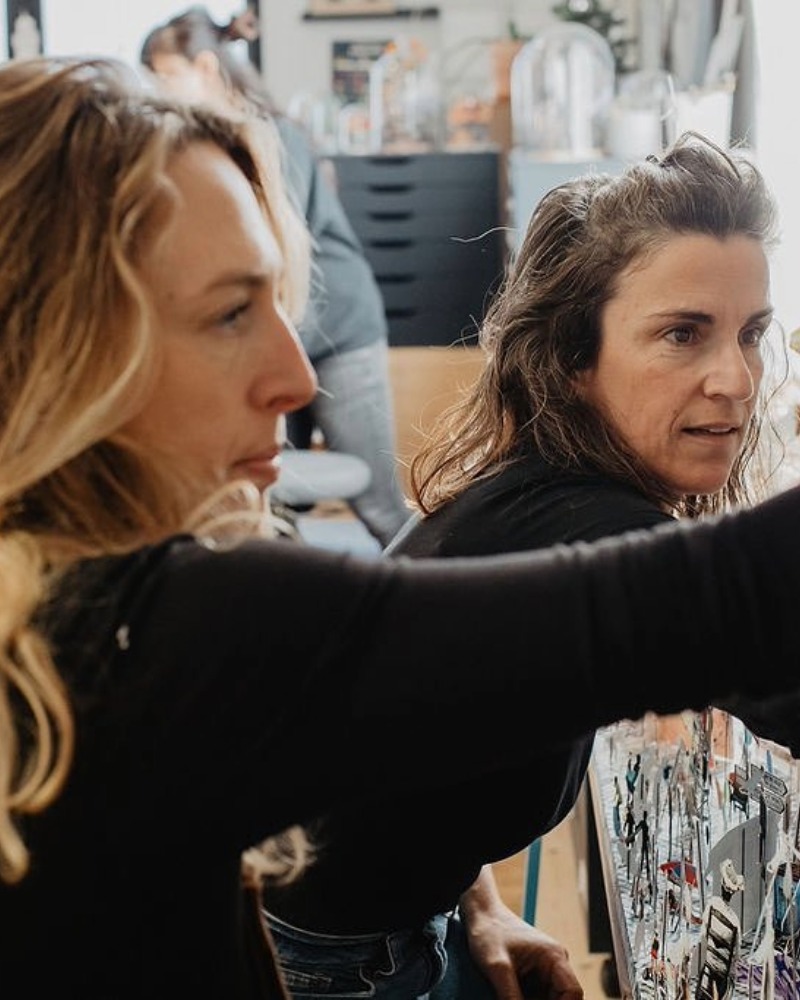
Every designer and artist at Etcheaz is independent. Every piece in our collection comes from someone who works outside the machinery of mass production — who has a studio, a method, a point of view that belongs to them, and who makes things in quantities that are defined by what their hands and their process can actually produce.
This is not a positioning statement. It is simply how we work, and it shapes everything else.
What Independent Actually Means
The word gets used loosely. It is worth being precise.
When we say independent, we mean an artist or designer who controls their own production — who has not licensed their work to a large manufacturer, who does not delegate the core of what makes their objects distinctive to a third-party factory, and who retains direct responsibility for the quality and integrity of every piece that leaves their studio.
Charlotte Bourrus’s globes are made by hand, in her studio in Bidart, by a small dedicated team she leads. The Taquin collection comes from a creative designer who has spent time perfecting a puzzle mechanism that no one else produces. Marie-Cerise shapes each of her Zuri concrete objects by hand — giving the concrete material the freedom to express its own irregularities, which make every piece singular.
In each case, there is a person — or a small, dedicated team — behind the object. That is what independent means, in practice.
Why It Matters for the Objects
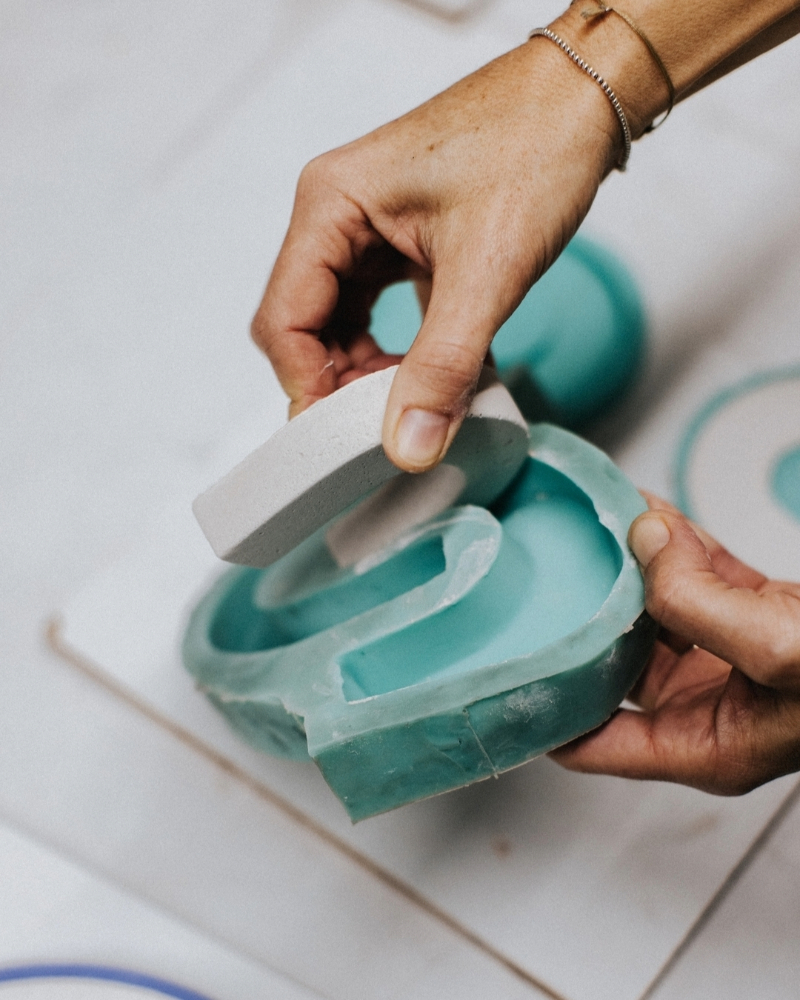
Objects made by independent designers have a quality that is difficult to describe precisely but easy to recognise. It is partly material — the texture of hand-laid paper, the weight of mouth-blown glass, the density of hand-embroidered thread — things that feel different from objects produced at scale.
But it is also something harder to name. A consistency of intention, perhaps. When one person is responsible for an entire object, from concept to completion, the decisions that shape it are all made by the same sensibility. There are no handoffs, no compromises between a designer’s vision and a manufacturer’s constraints, no value engineering at the end of the process.
The result is objects that hold together in a particular way. You can feel it when you hold them.
Why It Matters for the Makers
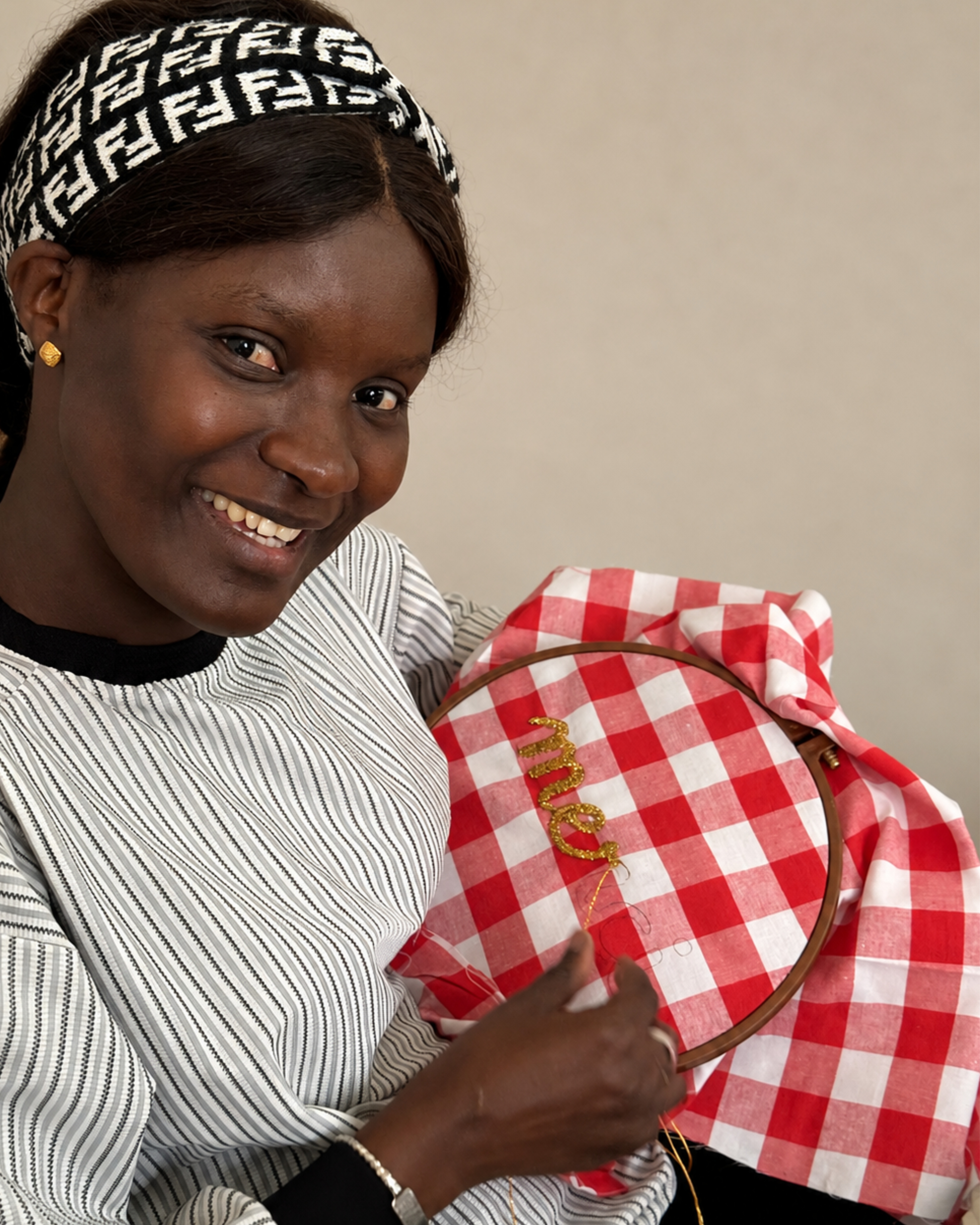
Mass production has been very efficient at driving the value of craft downwards. When an object can be reproduced at volume for almost nothing, the person who makes it by hand faces a structural disadvantage that has nothing to do with the quality of their work.
Working exclusively with independent artists is, in part, a response to this. We pay fair prices. We buy in quantities that are meaningful to a small studio without being volumes that would compromise their process. We do not ask artists to scale up in ways that would change what makes their work worth carrying.
Several of our relationships have developed into formal collaborations — exclusive pieces designed specifically for Etcheaz and our customers. The Globe Zürich and Globe Switzerland with Charlotte Bourrus. The Schweizerdeutsch cushion capsule with CSAO. These collaborations exist because trust has been established in both directions, and because the artist feels secure enough in the relationship to invest creative energy in something new.
That does not happen with a brand you picked from a catalogue.
Why It Matters for You
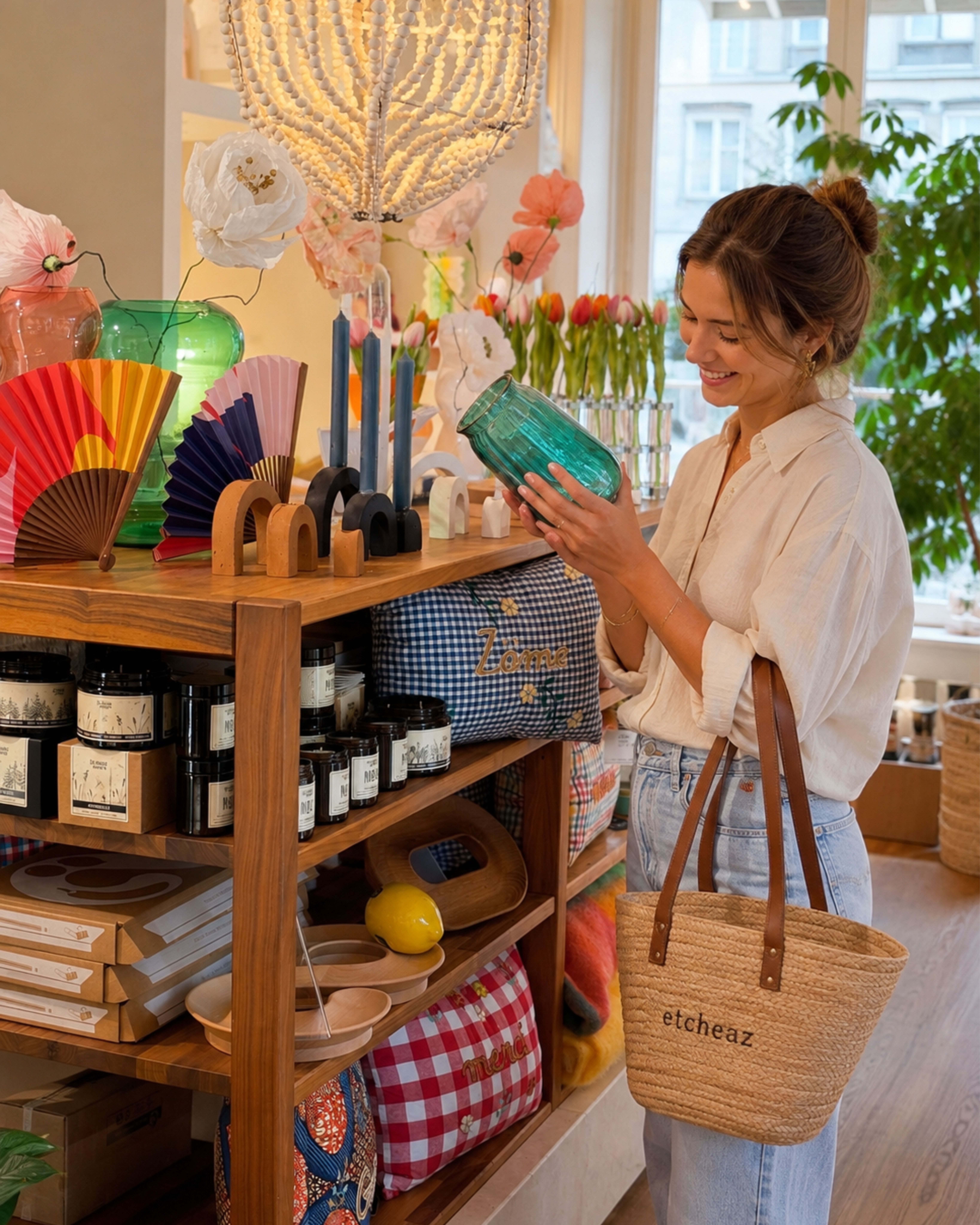
There is a practical dimension to this. When you buy a piece from an independent artist through Etcheaz, you are buying something that exists in limited quantity. When the edition closes, it closes. The object you own will not be reproduced, repriced, and sold in a chain store next season.
This is not scarcity as a sales tactic. It is scarcity as a natural consequence of how the object was made. One person, one studio, a finite amount of time.
There is also something less transactional. Knowing the story behind an object changes how you experience it. Charlotte Bourrus’s globes look different when you know that the cartographic detail was assembled, by hand, in her studio in Bidart. A Tokiko print looks different when you know that every city map was drawn by hand by Anna, the illustrator behind every single Tokiko design — each line a careful reading of the streets she loves.
Objects carry their histories. The histories of independent artists are worth carrying.
How We Choose Who We Work With
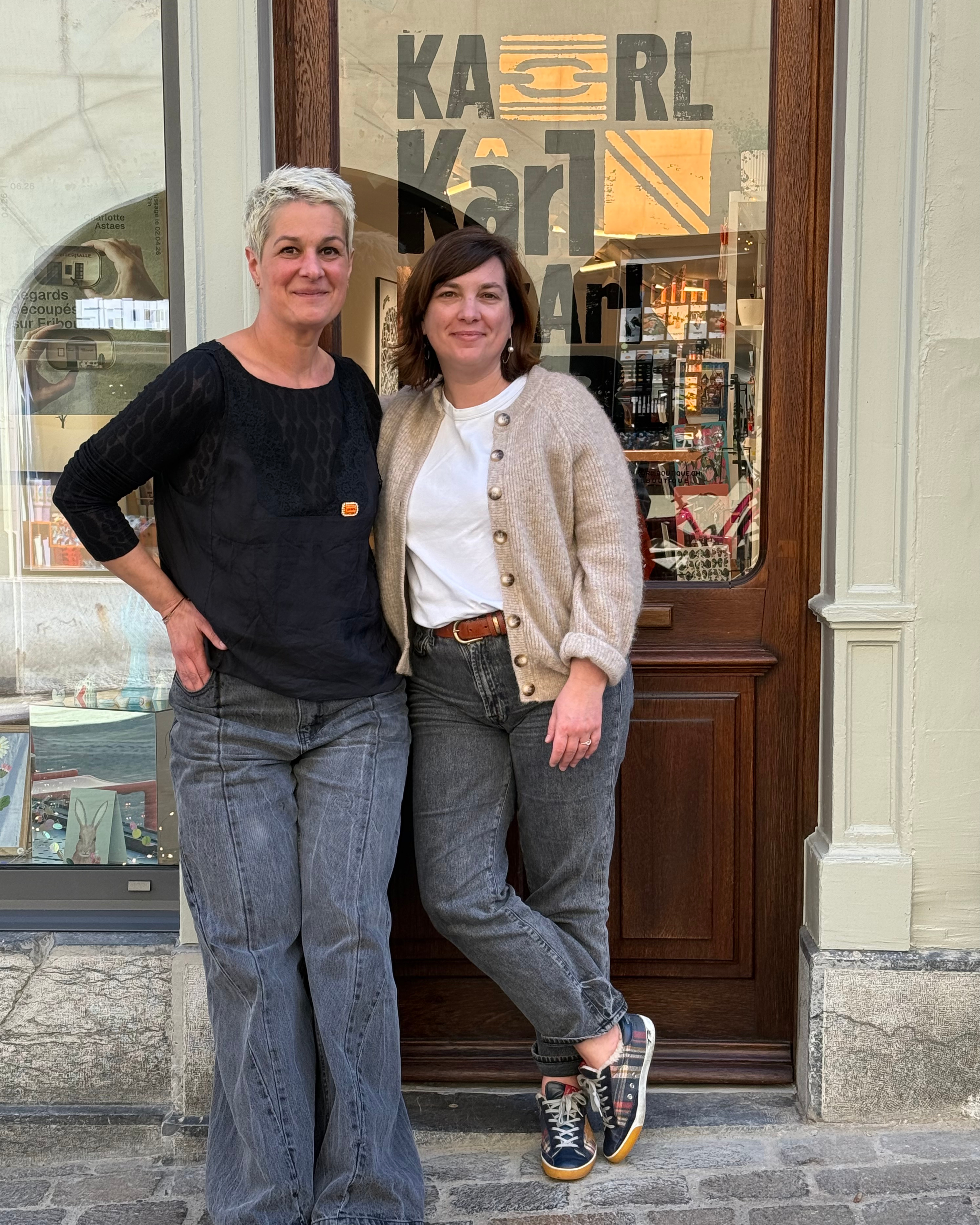
We do not have a formal checklist. The selection process at Etcheaz is curatorial rather than procedural — which means it depends on looking carefully, asking good questions, and being honest about whether a piece belongs in the collection.
A few things are consistent across every artist we work with: genuine craft at the core of the process, a point of view that is clearly their own, a commitment to limited production that reflects the real constraints of making things well, and a willingness to stand behind their work over time.
We also look for alignment with the values that run through the Etcheaz collection as a whole — an aesthetic that is warm without being decorative, considered without being cold, rooted in European craft traditions without being nostalgic about them.
When all of that is present, we have a conversation. Some of those conversations become long relationships.
What This Means in Practice
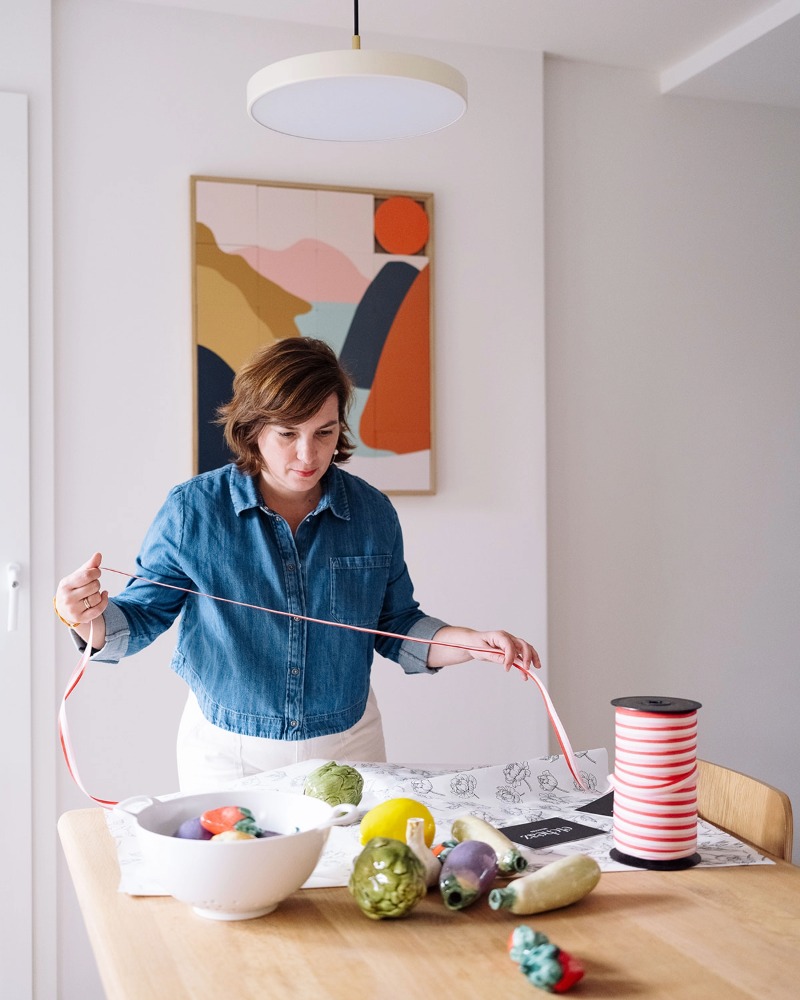
Shopping at Etcheaz is a different experience from shopping at a retailer who carries hundreds of brands and thousands of SKUs. The selection is smaller and more deliberate. The pieces take longer to turn over. New arrivals are genuinely new — not seasonal refreshes of the same categories.
If you are looking for something fast, something generic, something that fills a space without asking much of it, we are probably not the right place.
If you are looking for an object that will still feel like the right decision in ten years — something made by someone who cared, that exists in the world in limited numbers, that carries a story worth knowing — then this is where to look.
Discover the full collection of independent European designers at etcheaz.ch. Our showroom is at Seestrasse 155, Küsnacht ZH — fifteen minutes from Zurich, on the lake.*
Frequently Asked Questions
- Why does Etcheaz only carry independent designers?
Because the quality, integrity, and story of an object are inseparable from the conditions in which it was made. Independent designers retain full control of their process, which produces objects that hold together differently — materially and aesthetically — from mass-produced alternatives. This is the foundation of the Etcheaz curatorial approach. - What is slow design, and why does it matter?
Slow design is a philosophy of making that prioritises craft, intention, and limited production over speed and volume. Objects made in this way take longer to produce, exist in smaller quantities, and tend to carry a coherence that is difficult to achieve at scale. Etcheaz works exclusively within this framework. - Where can I buy ethical home décor in Switzerland?
Etcheaz carries a curated selection of home décor from independent European designers, favouring sustainable materials, limited production, and fair working conditions. The full collection is available at etcheaz.com, with shipping across Switzerland and personal pickup at the Küsnacht showroom. - What makes a design object worth collecting?
Scarcity, craft, and provenance are the three qualities that tend to define collectible design objects. Limited-edition pieces made by hand by independent artists — like the Charlotte Bourrus globe collection or the Taquin wall art series — meet all three criteria. They exist in finite numbers, are made with genuine skill, and come from makers with a distinct and traceable point of view. - How does Etcheaz select its designers?
The selection process is curatorial: based on direct experience of the work, extended conversations with the maker, and an assessment of alignment with the values that define the Etcheaz collection — craft-first production, limited editions, and a European design sensibility that is considered without being cold.
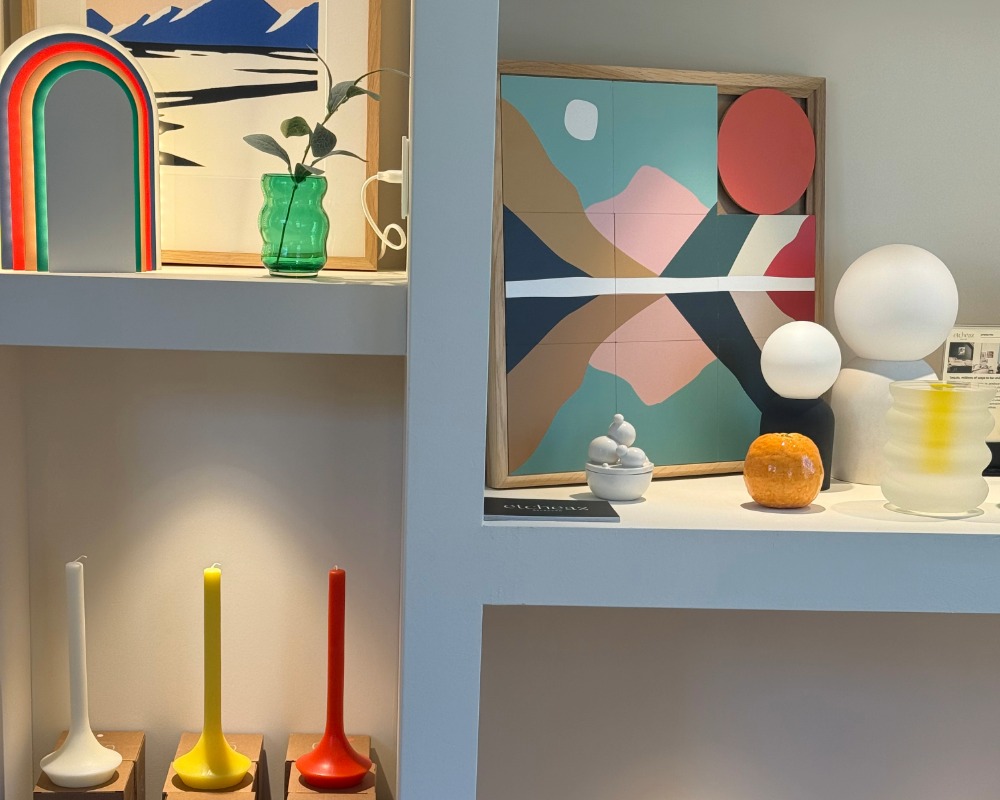
Inside the Etcheaz Showroom: a Design Address on Zurich’s Gold Coast
Some addresses take a moment to find, and are worth it when you do.
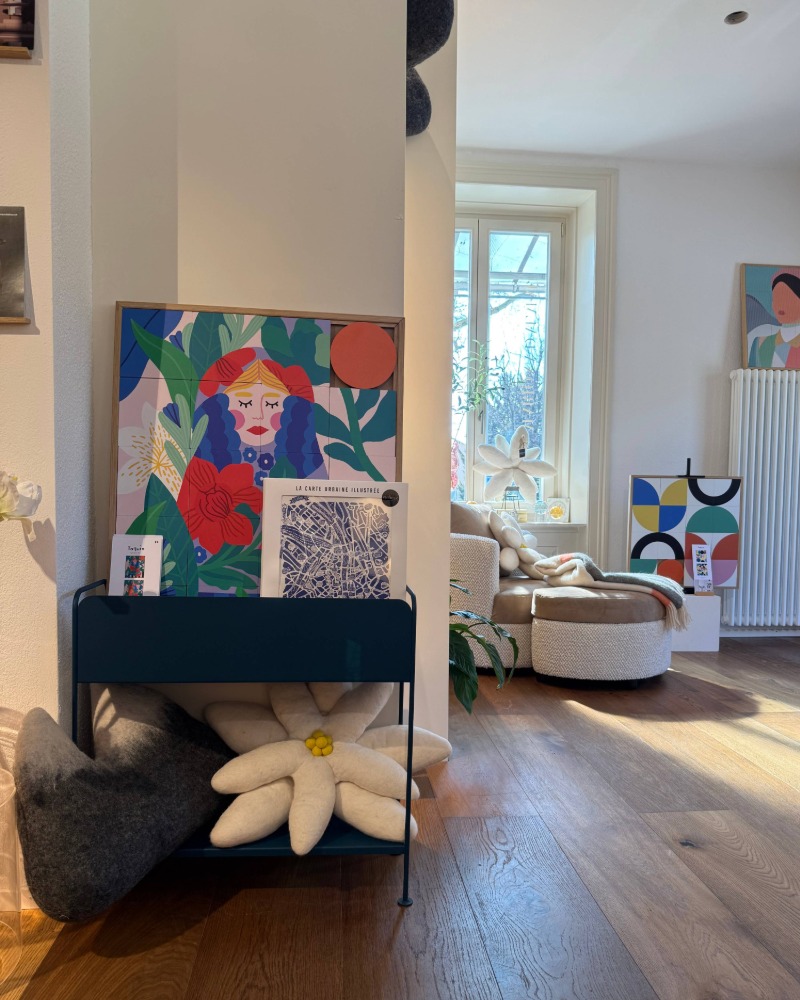
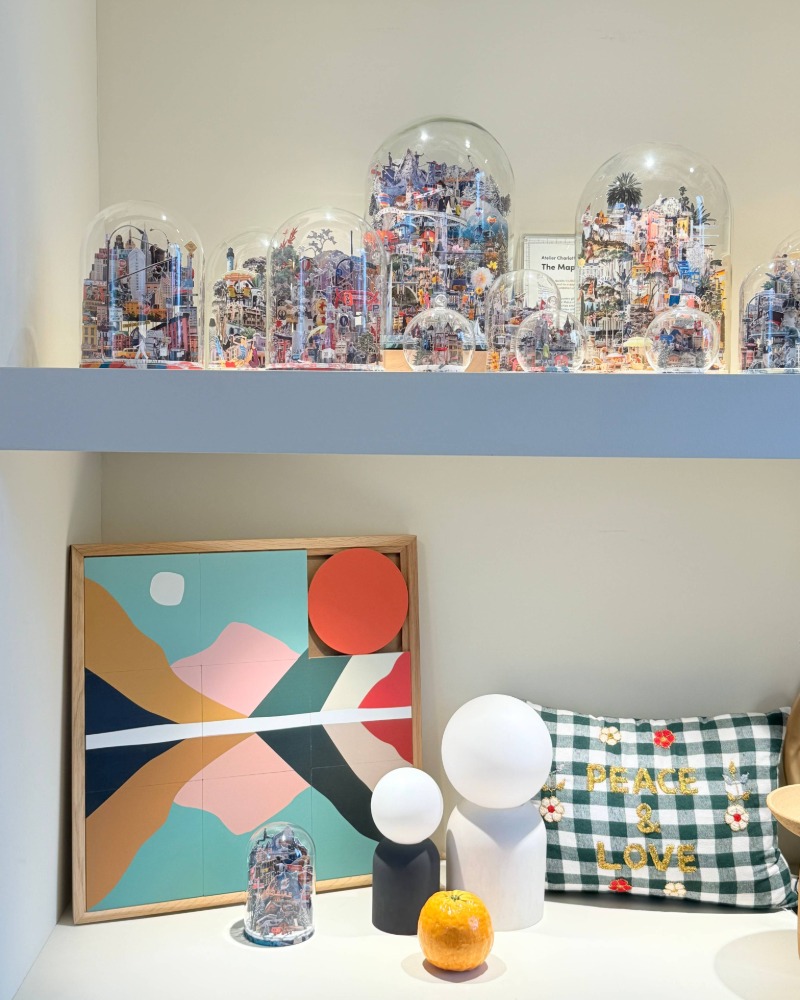
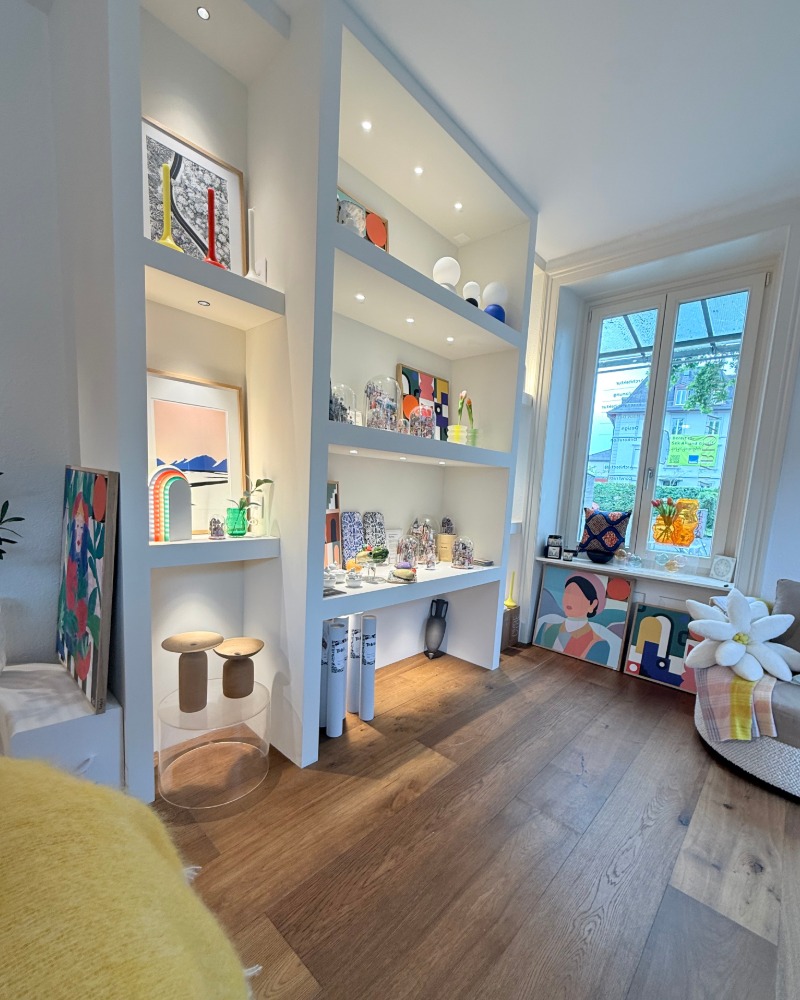
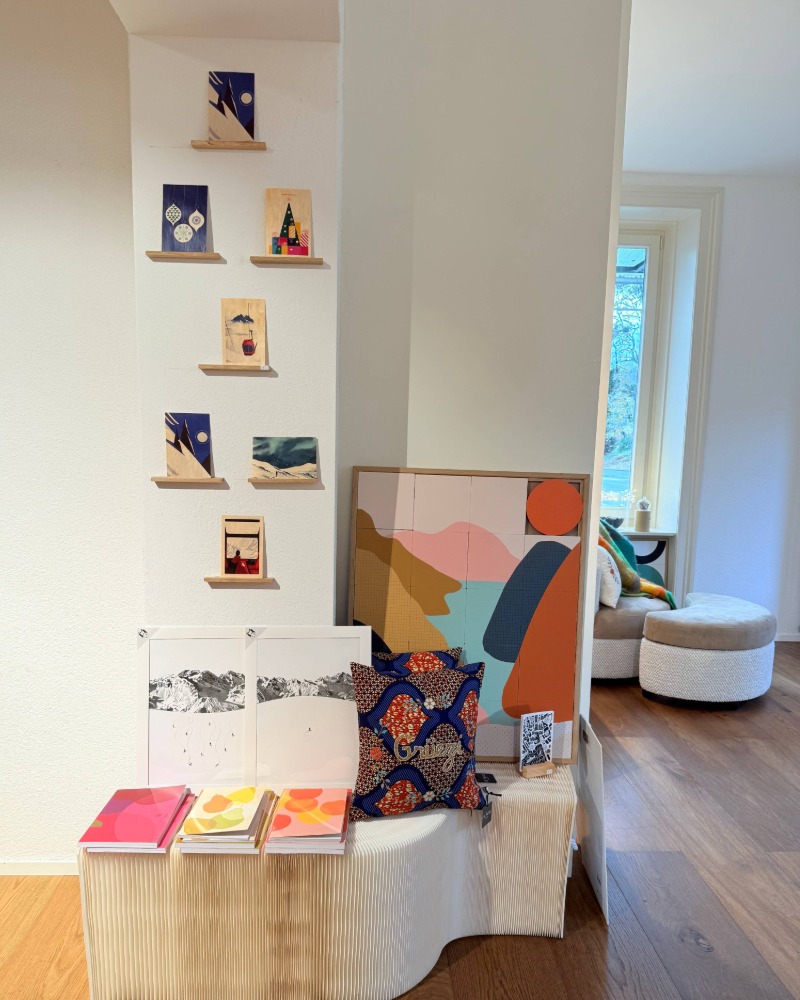
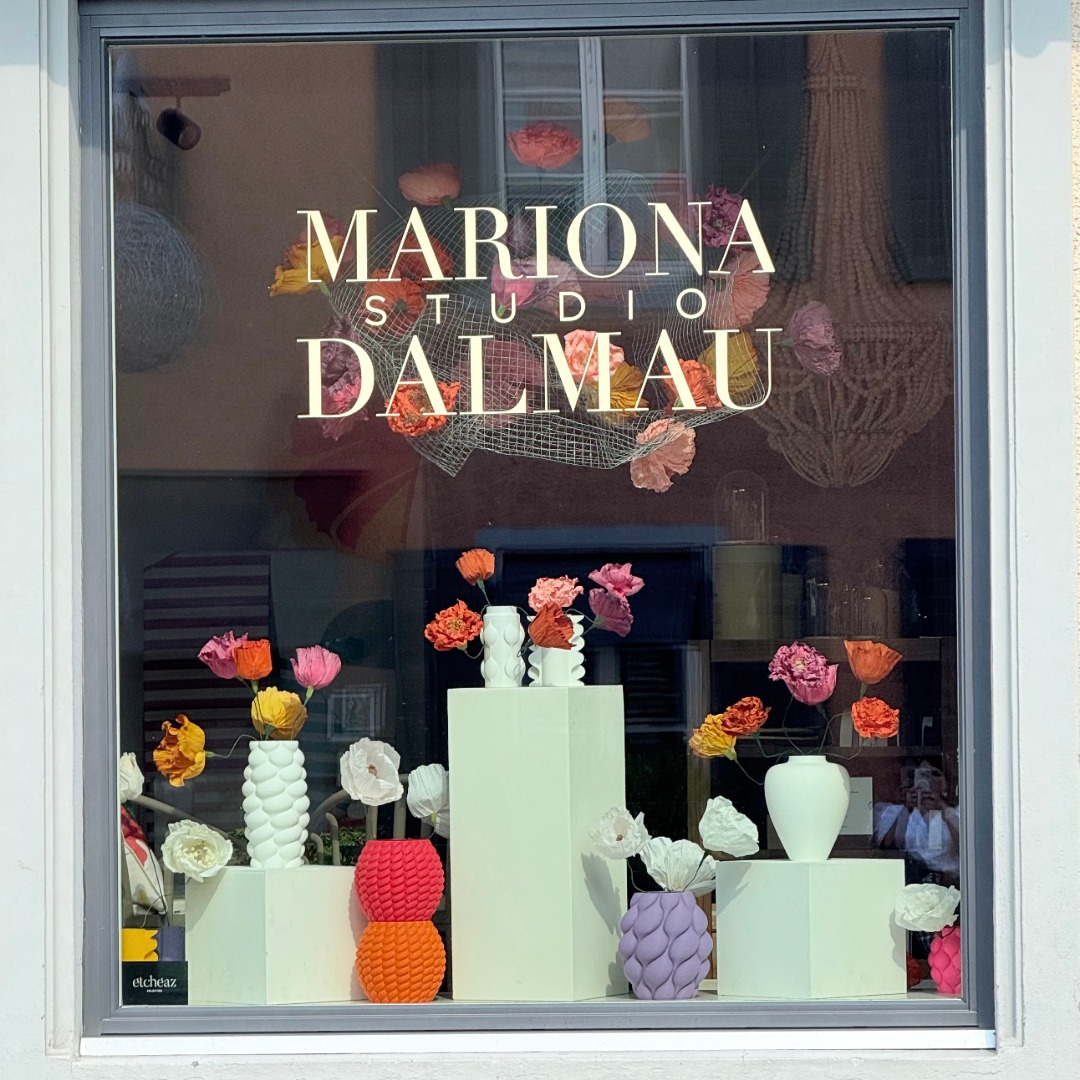
The Etcheaz showroom sits at Seestrasse 155, in Küsnacht — the quiet lakeside town on Zurich’s Gold Coast that has a habit of surprising first-time visitors. The road follows the water. And inside the showroom, a selection of objects waits — each one chosen carefully, none of them mass-produced.
This is not a shop in the conventional sense. It is closer to a small boutique for people who care about how things are made.
What You’ll Find
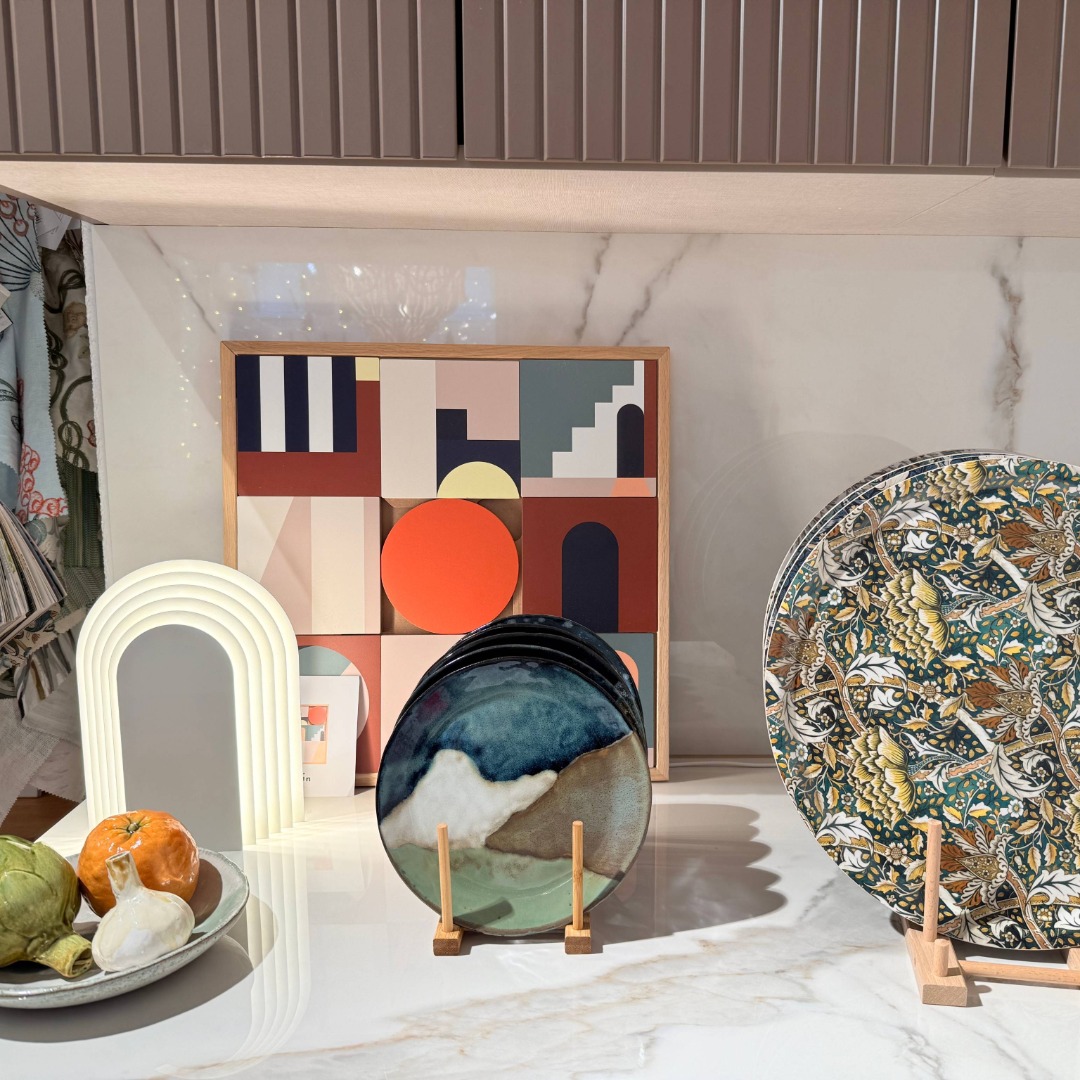
The Etcheaz selection is deliberately edited. There are no filler products, no seasonal noise. What we carry reflects a consistent point of view: that objects should be made with skill, produced in limited quantities, and designed to last — in both aesthetic and material terms.
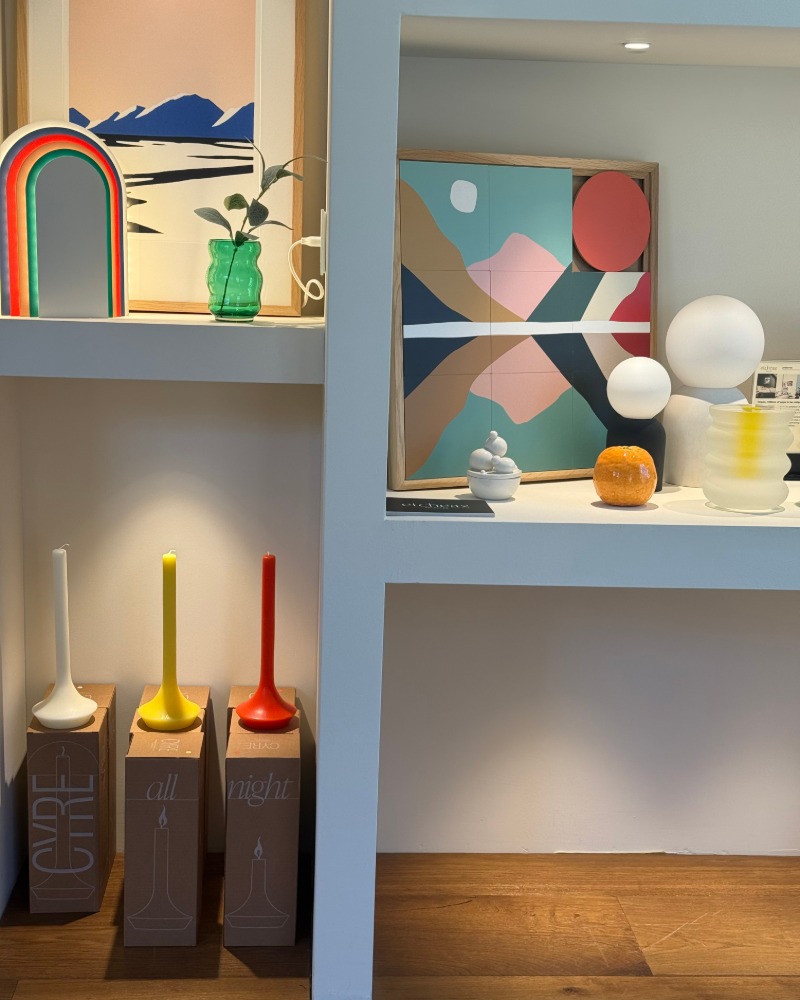
At Seestrasse 155, you will currently find:
- Charlotte Bourrus paper globes — hand-crafted in France, painted with cartographic detail, each one numbered. Including the two Etcheaz exclusives: the Globe Zürich and the Globe Switzerland XXL.
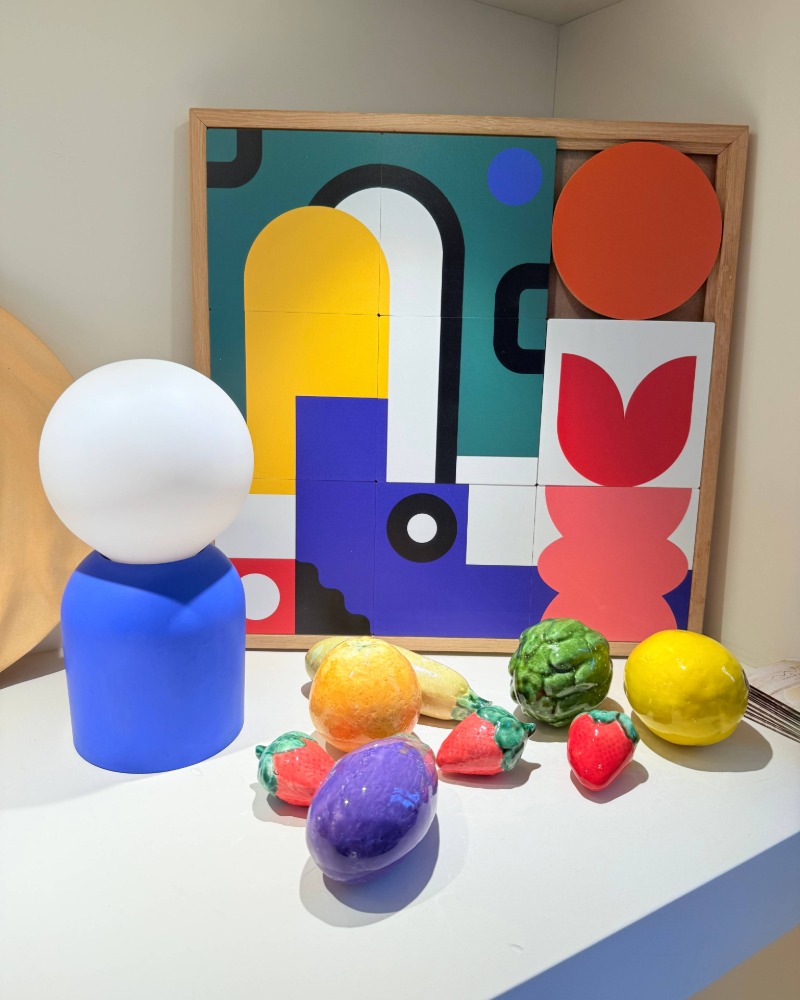
- Taquin wall art — the sliding puzzle collection that occupies the space between game and painting, designed in France. Seventeen configurations, all limited edition.
- CYRE candles by Renaud Defrancesco — home fragrance as a design object. Heavy glass, clean compositions, scents that come from someone who thinks seriously about the relationship between smell and space.
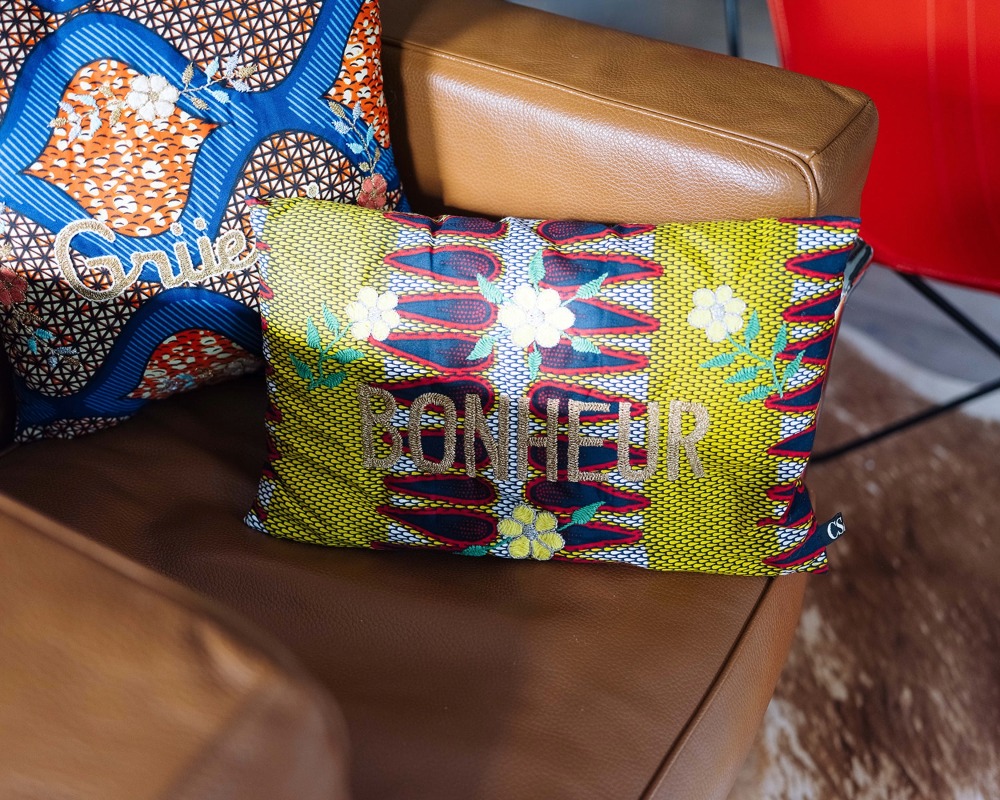
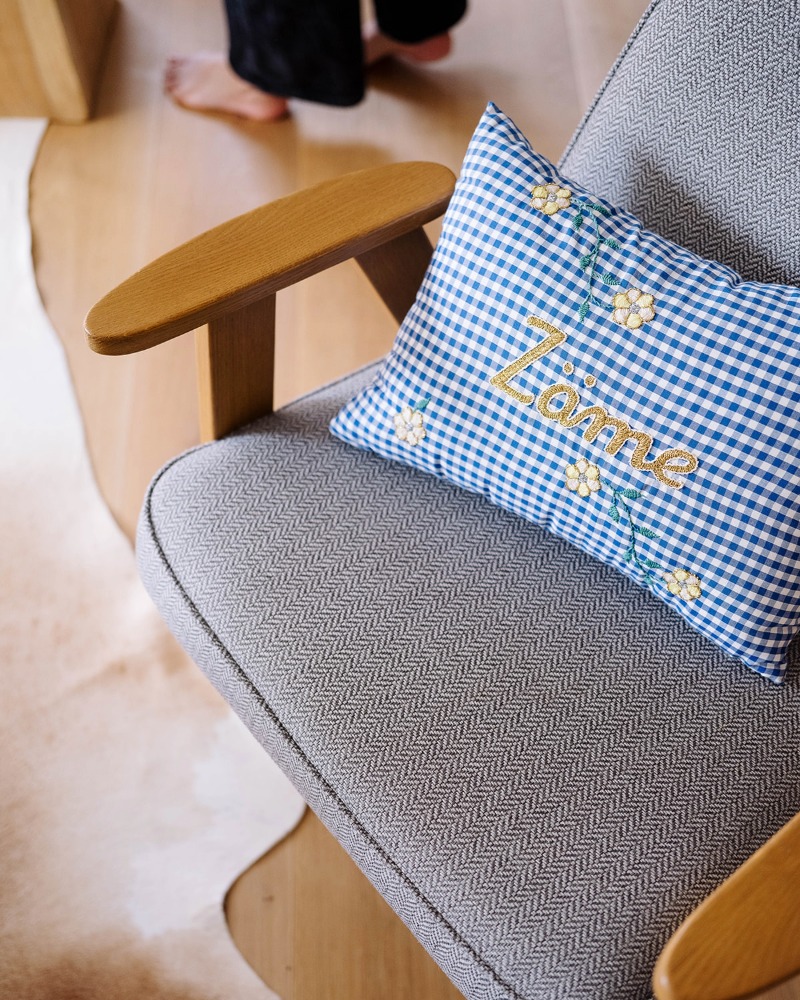
- CSAO cushions — including the Etcheaz exclusive Schweizerdeutsch capsule: Grüezi, Merci, Zäme. Embroidered in France, quietly local in their language.
- Fundamental Berlin crystal vases — mouth-blown in Bohemia from lead-free crystal. The MUSE vase in particular has the quality of holding light in a room rather than simply standing in it.
- Textiles, paper objects, accessories — the broader selection changes with the seasons and with new artist partnerships as they develop.
On the Location
Küsnacht sits between Zurich and Rapperswil on the eastern shore of the lake — the stretch known, with some accuracy, as the Gold Coast for the quality of its light and the low density of its architecture. It is fifteen minutes by train from Zurich HB, or a very pleasant drive along the lakeshore road.
It is not a destination you stumble upon. People who come to Seestrasse 155 tend to have made a small decision to do so, which means the people who walk through the door are, almost without exception, genuinely interested in what they find inside.
There is something to be said for that.
How to Visit
- Showroom address: Seestrasse 155, 8700 Küsnacht ZH
- By train: S-Bahn line S6 or S16 to Küsnacht (ZH), then a short walk to the lakeshore road
- By car: Parking available along Seestrasse
- Contact: info@etcheaz.com | +41 78 203 11 66
We recommend reaching out before visiting to confirm current opening hours and product availability — particularly for the Charlotte Bourrus globes, which move.
The full collection is also available online at etcheaz.ch, with shipping across Switzerland and payment in CHF.
Why Come In Person
There is a practical reason and a less practical one.
The practical reason: some of the objects we carry — the globes above all, but also the crystal vases and the cushions — reward the kind of close attention that a screen cannot fully support. The texture of hand-laid paper, the weight of mouth-blown glass, the density of embroidery thread — these things arrive differently in person.
The less practical reason: it is simply a pleasant experience to be in a room with well-made objects. No obligation, no pressure. Just the quiet of something done well, for a while.
A Second Location: The Valley, Kemptthal
For those coming from the north or east, Etcheaz also has a presence at The Valley in Kemptthal — a cultural and creative space in the former Maggi factory complex in the Tösstal valley. A different environment, the same curatorial eye.
Frequently Asked Questions
- Where is the Etcheaz showroom located?
The main Etcheaz showroom is at Seestrasse 155, 8700 Küsnacht ZH, on Zurich’s Gold Coast. A second location exists at The Valley in Kemptthal. - How do I get to Küsnacht from Zurich?
Küsnacht is approximately 15 minutes from Zurich HB by S-Bahn (lines S6 or S16). By car, follow the lakeshore road along the eastern shore of Lake Zurich. - Can I pick up online orders at the Etcheaz showroom?Yes. Orders placed at etcheaz.com can be collected in person at the Küsnacht showroom. This is particularly recommended for fragile or large items such as the Charlotte Bourrus paper globes.
- What makes Etcheaz different from other design shops in Zurich? Etcheaz focuses exclusively on independent European designers and artists, favouring limited editions and exclusive collaborations over standard retail ranges. Several pieces — including the Globe Zürich, Globe Switzerland XXL, and the Schweizerdeutsch cushion capsule — are produced exclusively for Etcheaz and cannot be found elsewhere. All prices are in CHF.
- Does Etcheaz ship across Switzerland? Yes. The full collection is available at etcheaz.com with nationwide shipping. For international orders, contact us directly at info@etcheaz.com
- Is Etcheaz the only place in Switzerland to buy Charlotte Bourrus globes? Yes. Etcheaz is the sole authorised retailer of Charlotte Bourrus paper globes in Switzerland.
Charlotte Bourrus and the Art of the Paper Globe: How a French Artist Maps the World by Hand
There is a particular kind of quiet that surrounds a well-made object. Not the silence of something empty, but the kind that comes from a great deal of attention, spent over a long time, on something small.
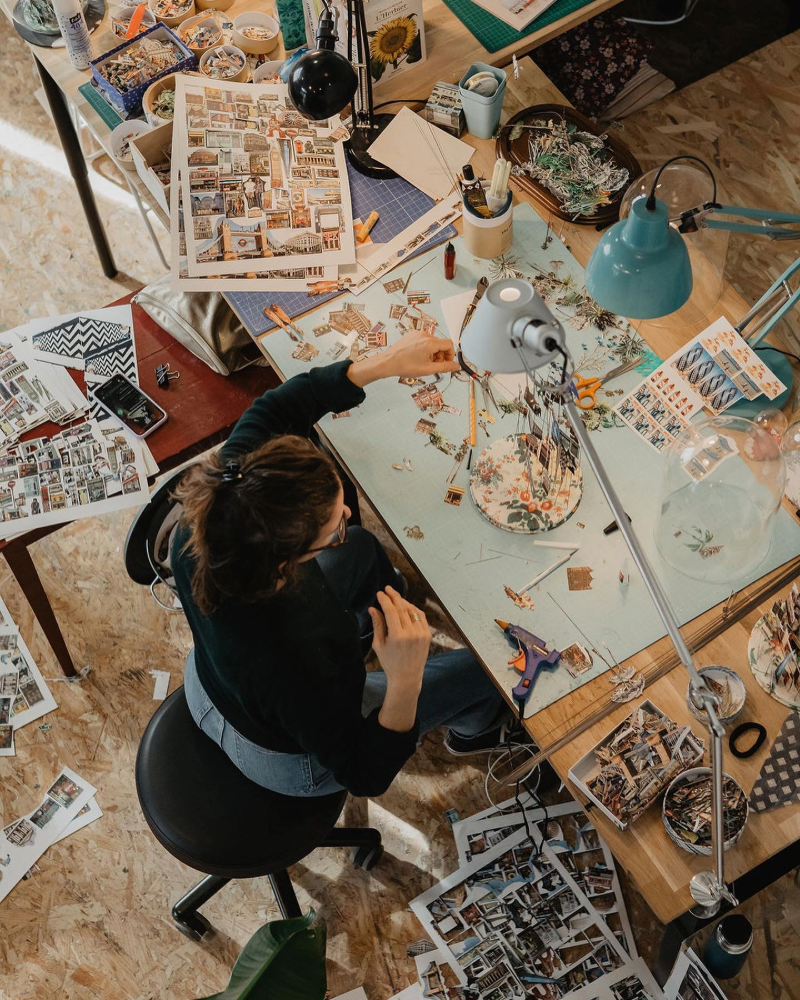
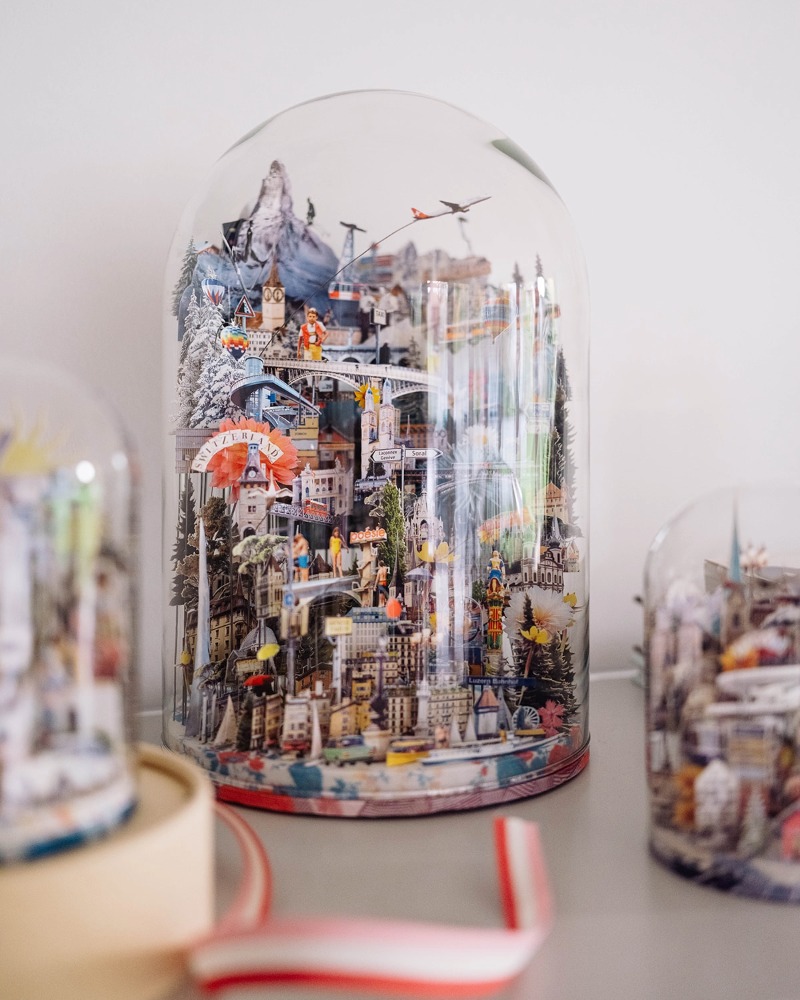
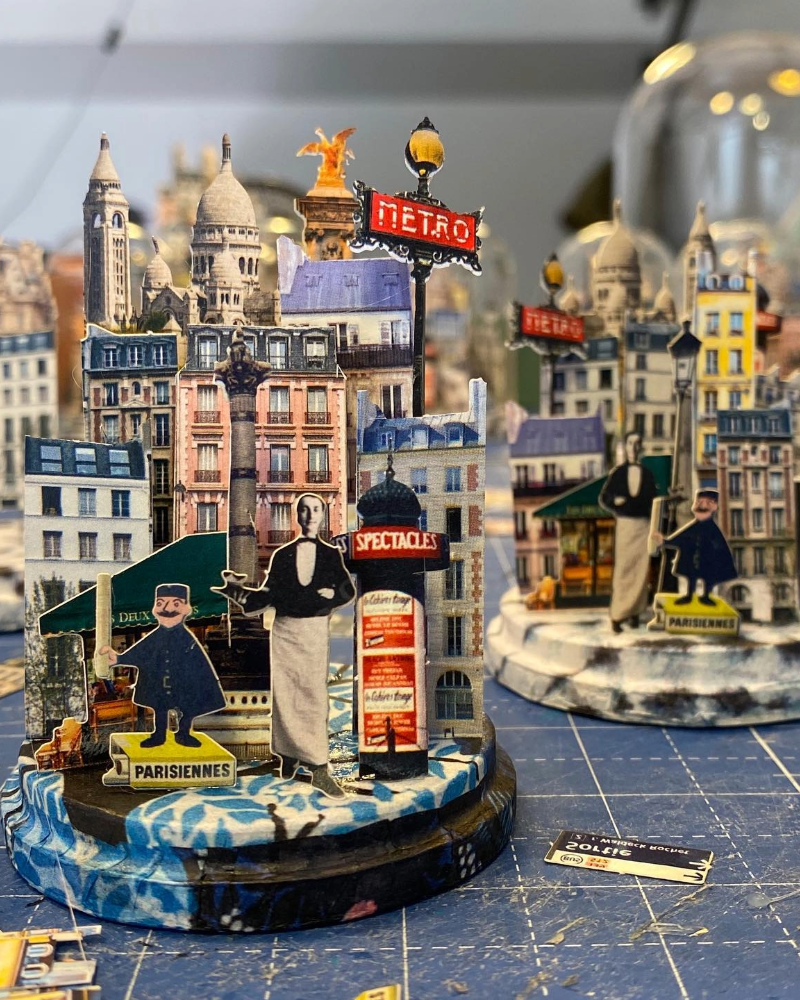
Charlotte Bourrus makes paper globes. She has been doing so for years, by hand, in her studio in France — shaping, layering, and creating a scenography, each one with the kind of patience that no machine has ever been able to replicate. The result is an object that sits in a room and changes it. Not loudly. Just enough.
From the Studio: How a Charlotte Bourrus Globe is Made
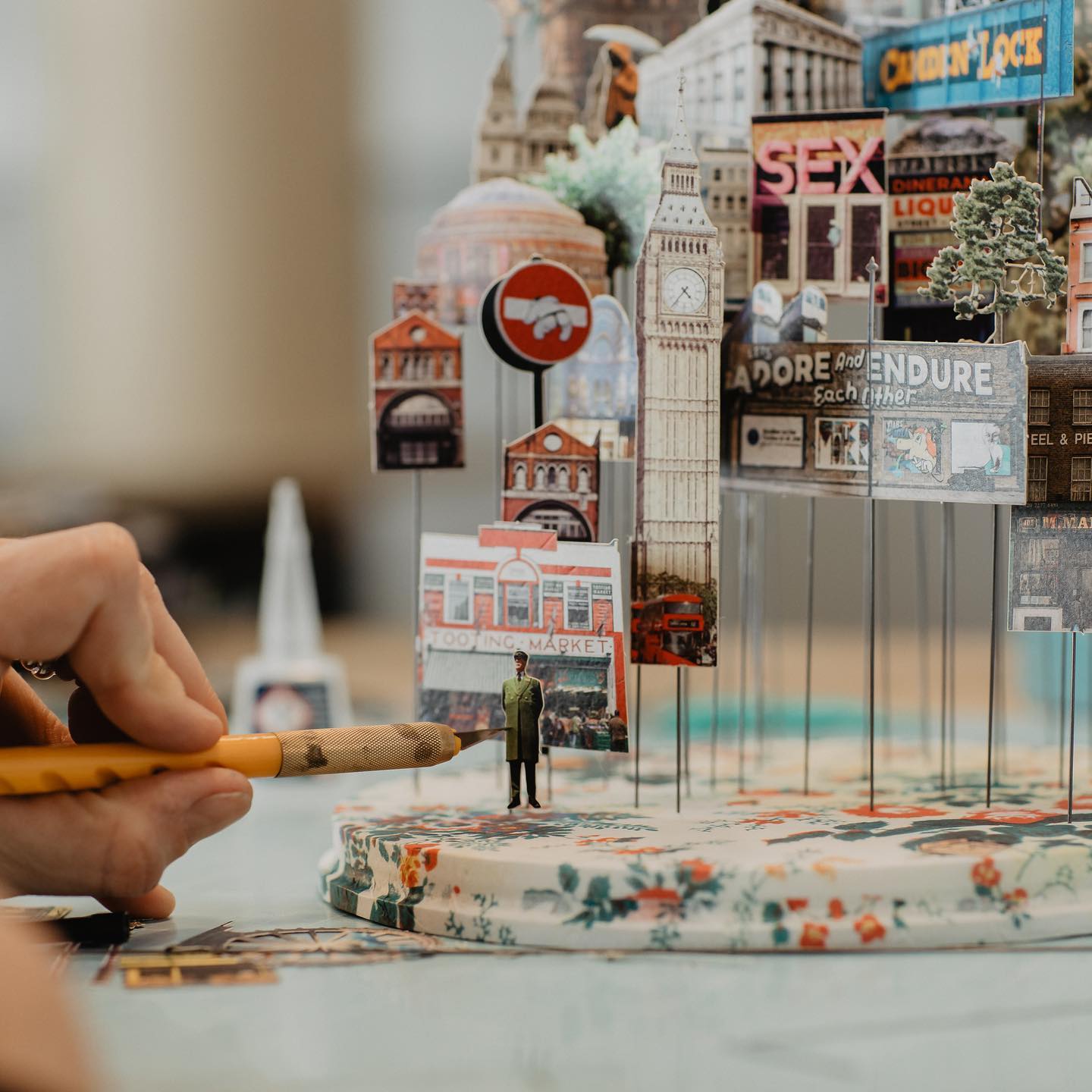
Every globe begins with paper. Not the smooth, indifferent kind you find in a printer tray — but paper with texture, with memory, with a surface that responds to the hand. Charlotte works with traditional paper art techniques, building up each globe layer by layer until it holds its shape and its weight.
The cartographic detail comes next. Each globe is hand-crafted — continents, mountain ranges, ocean, cities — rendered with the kind of details that makes you want to look closely, and then look again. Cities appear in careful script. Coastlines are observed, not approximated. The tones are muted and warm: aged ivory, deep sea blue, soft terracotta for land masses.
No two globes are identical. The hand that made them saw to that.
The Objects themselves
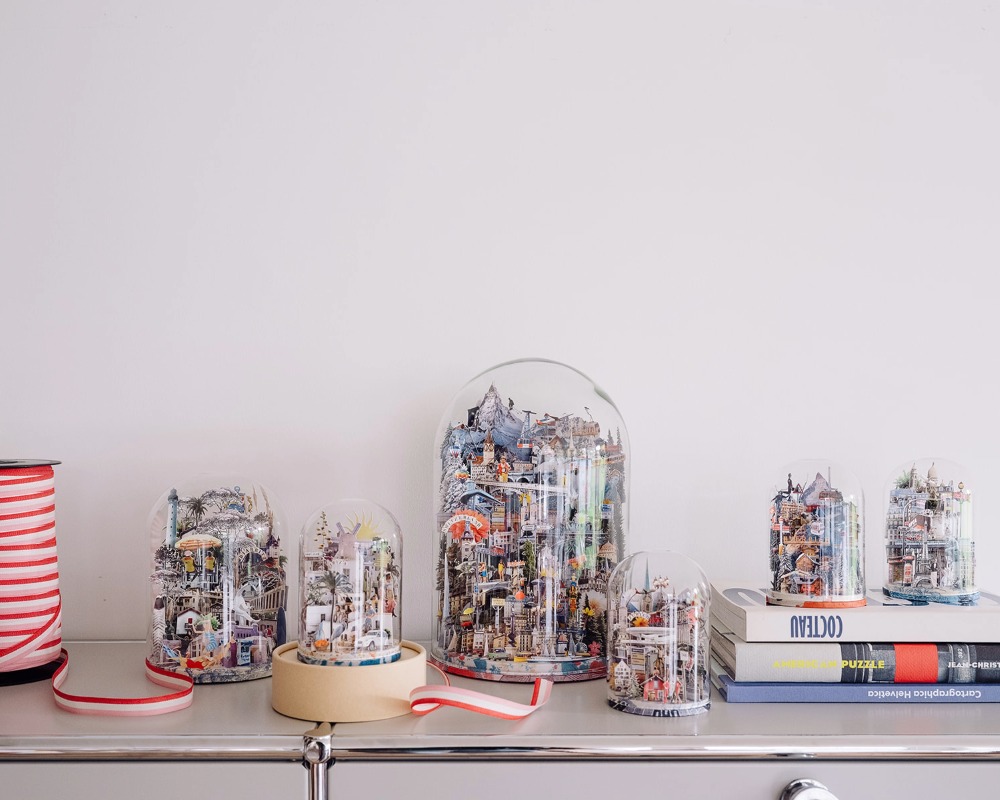
Charlotte Bourrus produces globes in several sizes — from intimate miniature pieces to statement globes that anchor a room. Each one belongs to a numbered edition, which means each one will, eventually, be the last of its kind.
At Etcheaz, we carry her full collection, including two editions created in exclusive collaboration with us: the *Globe Zürich* and the *Globe Switzerland *. These pieces were designed specifically for the Swiss market and Swiss lovers — for homes here, for people who feel a connection to this country’s geography and want to hold a piece of it on a shelf.
The Globe Zürich features the city’s lake, its hills, its boroughs — rendered with the same unhurried hand that Charlotte applies to every surface she works on. The Globe Switzerland takes a wider view: the Alps in full, the valleys between them, the country as a landscape rather than a border.
Both are available exclusively at Etcheaz in Switzerland, priced in CHF, with the option of in-person pickup at our Küsnacht showroom on Seestrasse 155.
Why a Globe, Still?
It is a reasonable question. We have screens that show us any corner of the world in seconds. Satellites map every street. The globe, as an information tool, has been obsolete for a long time.
And yet.
There is something the screen cannot do. It cannot sit on a table and be turned slowly, and felt, and admired from a particular angle in a particular light. It cannot age gracefully on a shelf. It cannot be the thing a guest reaches for without thinking, turns in their hands, and puts back gently.
Charlotte Bourrus’s globes are not about information. They are about the pleasure of the world as an object — something finite, holdable, beautiful. In that sense, they are more relevant now than ever.
A Note on Collecting
Charlotte’s globes are produced in limited series. When an edition closes, it closes. There are no reprints, no reorders, no restocks.
This is not a marketing strategy. It is simply the natural consequence of making things by hand at a pace that cannot be hurried. If you are considering one of her globes, the honest advice is not to wait too long.
Where to Find Charlotte Bourrus Globes in Switzerland
Etcheaz is the sole authorised retailer of Charlotte Bourrus globes in Switzerland. Her collection is available on etcheaz.com, with shipping across Switzerland and the option of personal pickup at our showroom in Küsnacht, on Zurich’s Gold Coast.
We are one of the few places in Europe where her work can be seen in person before purchase — which, for an object this tactile, this present, we recommend.
Frequently Asked Questions
- What makes Charlotte Bourrus globes unique?
Each globe is hand-crafted using traditional papier-mâché techniques and painted by hand. No two pieces are identical. They are produced in numbered limited editions, making them genuinely collectible objects rather than decorative reproductions.
- Where can I buy Charlotte Bourrus globes in Switzerland?
Etcheaz is the only authorised retailer of Charlotte Bourrus globes in Switzerland. Her full collection is available at etcheaz.com, with pickup possible at our showroom at Seestrasse 155, Küsnacht (Zurich). Prices are in CHF.
- Are Charlotte Bourrus globes limited edition?
Yes. Each globe belongs to a numbered series. Once an edition is complete, it is not reprinted. This is a direct consequence of the hand-made production process — each globe takes significant time and skill to produce.
- What sizes are available?
Charlotte Bourrus produces globes in several sizes, from smaller desktop pieces to larger statement globes. Our current selection at Etcheaz includes both, as well as the two exclusive Etcheaz collaborations: the Globe Zürich and the Globe Switzerland XXL.
- Can I visit the showroom to see the globes in person?
Yes. Our Küsnacht showroom at Seestrasse 155 carries a selection of Charlotte Bourrus globes. We recommend contacting us before visiting to confirm current availability: info@etcheaz.com
Behind the Puzzle: The Story of Taquin and the Wall Art that plays with Perception
Most wall art asks very little of the person looking at it. You hang it. You walk past it. Eventually, you stop seeing it.The Taquin collection works differently. It asks you to look, and then to touch, and then to think — and it refuses to let you stop seeing it, because the image in front of you is never quite the same twice.
Taquin is a sliding puzzle. It is also, depending on how you approach it, a painting, a game, a meditation on order and disorder, and one of the more genuinely original ideas in contemporary decorative art. It has been part of the Etcheaz collection since the beginning, for the simple reason that nothing else does what it does.
What is a Taquin?
The taquin — known in English as a sliding puzzle — has been around since the late nineteenth century. The original, invented in the 1870s, was a 4×4 grid of numbered tiles with one space missing. The goal was to slide the tiles into the correct sequence. Simple in concept, maddening in practice, and almost impossible to put down once you started.
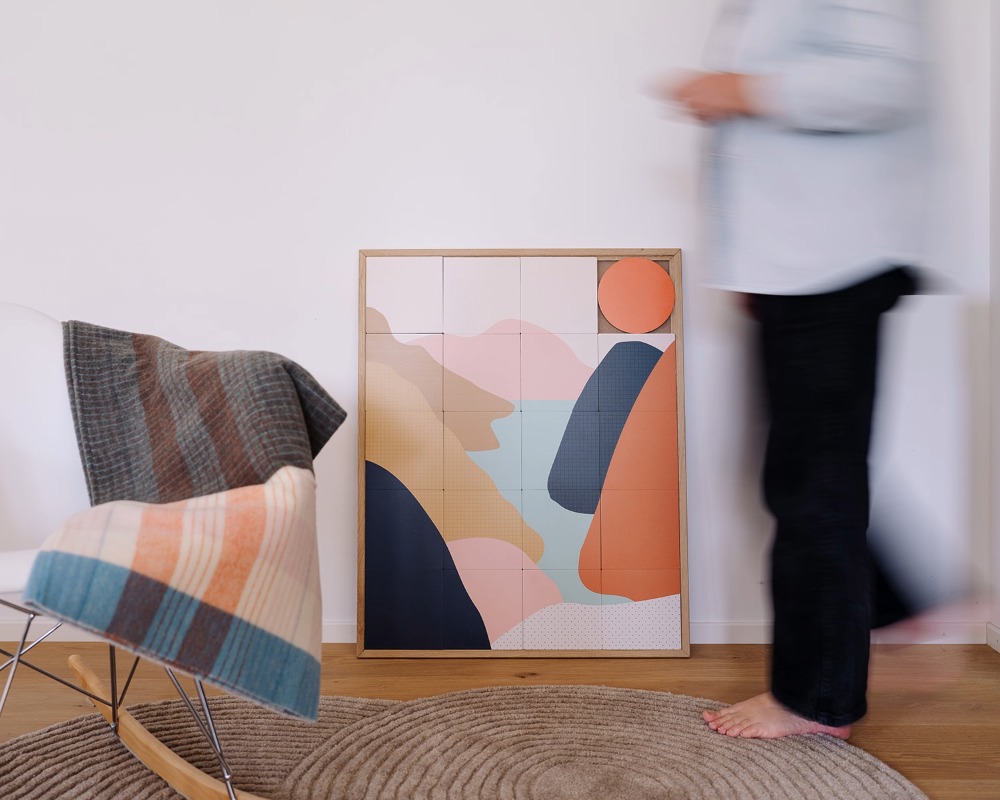
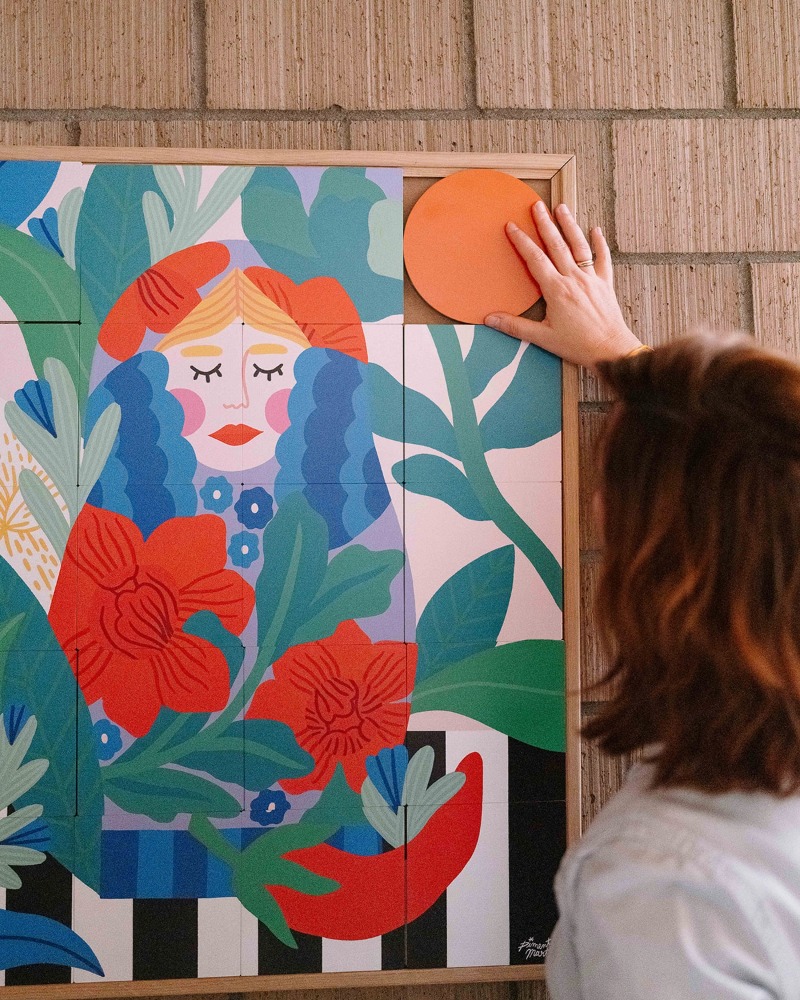
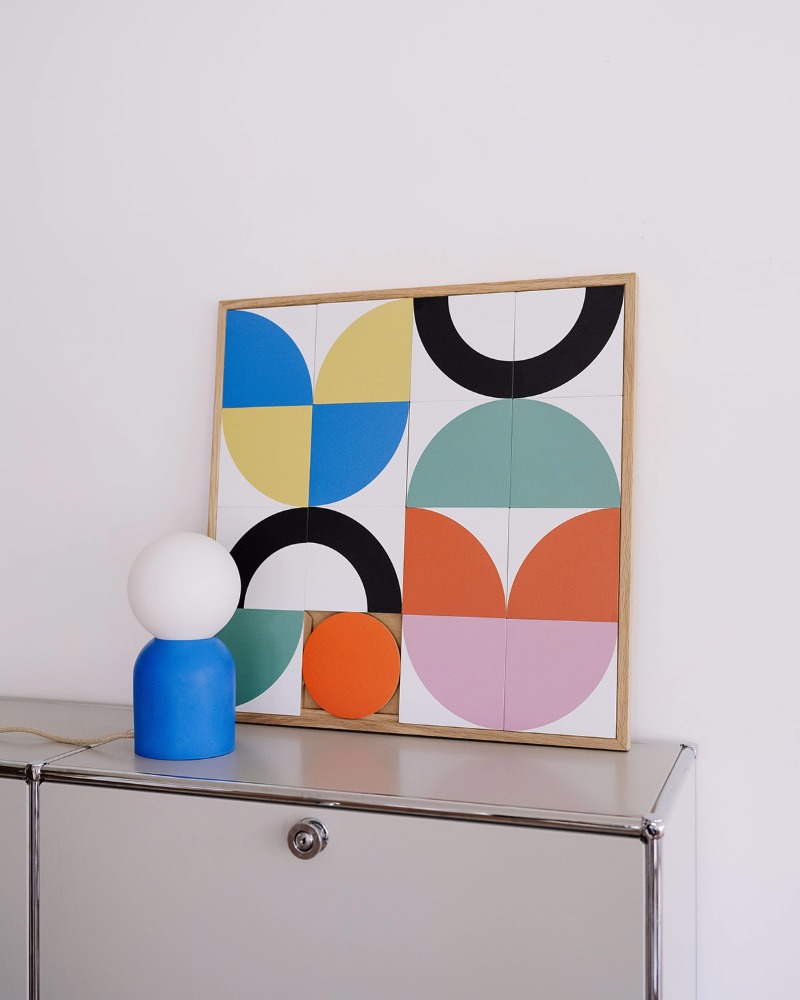
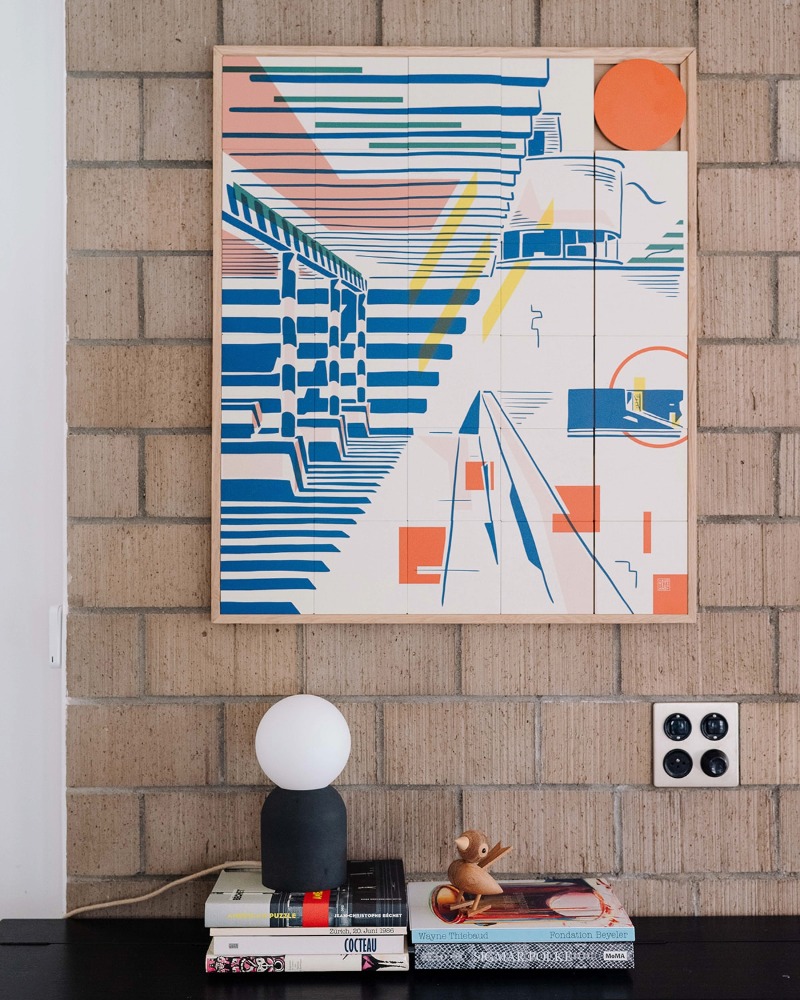
The Taquin collection at Etcheaz takes this mechanism and applies it to something altogether different: a photographic or illustrated image, divided into a grid of moveable wooden tiles, mounted in a frame designed to hang on a wall.
In its solved state, it is a complete image — a piece of wall art like any other. But the tiles move. The image can be shuffled, rearranged, broken apart and reconstructed. What hangs on the wall is not a fixed thing but a variable one — something that changes each time a hand passes over it.
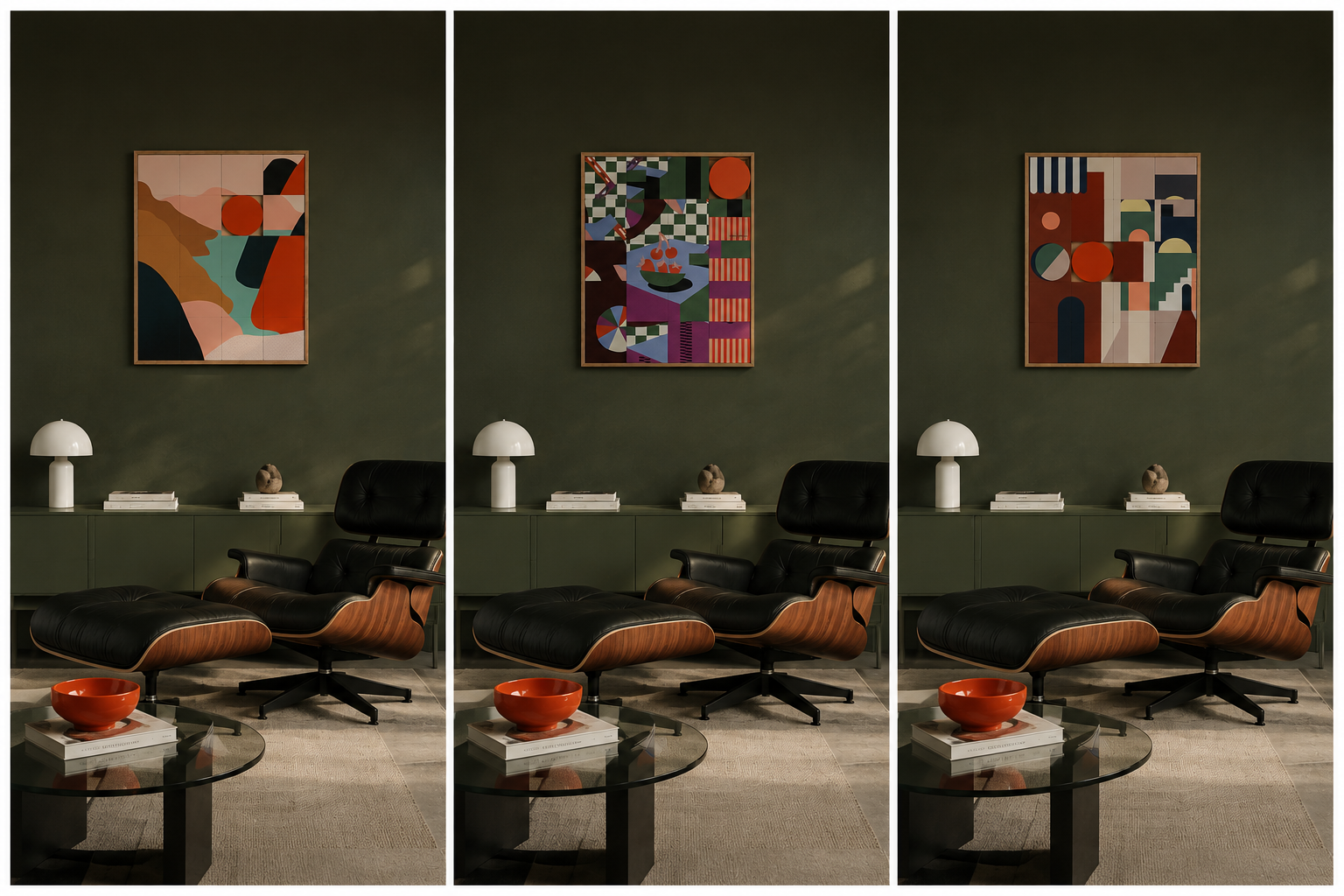
The Taquin collection at Etcheaz comprises seventeen configurations, spread across several image families. Some are photographic — landscapes, architectural details, natural textures. Others are more graphic, working with colour fields and geometric compositions that become almost abstract when the tiles are displaced.
Each piece is produced in a limited edition. The frame is clean and considered, designed to disappear around the work rather than compete with it. The tiles themselves are printed with precision: when the puzzle is solved, the joins between tiles are barely visible. The image holds.
Sizes range from compact desktop pieces — the kind that sit on a shelf and invite the passing hand — to larger wall formats that function primarily as art, with the puzzle element as a secondary pleasure.
All are available at Etcheaz.
The Space it occupies
There is a category problem with the Taquin collection, and it is part of what makes it interesting.
It is not a toy, though it has the mechanism of one. It is not conventional wall art, though it hangs on a wall and holds an image. It is not a game in the competitive sense, though there is a clear objective — return the image to its completed state — and a satisfying difficulty in achieving it.
What it is, more precisely, is an object that changes the relationship between a piece and the person who lives with it. Most decorative objects are passive. They receive your attention and return it unchanged. The Taquin demands something back: an engagement, a decision, a small act of restoration.
For someone who finds pure decoration slightly inert, who wants their home to contain things that do something — this is exactly the point.
A Note on the Name
The word *taquin* is French, and it means something like *teasing* — a gentle, persistent provocation. It is a good name for an object that unsettles a fixed image and then waits for you to restore it.
There is also, in French, the phrase *ne pas être taquin* — to not be a tease, to not withhold. The puzzle, to its credit, withholds nothing. The mechanism is transparent. The challenge is real. The image, when you complete it, is genuinely satisfying.
Behind the Studio: the People who Make Taquin
Taquin did not begin as a product. It began as a question.
What would happen if you took a work of art — something normally hung, protected, and looked at from a respectful distance — and gave people permission to touch it?
The answer started with a meeting. Cécile Makowski, a designer, and Emmanuel Ghillebaert, who runs HELLIN, a family furniture business with its own relationship to craft and material, found that they were asking the same question from different directions. A third voice joined early — bringing operational rigour to what might otherwise have remained a beautiful idea.
The result is a studio with its own design bureau, its own production process, and a very specific way of choosing what goes onto a frame.
How they choose
Every visual that makes it into the Taquin collection has been tested at full scale before a single piece goes into production. The team looks for works that provoke an emotion, tell a story, and hold up — visually and physically — when divided into a grid of moveable tiles.
The artists they work with range from emerging voices to established names: Nina Bruneau, Les Petits Yéyés, Tommy Knuts. And then there are the collaborations that arrive with their own weight — Matisse, Fernand Léger, works that have hung in museums for decades and now find themselves on a shelf, sliding.
These collaborations take us back to museum visits as children — feet dragging, minds elsewhere. Today we love bringing those works into homes differently. More playful. More accessible. Still art.
That last phrase matters. Still art. The Taquin team has no interest in novelty for its own sake. The puzzle mechanism is a means, not an end — a way of changing the relationship between a person and an image, not of replacing the image with a gimmick.
How they make
Production happens one piece at a time, with printing partners located just a few kilometres from the Taquin workshop. Each frame is assembled by hand in their atelier. The joins between tiles, when the puzzle is solved, are barely visible. The image holds.
This is not a coincidence. It is the result of a process that treats each piece as a singular object rather than a unit in a run — local, artisanal, deliberate in a way that leaves a trace in the finished object, even when you cannot see exactly where.
We want people to become co-creators. The Taquin breaks the codes of the traditionally untouchable artwork. Here, you stimulate your own creativity, you take ownership of the visual according to your mood — and nothing is ever fixed.
Nothing is ever fixed. For an object that lives on a wall, that is a remarkably generous thing to offer.
The Taquin pieces at Etcheaz are among the most consistently remarked upon in the showroom. Visitors who come in for something else — a candle, a globe, a cushion — stop at the Taquin display and spend longer there than they planned. The tiles move easily. The impulse to shuffle and re-solve is immediate.
We carry the full range of seventeen configurations, available in store at Seestrasse 155, Küsnacht, and online at etcheaz.ch
Frequently Asked Questions
- What is Taquin wall art?
Taquin wall art is a limited-edition decorative object based on the sliding puzzle mechanism. Each piece consists of a framed image divided into moveable tiles — in its solved state it functions as wall art; the tiles can be shuffled and rearranged, making the image variable. The Taquin collection at Etcheaz comprises seventeen configurations, all limited edition.
- Is Taquin wall art limited edition?
Yes. All pieces in the Taquin collection at Etcheaz are produced in limited editions. Once an edition closes, it is not reprinted.
- Where can I buy Taquin puzzle wall art in Switzerland?
The full Taquin collection is available at Etcheaz — online at etcheaz.com and in person at the showroom at Seestrasse 155, Küsnacht ZH. .
- What sizes does the Taquin collection come in?
The Taquin collection is available in several sizes, from smaller shelf pieces to larger wall-format works. Specific dimensions are listed on each product page at etcheaz.com.
- Is the Taquin collection a good gift?
It is one of the more distinctive gifts in the Etcheaz collection — suitable for people who appreciate objects that combine craft with concept. It works well for design enthusiasts, people with curious minds, and anyone who finds conventional wall art too passive. Presented in its frame, it requires no additional wrapping.
How to Style a Spring Interior: Textiles, Candles & Design Objects
There is a particular feeling that arrives with spring.
The light changes first — softer in the morning, longer in the evening, finding its way into corners of the room that spent the winter in shadow. Then comes the instinct to move things around. To open windows. To replace the heavy and the dark with something lighter, something that breathes.
At etcheaz, we think of spring not as a trend to follow, but as a shift in feeling to welcome. Here is how we approach it — with textiles, scent, and objects chosen to make a home feel like itself again, only better.
Start with Light — Let your Textiles Breathe
Winter interiors rely on weight: thick throws, dark tones, layers of warmth. Spring asks for the opposite.
This is not about removing everything and starting again. It is about editing — swapping one heavy element for something that lets light pass through it, choosing colours that reflect rather than absorb.
What to change:
- Fold away the heaviest throws and bring out lighter weights — merino wool or cotton blankets in muted, natural tones
- Swap dark cushion covers for something with a graphic print or unexpected texture
- Move a throw from the sofa to a basket or ladder — displayed rather than just draped
What to keep:
Everything that already feels right. Spring styling is about addition and subtraction, not transformation.
Our pick: Voited CloudTouch Blanket
The Voited CloudTouch is the definition of a transitional textile. Waterproof, packable, and made from recycled materials, it moves effortlessly between indoors and out — on the sofa one afternoon, on a picnic blanket the next. Available in soft, considered colours that work in any interior.

Bring in Colour — but Let it Surprise you
Spring colour in interiors is often misunderstood. It does not mean pastels everywhere, or a sudden explosion of yellow.
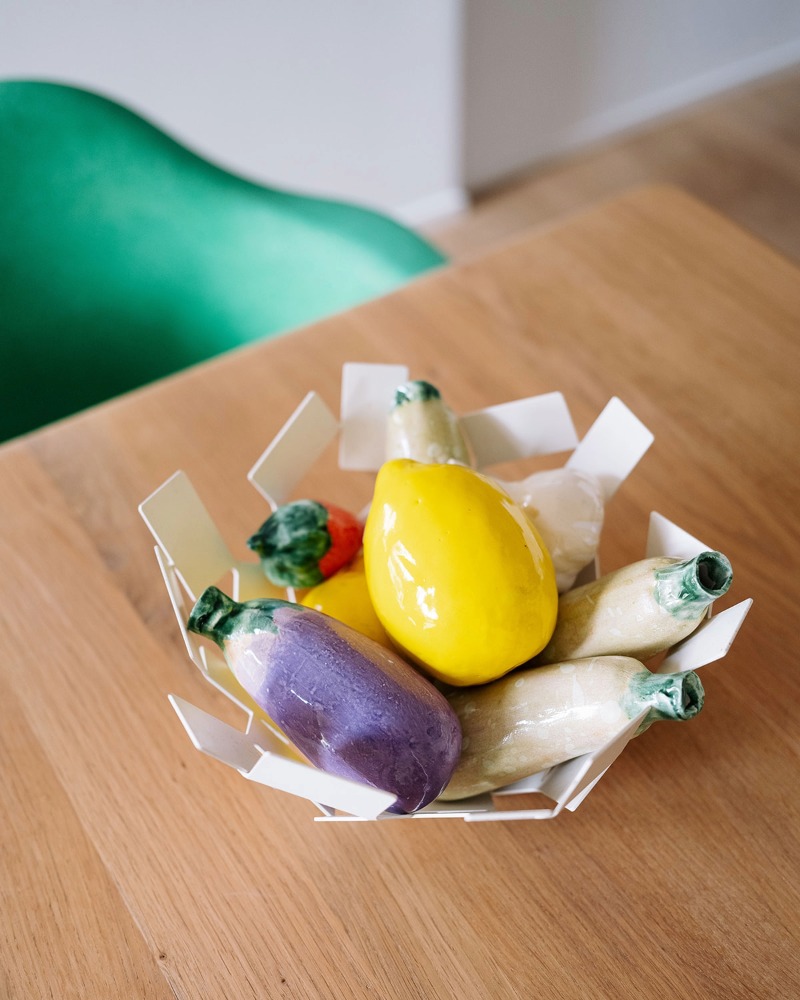
The most considered approach is to introduce one or two unexpected colour notes — a saffron vase on a shelf, a glazed ceramic lemon on a kitchen counter, a cushion in a tone you would not usually reach for. The rest of the room stays as it is. The contrast does the work.
The colours we are thinking about this spring:
- Saffron yellow and warm amber — present without being aggressive
- Deep emerald and forest green — grounding, not heavy
- Soft opal and warm white — for light without coldness
- Terracotta and earthy red — connecting the interior to the season outside
Our pick: Vase MUSE
A single hand-blown crystal vase in saffron yellow or emerald green changes the quality of a shelf entirely. The MUSE by Fundamental Berlin is the kind of object that looks different at every hour of the day — catching morning light one way, catching evening light another.
One vase. Infinite rooms.
Also consider: Glazed Ceramic Fruits & Vegetables
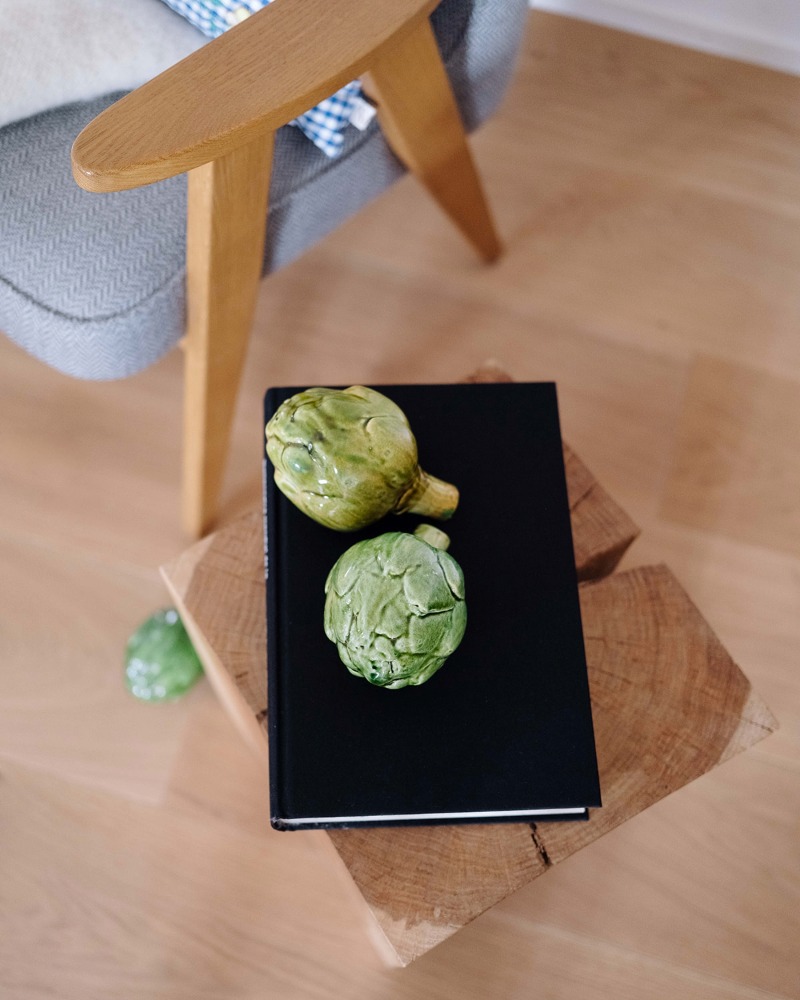
A lemon on a windowsill. An orange on a kitchen shelf. Sometimes the smallest objects carry the most seasonal feeling — and the hand-glazed ceramic fruits at etcheaz do exactly that. An affordable, joyful way to bring spring into any corner of the home.

Change the Scent — Let Spring In through the Air
We underestimate how much a room’s atmosphere is shaped by what we smell rather than what we see.
Winter scents tend towards warmth and spice — amber, vanilla, smoke, pine. Spring invites something different: fresher, greener, more open. Citrus, fig leaf, white florals, clean cotton. Scents that feel like open windows.
Changing the candle on your table is one of the simplest and most immediate ways to shift the feeling of a space. It takes thirty seconds and it works every time.
What to look for in a spring candle:
- Natural wax — burns cleaner and carries fragrance more honestly
- Citrus or botanical notes — lemon, citronella, green tea, white flowers
- A considered aesthetic — the candle is an object on your table long before it is lit
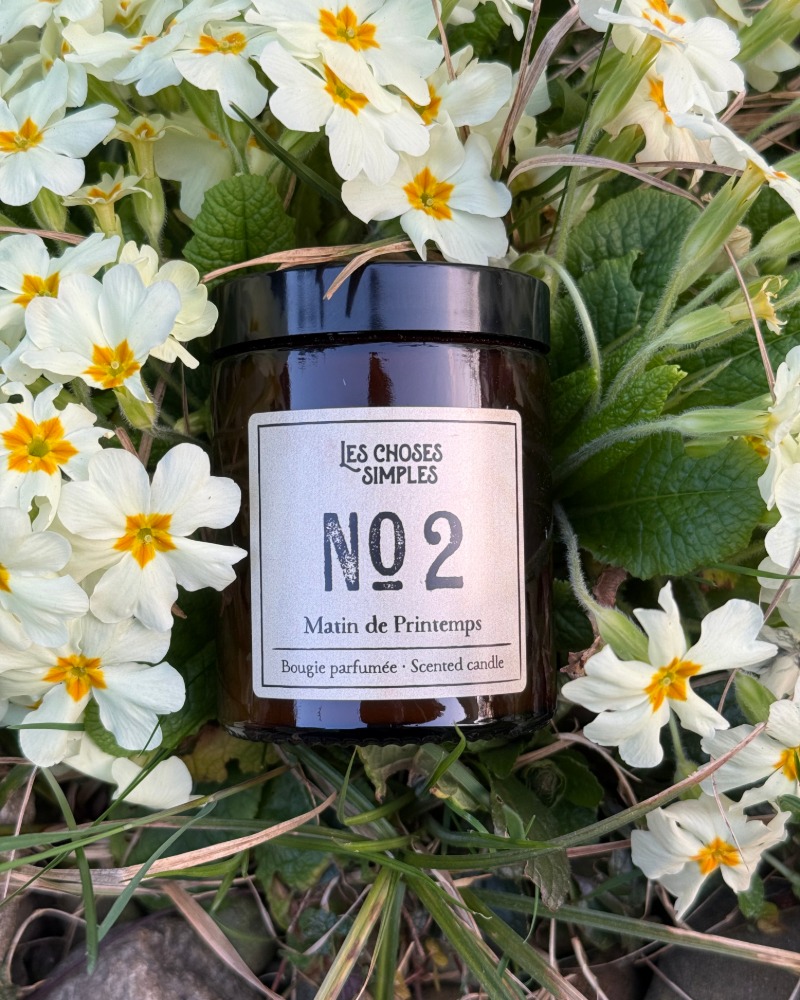
Our pick: Candle N°2 Matin de Printemps — Les Choses Simples
Designed for the transition between indoors and outdoors, the citronella candle by Les Choses Simples is one of our favourite spring objects. Natural wax, a fragrance that feels like the first warm evening of the year on a terrace. Beautiful unlit, transformative when burning.
Think about the Transition — Inside and Outside
One of the defining characteristics of spring living is the blurring of the boundary between interior and exterior. The terrace gets a cushion. The picnic blanket comes out of storage. Objects start moving between the kitchen table and the garden.
This is worth designing for deliberately — choosing objects that work in both contexts, and creating a visual continuity between what is inside and what is outside.
A blanket that goes from sofa to picnic. Candles that burn equally well on a dining table and a terrace. Cushions that survive outdoor evenings as well as indoor mornings.
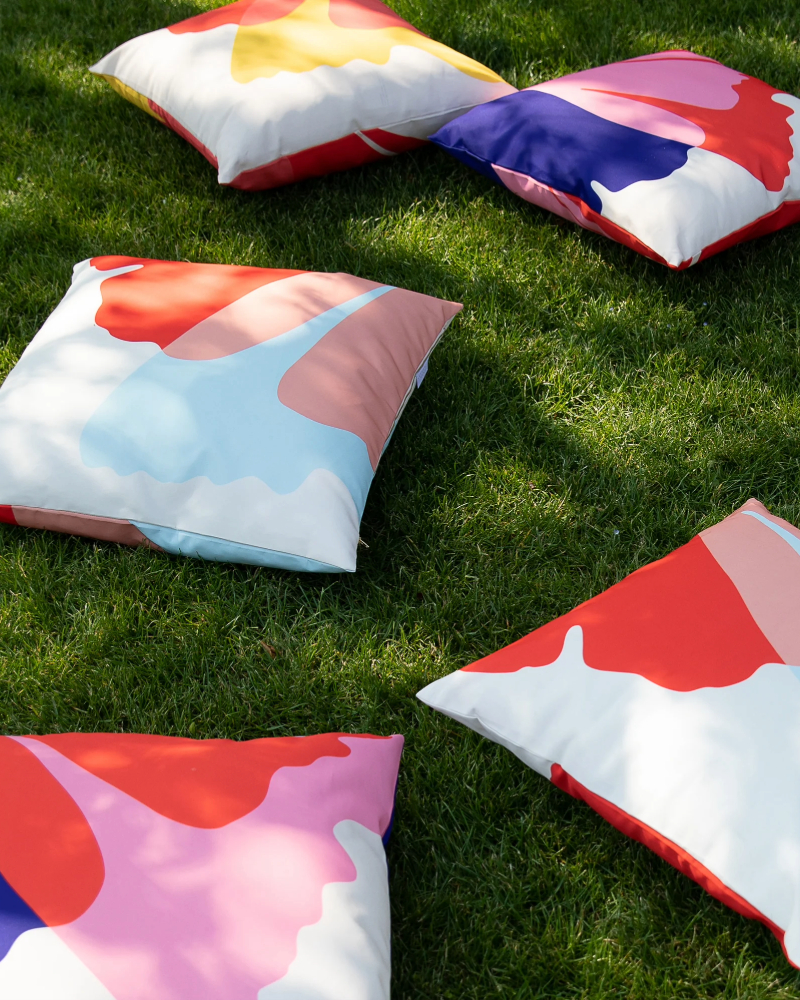
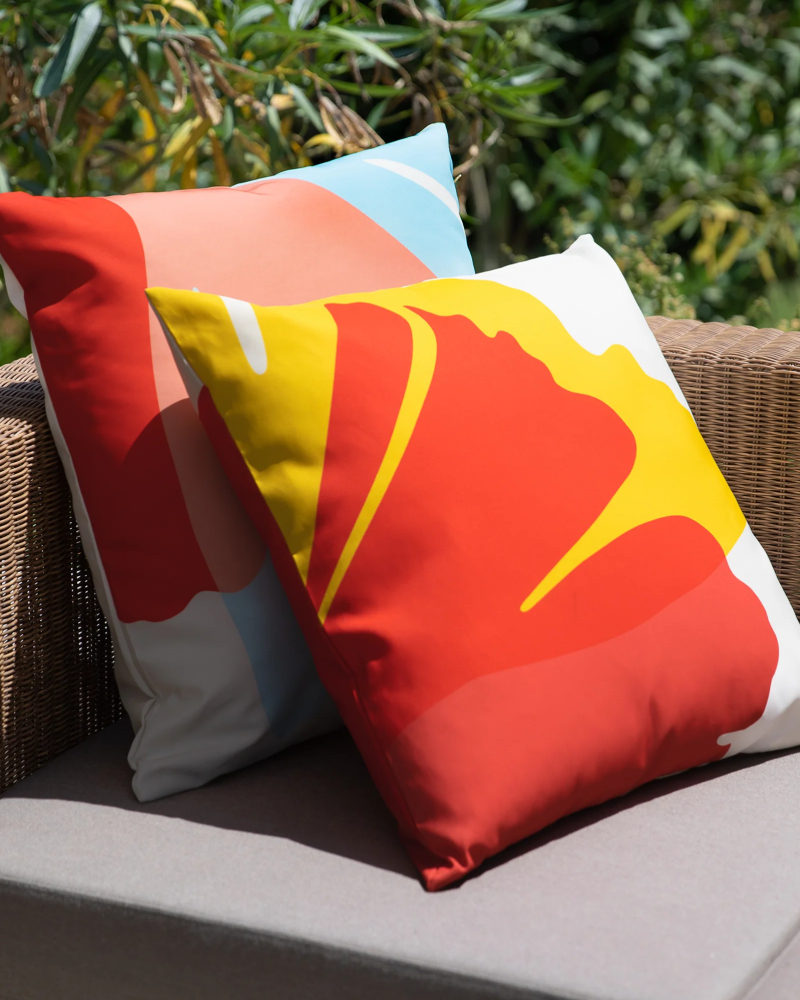
Our pick: Outdoor Cushion — Common Modern
Designed specifically for the transition between indoor and outdoor use, these cushions bring the same design sensibility to a garden chair or terrace bench as to a living room sofa. Durable, considered, and available in botanical prints that feel entirely of this season.
Edit one Surface at a Time
The most common mistake in seasonal restyling is trying to redo everything at once.
Instead, choose one surface — a shelf, a coffee table, a windowsill, a console — and treat it as a small composition. Remove what no longer feels right for the season. Add one or two new objects. Stand back and look.
Then leave it for a week before touching anything else.
A spring shelf composition to try:
- One vase with a single stem or branch of spring blossom
- One ceramic object for texture and colour (a glazed lemon, a small sculptural piece)
- One candle — unlit, but present as an object
- One book, lying flat, as a base for the other objects
- One empty space — resist the urge to fill it
The empty space is as important as everything else.
The Etcheaz Spring Edit — All in One Place
If you want to refresh your interior this spring without starting from scratch, here is where to begin:
- For textiles: [Voited CloudTouch Blankets](https://etcheaz.com/textile-throws-towel/)
- For colour: [Vase MUSE — Fundamental Berlin](https://etcheaz.com/vase-tableware/)
- For scent: [Natural Candles — Les Choses Simples](https://etcheaz.com/candles-home-fragrance/)
- For the terrace: [Outdoor Cushions & Blankets](https://etcheaz.com/outdoor/)
- For small details: [Glazed Ceramic Fruits](https://etcheaz.com/vase-tableware/)
Or visit us at our Küsnacht showroom — where the spring collection is already on display, and where we are always happy to help you find the right piece for your space.
Explore the full etcheaz collection
6 Meaningful Design Gifts for Mother’s Day 2026
This Mother’s Day, we’d like to suggest a different approach: not a bouquet that will fade, not a box of chocolates that will disappear, but an object with a soul. Something chosen with the same care and attention she gives to everything around her.
At etcheaz, we curate European design objects that carry meaning — made by designers and artisan houses who believe that beauty and intention belong in everyday life.
Here are six pieces we would be proud to give.
1. Mohair & Alpaca Throw by Brun de Vian-Tiran
For the mother who deserves to be wrapped in something extraordinary.
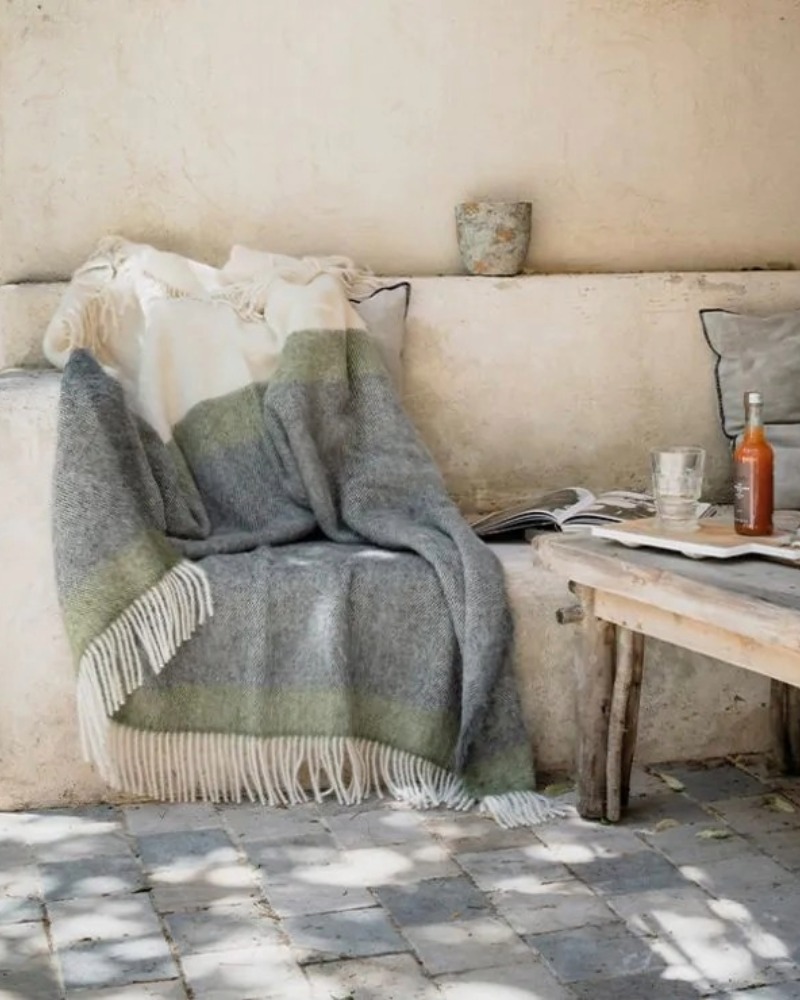
Brun de Vian-Tiran has been weaving in France since 1808. The 100% mohair or alpaca throw is the kind of object that earns its place on a sofa and stays there for decades — impossibly soft, naturally warm, and more beautiful with every year that passes.
It is not a seasonal gift. It is a lasting one.
Why we love it: The weight of it, the softness of it, the history behind it. There is no substitute for this quality of mohair and alpaca, made by a house that has spent over two centuries perfecting it.
Perfect for: The mother who loves her home and the objects in it. The one who notices quality.

2. Vase MUSE — Fundamental Berlin
For the mother whose home already tells a story — and deserves another chapter.
The MUSE vase by Fundamental Berlin is mouth-blown crystal glass, shaped with a quiet precision that only becomes more apparent the longer you look at it. Available in several colours — saffron yellow, opal white, emerald green, ruby — each one brings a different light into a room.
This is not a vase you hide flowers in. It is a vase you place somewhere and let it be.
Why we love it: It manages to be both sculptural and understated — which is one of the hardest things to achieve in design.
Perfect for: The mother with an eye for beautiful interiors. The one who already has everything, but would never have thought to buy this for herself.


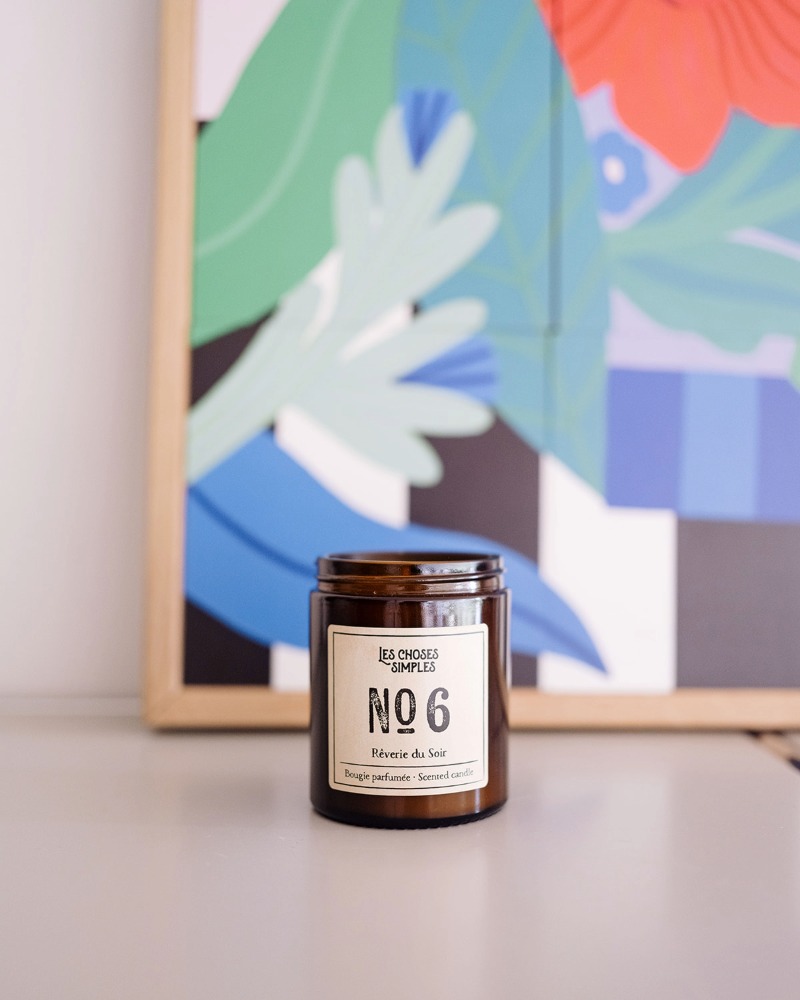
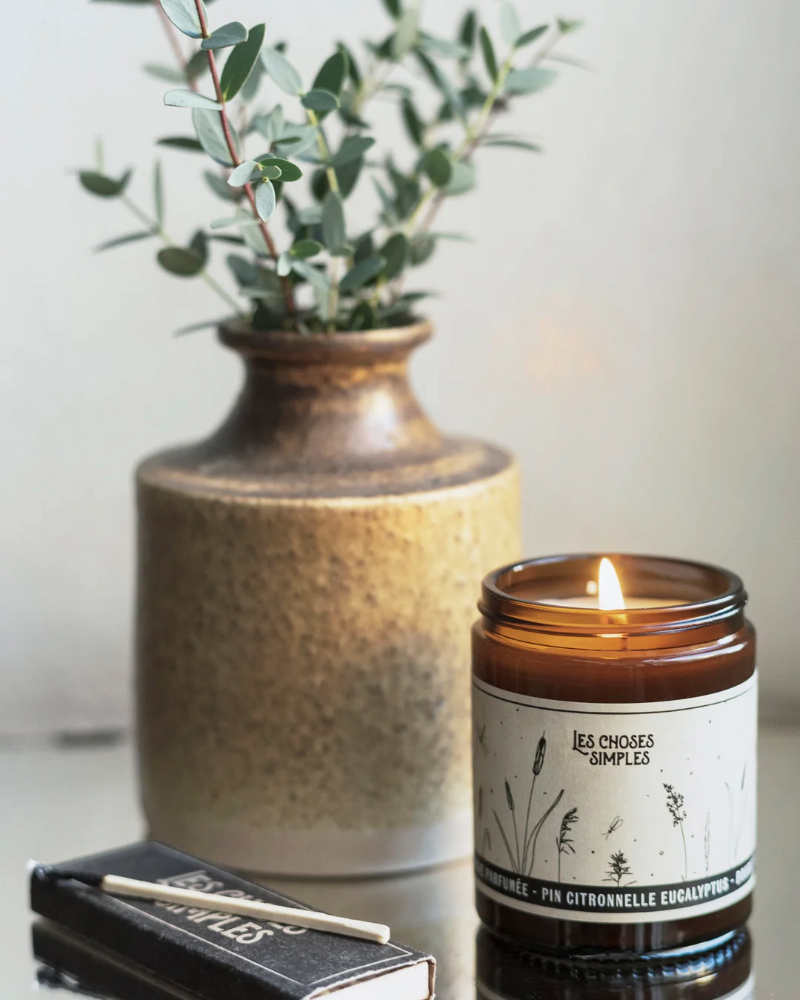
3. Natural Scented Candle — Les Choses Simples
For the mother who creates atmosphere wherever she goes.
Les Choses Simples — “the simple things” — is a French design house that makes candles the way candles should be made: natural wax, fine fragrance, long burn time, and a considered aesthetic that makes the object itself worth keeping long after the wick has burned down.
Light it once and the room changes. That is the only way to describe it.
Why we love it: The scents are sophisticated without being overpowering. The design is refined without being cold. It is the definition of a considered gift.
Perfect for: The mother who appreciates the ritual of lighting a candle at the end of the day. The one who loves her home to smell as beautiful as it looks.
4. Tableau Taquin, Irène
For the mother who sees art differently — and invites others to do the same.
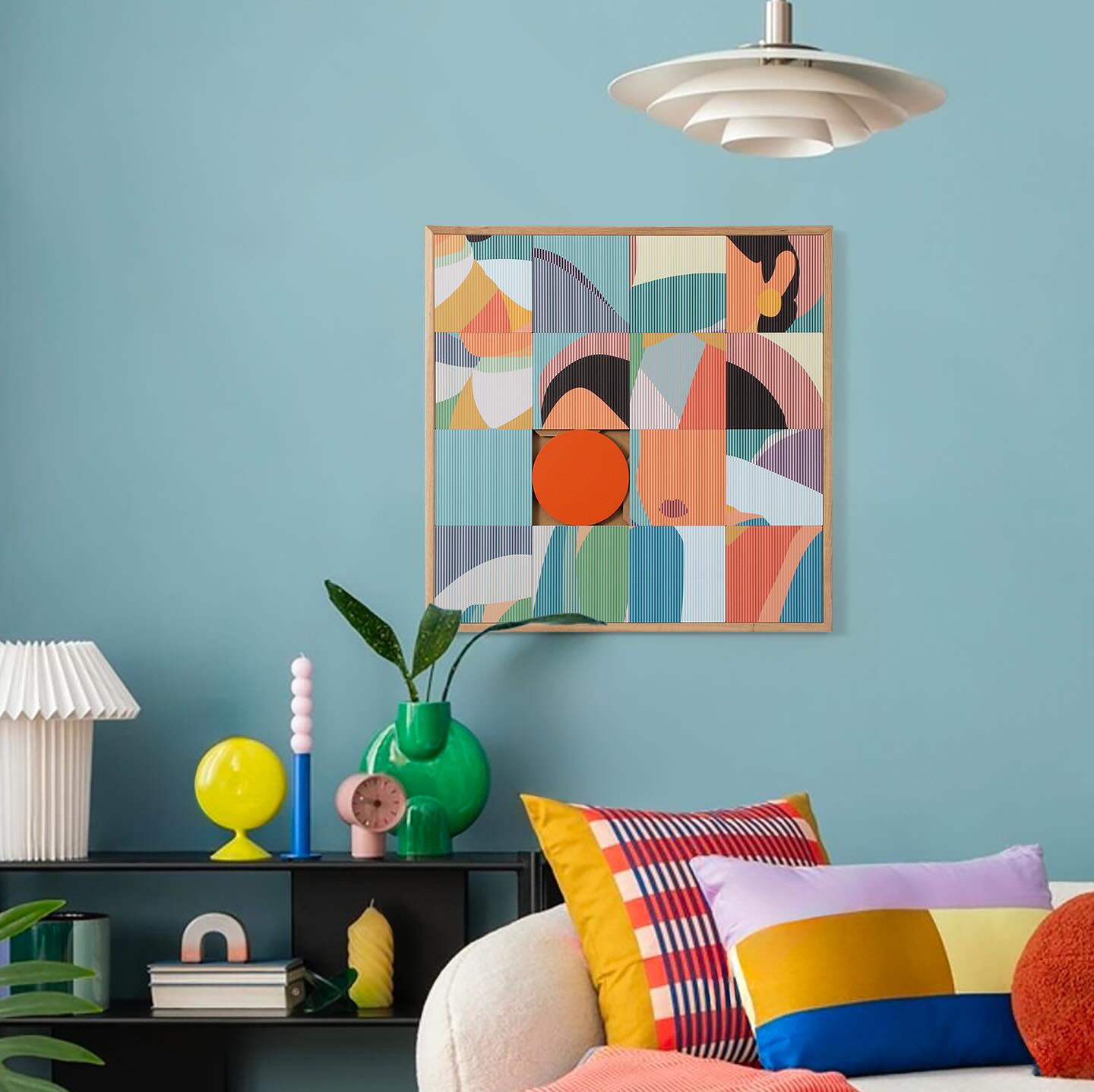
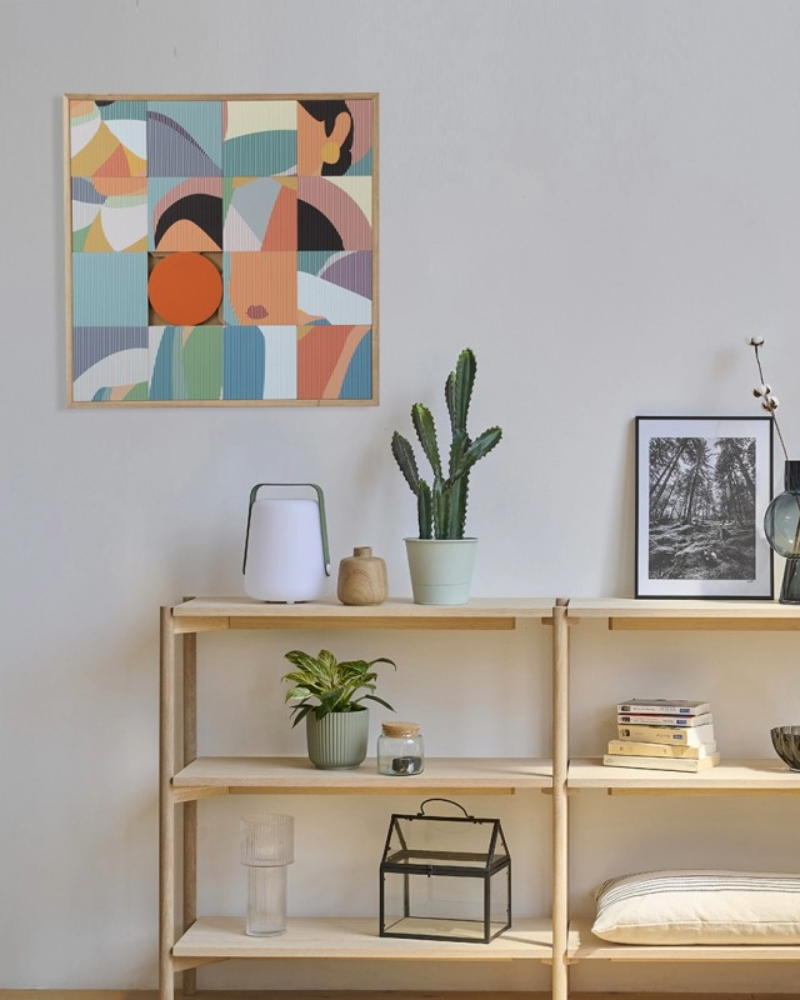
Meet Irène. The enigmatic woman in the beret, at once reserved and warm, carrying the weight of deep stories within her. The Tableau Taquin is a wooden wall art made of 16 sliding oak pieces — a frame you can rearrange, deconstruct and reconstruct, turning a portrait into an abstraction and back again.
It is a work of art that is never finished. Never quite the same twice.
Why we love it: It breaks the rule that art must be untouchable. Here, you build, you dismantle, you play. Designed and made in France, with a solid oak frame. 63 × 63 cm.
Perfect for: The mother who loves art but also loves the unexpected. The one whose home already has beautiful things — and deserves one that moves.

5. Cushion CSAO x Etcheaz — “Merci” or “Zame”
For the mother who deserves to be told, in the most beautiful way possible.
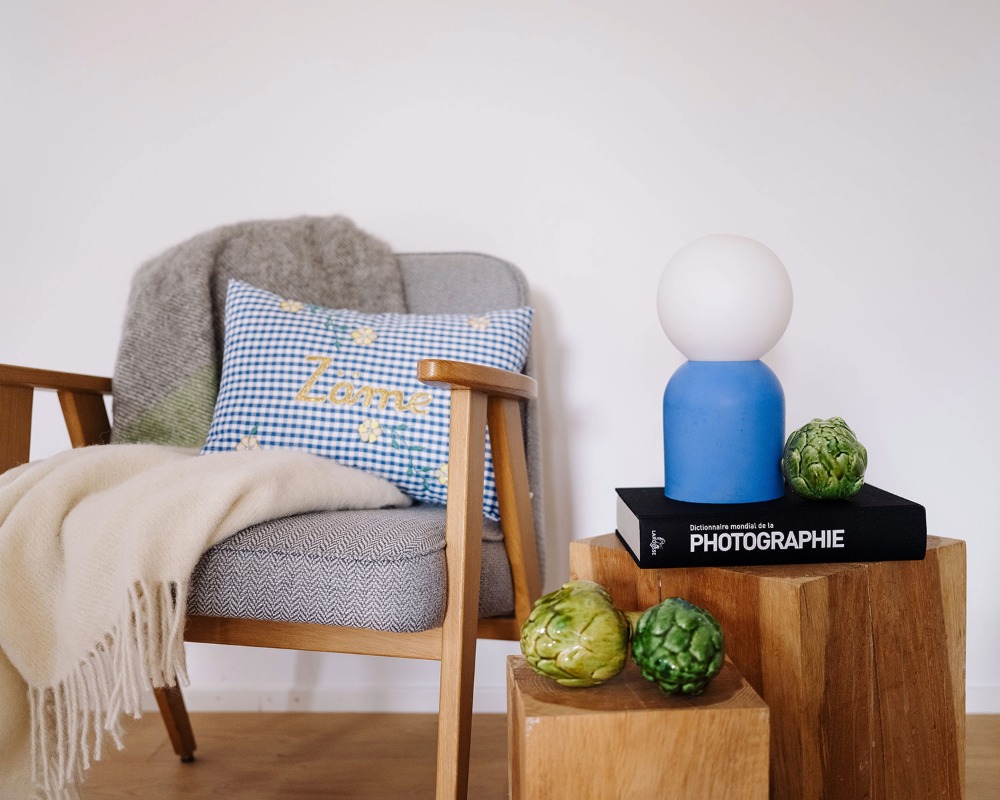
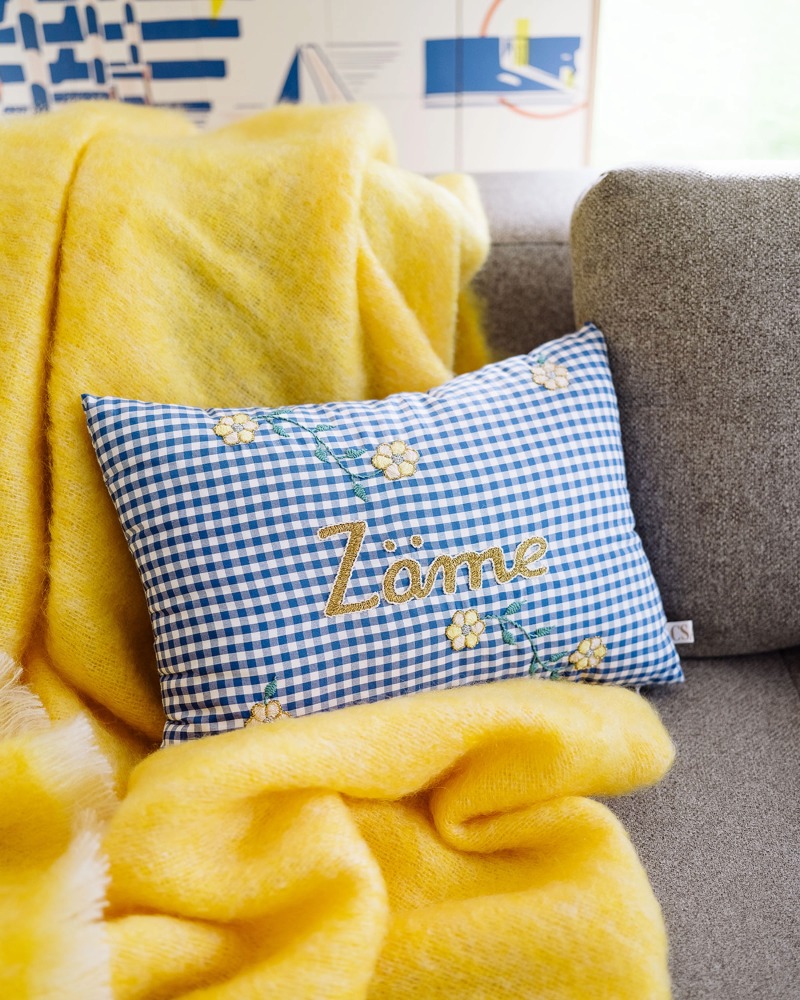
*Merci* — thank you. *Zame* — love, in Bambara. Two words, hand-embroidered onto red and blue gingham cotton, born from an exclusive collaboration between etcheaz and CSAO — a Parisian house with deep roots in African craft traditions. Each cushion is made by hand by skilled artisans, part of a limited Schweizerdeutsch capsule that will not be repeated.
This is a gift that says something. Because some messages deserve to be sewn into something you can hold.
Why we love it: The craft, the story, the meaning. An object born from two cultures meeting with care and intention — and available only here.
Perfect for: The mother you want to say thank you to. The one who surrounds herself with objects that carry meaning. Only 2 in stock — choose your word wisely.

6. Glazed Ceramic Fruit & Vegetable Collection
For the mother who smiles at the unexpected.
These hand-glazed ceramic fruits — lemon, orange, artichoke, eggplant, strawberry — are small objects with an outsized ability to bring warmth and personality to a kitchen or dining table. Each one is crafted with a care that only becomes apparent when you hold it.
They can be given individually or as a collection. They can be placed on a table, a shelf, a windowsill. They do not take themselves seriously — which is precisely why we love them.
Why we love it: At CHF 30, this is proof that a beautiful, meaningful gift does not have to be expensive. It just has to be chosen with intention.
Perfect for: The mother who loves her kitchen. The one who appreciates humour and craft in equal measure. An ideal addition to a larger gift.


Not sure which to choose? There’s always the Gift Card.
Sometimes the most loving thing you can do is let her choose for herself.
Our etcheaz gift cards are available in any amount, delivered by email, and valid on the entire collection — online and at our Küsnacht showroom.
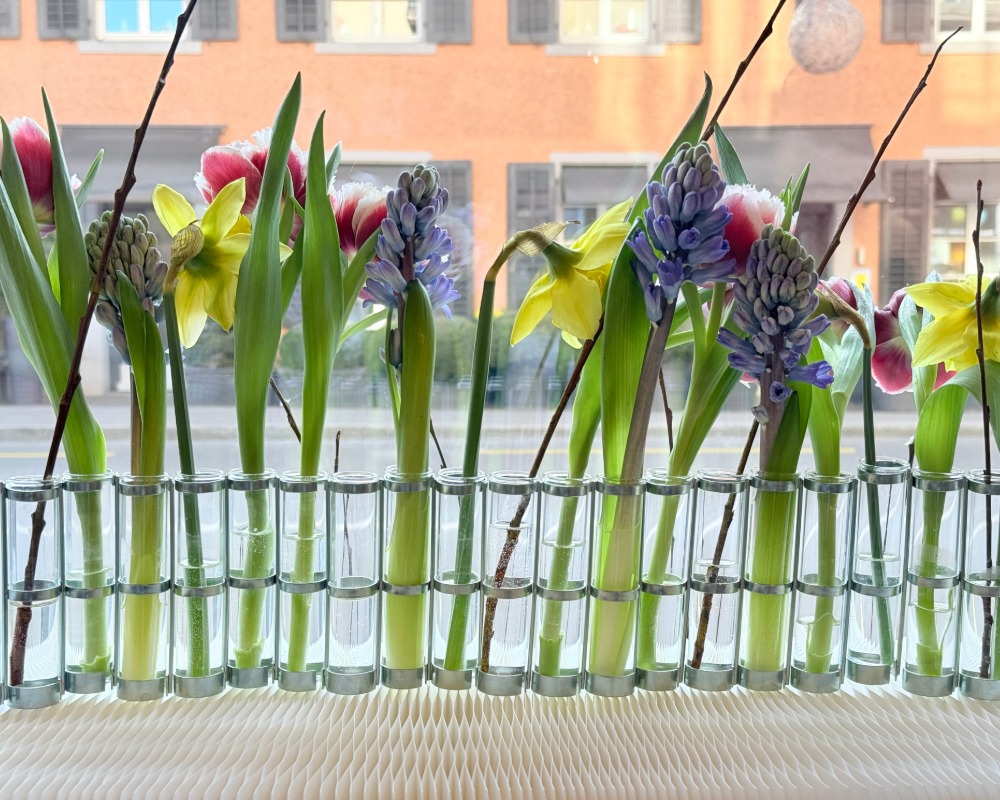
Designer Vases: Sculptural, unique, european-made
Sculptural Objects for your Home
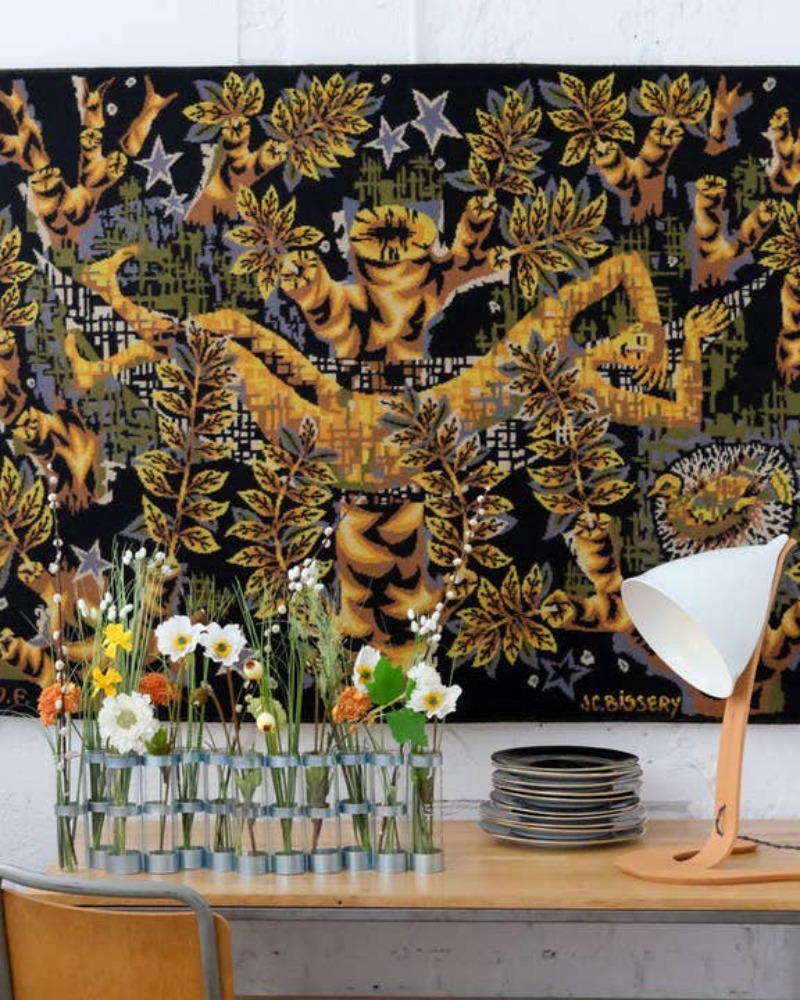
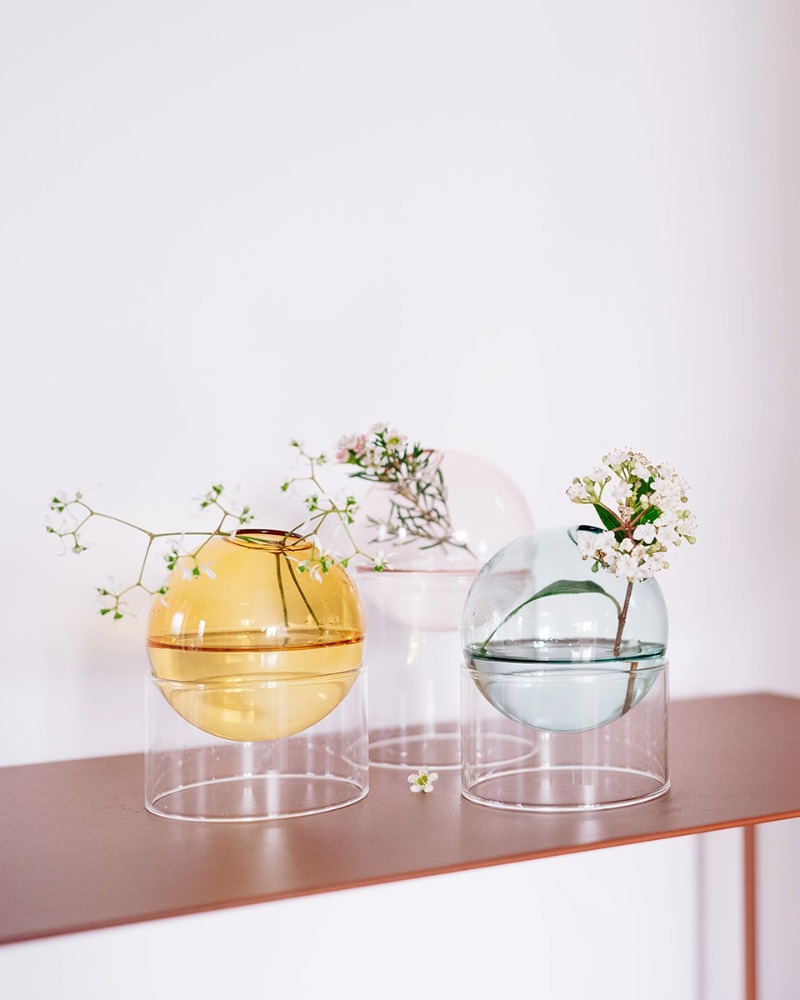
At etcheaz, a vase is never “just a vase.” It is a sculptural object, a point of contemplation, a statement of taste, and a way to bring a piece of design history into your interior. From Renaud Defrancesco’s Wavy Vases to Fundamental Berlin’s minimalist crystal designs, and Tsé-Tsé’s playful Vase Avril, each piece transforms a space while connecting you to the story of contemporary European design.
The Poetry of Materials
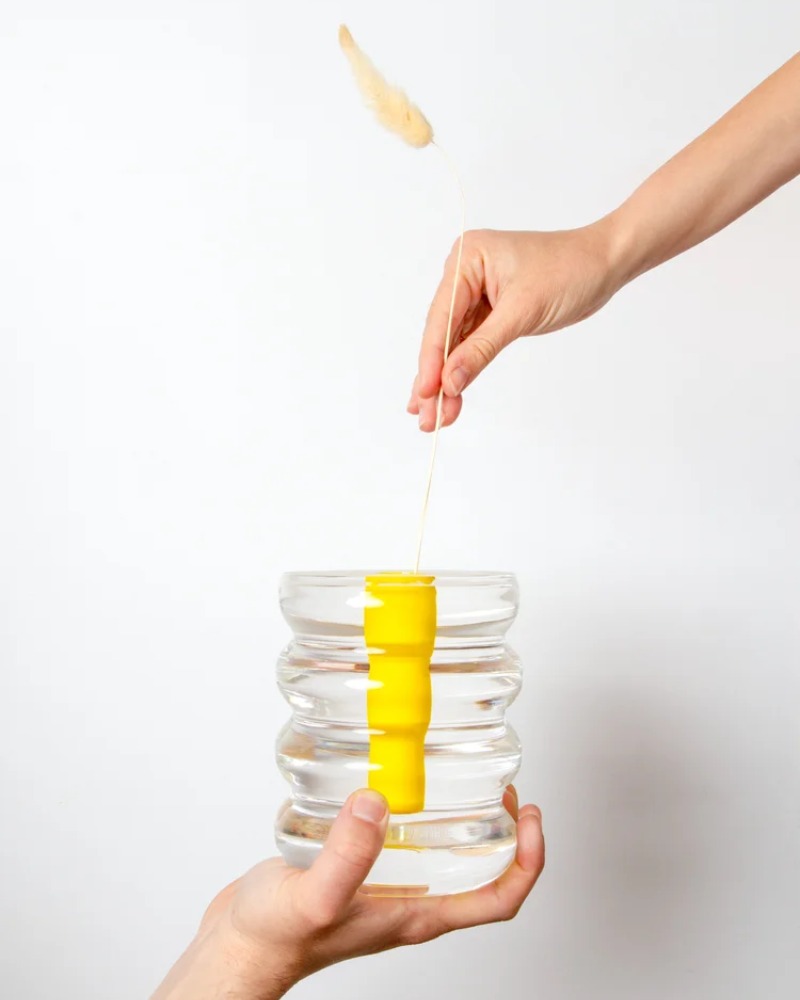
Glass that catches light, crystal that sparkles with refined elegance, ceramic that offers tactile warmth—each material tells its own story. Carefully selected for texture, color, and form, our vases invite you to experience the subtle beauty of everyday objects. The Vase Avril by Tsé-Tsé, with its distinctive organic curves and playful proportions, exemplifies the blend of design innovation and artisanal expertise that defines etcheaz.
Unique, Limited, European-Made
Every vase is limited edition, crafted with care, and produced in Switzerland or Europe. The focus on local expertise and artisanal savoir-faire ensures that each piece is both collectible and timeless. Owning one is more than acquiring a decorative object—it is introducing a piece of design history into your home. These are vases designed for those who value European craftsmanship and originality.
Styling Your Designer Vase
- Highlight a single vase as a sculptural focal point
- Combine vases of different heights, textures, and materials
- Pair with seasonal flowers, dried blooms, or greenery for a poetic touch
- Include playful forms like Vase Avril by Tsé-Tsé to add personality and movement
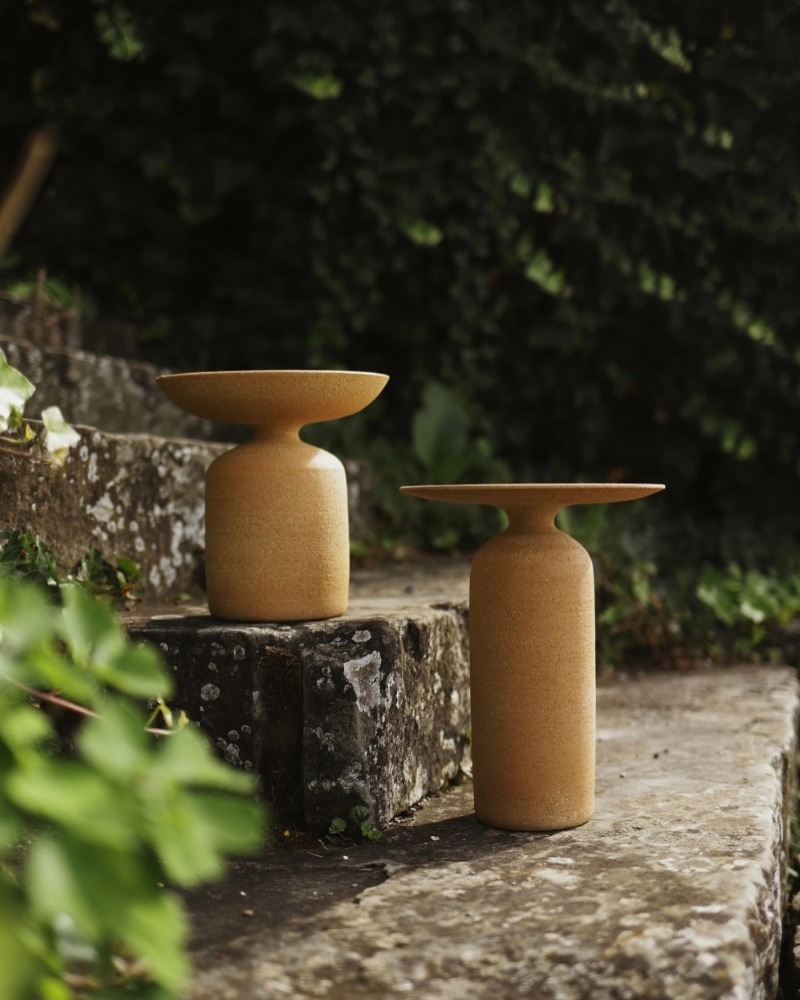
Why Etcheaz selects these Vases
We curate vases for the discerning collector: objects that embody design, craftsmanship, and elegance. With etcheaz, you bring artful, sustainable, European-made pieces into your home—functional yet poetic, minimal yet striking. Designers like Renaud Defrancesco, Fundamental Berlin, and Tsé-Tsé showcase the diversity of contemporary European design, allowing every piece to enter your interior as a story and a piece of design history.

Explore the designer vase collection and bring unique, European-made pieces that elevate your interior and connect you to design history.

Frequently Asked Questions
Q1: What makes a vase a designer piece?
Answer : A designer vase is created by a recognized artist or studio, combining original design, premium materials, and European craftsmanship, making it both functional and sculptural.
Q2: Are etcheaz vases limited edition?
Answer : Yes, all vases are produced in small batches, ensuring each piece is unique and collectible.
Q3: What materials are used for etcheaz vases?
Answer : Our vases are crafted in glass, crystal, and ceramic, each chosen for quality, texture, and aesthetic impact.
Q4: Can I style a designer vase with flowers?
Answer : Absolutely. Pairing flowers, dried blooms, or greenery enhances the sculptural design and adds life to any interior.
Q5: Why choose European-made vases?
Answer : European-made vases showcase artisanal savoir-faire, sustainable production, and design heritage, bringing a piece of design history into your home.
Q6: Which designers are featured at etcheaz?
Answer : Etcheaz features designers like Renaud Defrancesco, Fundamental Berlin, and Tsé-Tsé, offering unique vases such as the Wavy Vase and Vase Avril.
Q7: Can these vases be used in minimalist or contemporary interiors?
Answer : Yes, our vases are designed to complement minimalist, modern, and contemporary interiors, creating sculptural focal points and curated spaces.
 We are discovering new creations and working on exciting collaboration - including some exclusive new pieces just for you. Stay tuned !
Please note that the delivery times may be slightly longer than usual during this period. We will be back to our normal delivery time from October 19th.
Thank you for your understanding.
We are discovering new creations and working on exciting collaboration - including some exclusive new pieces just for you. Stay tuned !
Please note that the delivery times may be slightly longer than usual during this period. We will be back to our normal delivery time from October 19th.
Thank you for your understanding.