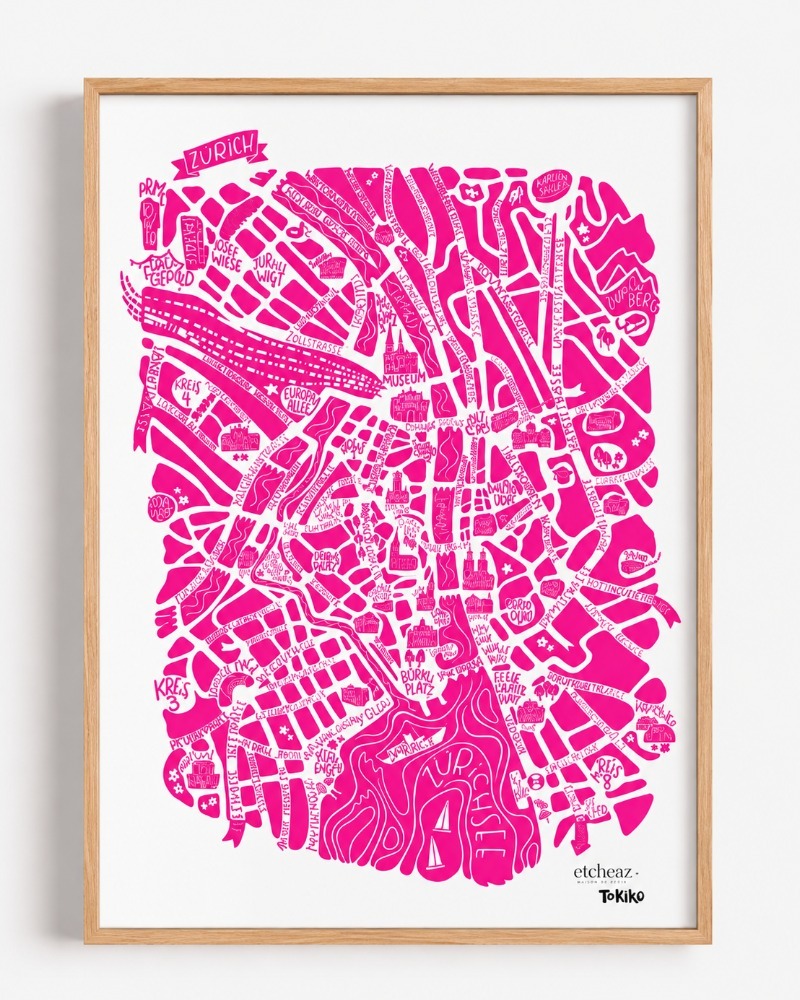
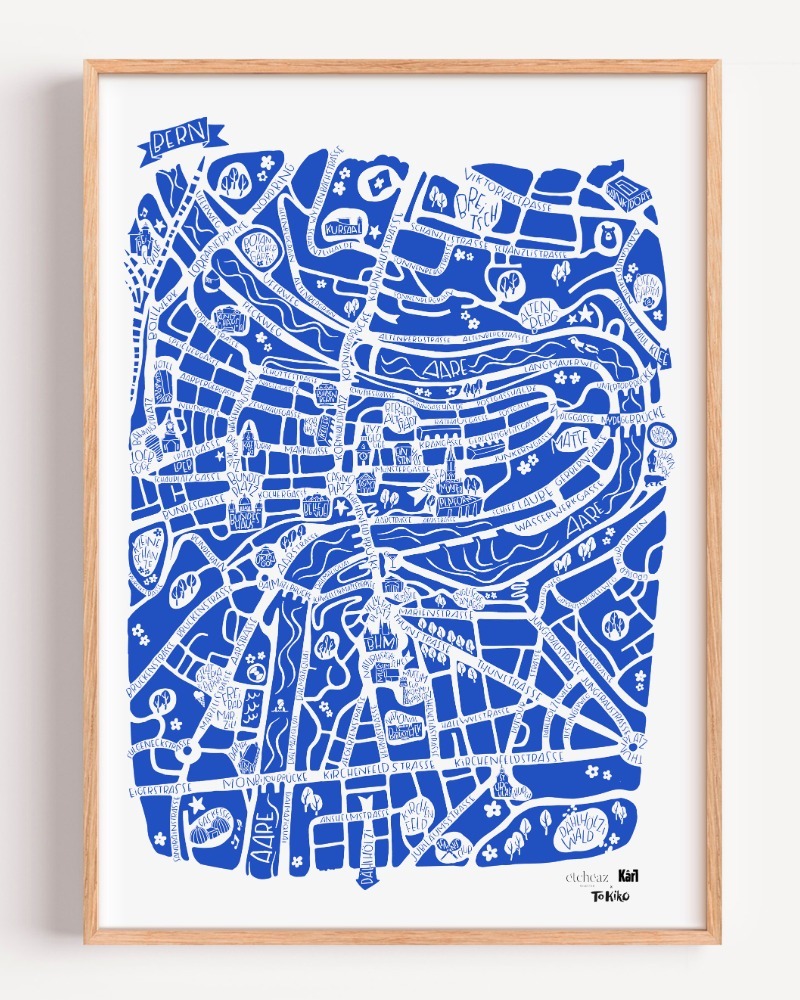
Two independent Swiss addresses, a shared set of values, and one artist’s hand behind the ink. Karl, a concept store in Fribourg, and Etcheaz, an art and decor label in Zürich, don’t compete — they recognize each other. Both are small, both are selective, both build slowly rather than scale fast.
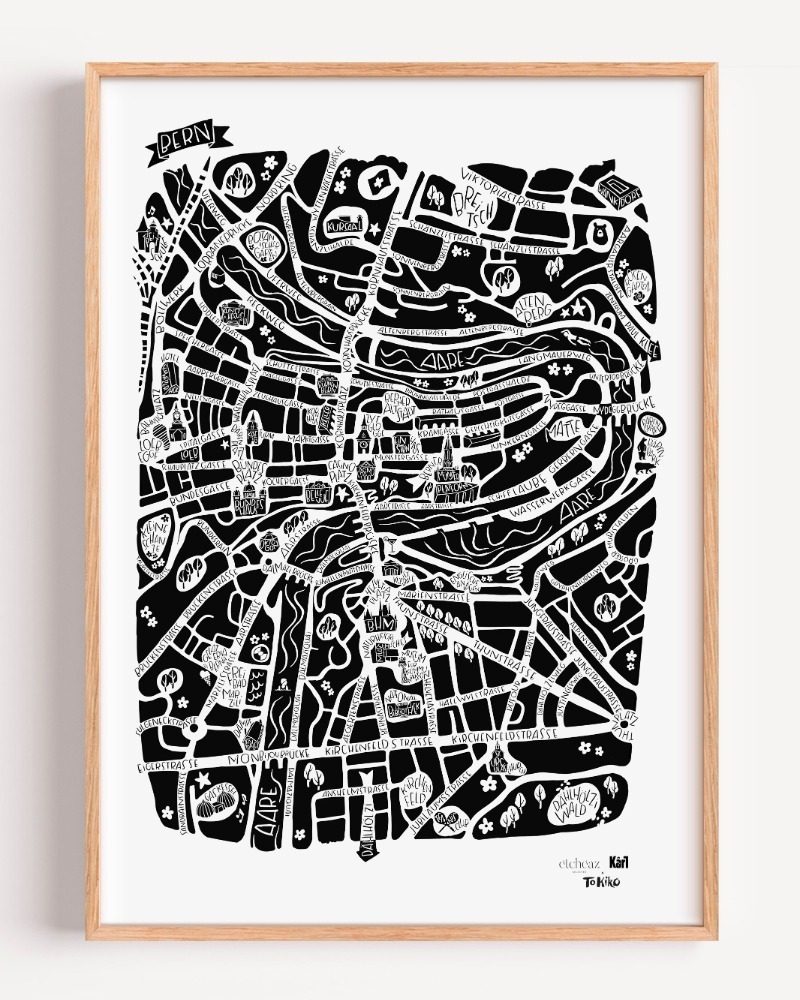
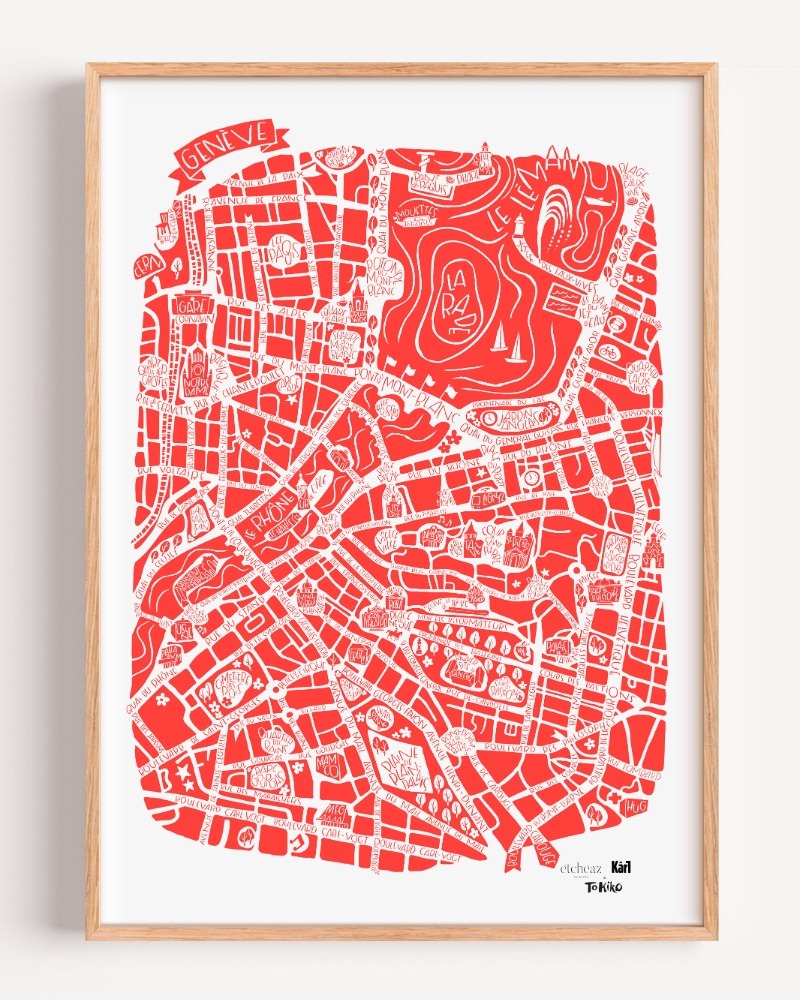
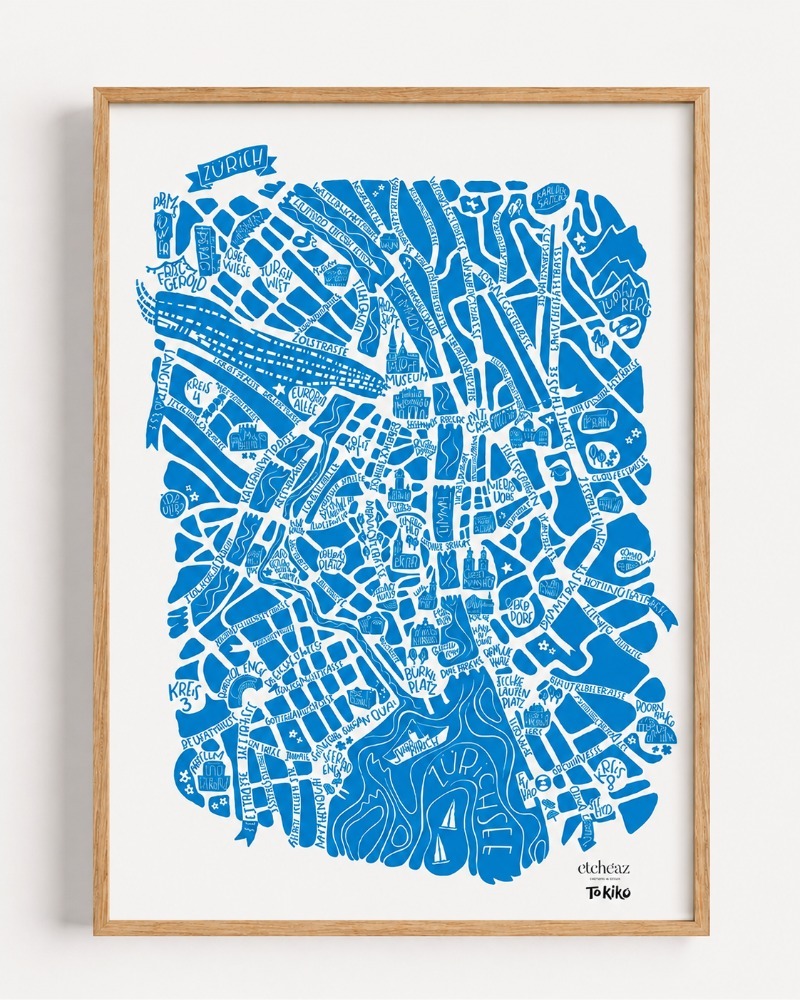
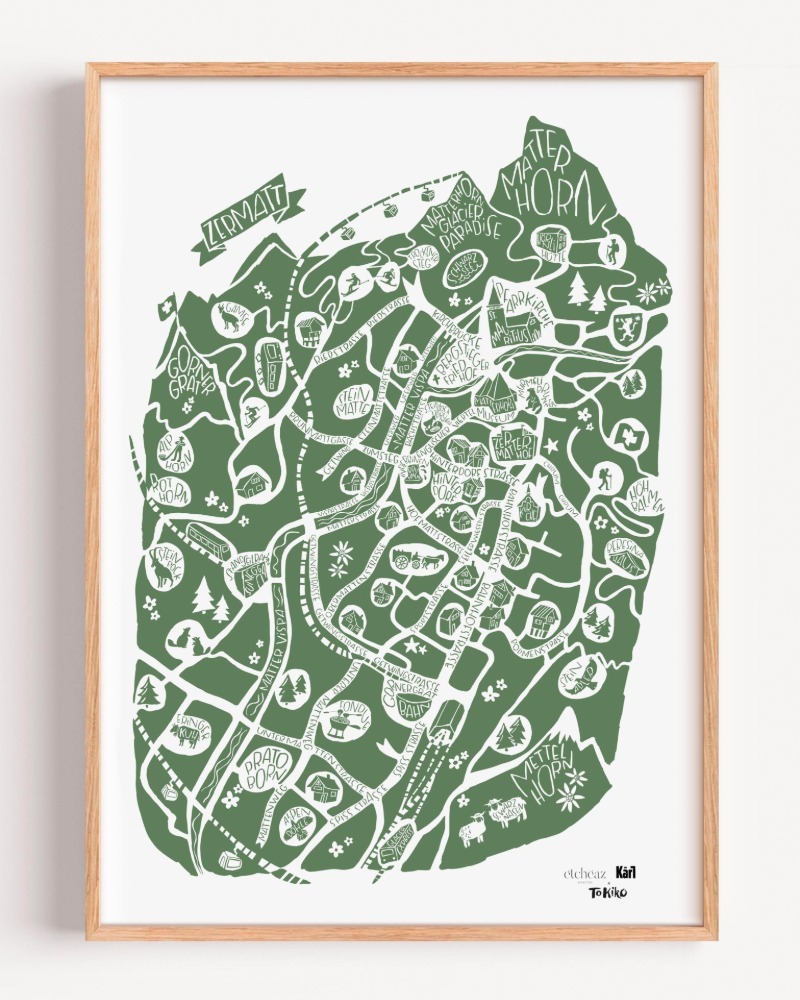
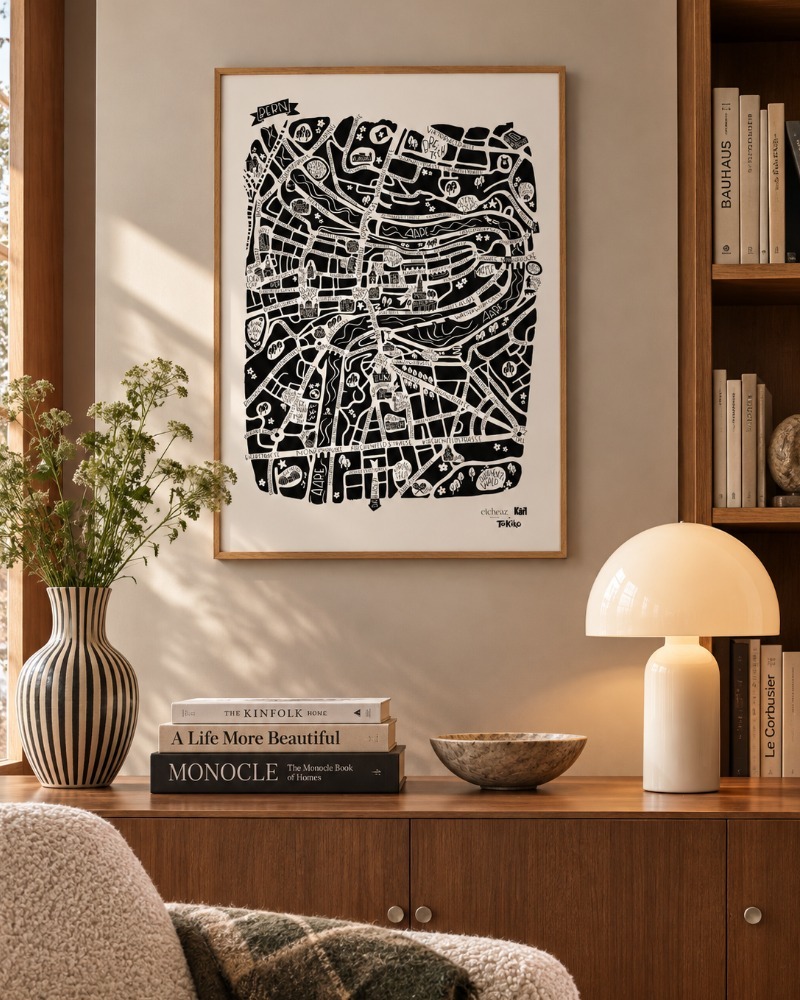
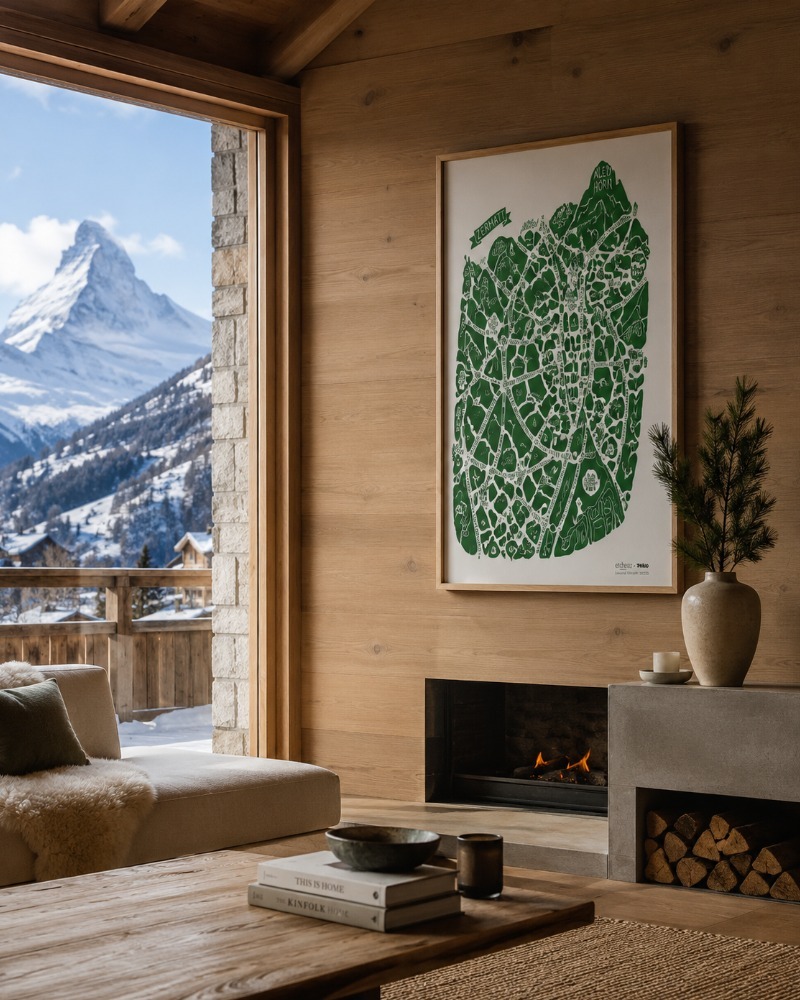
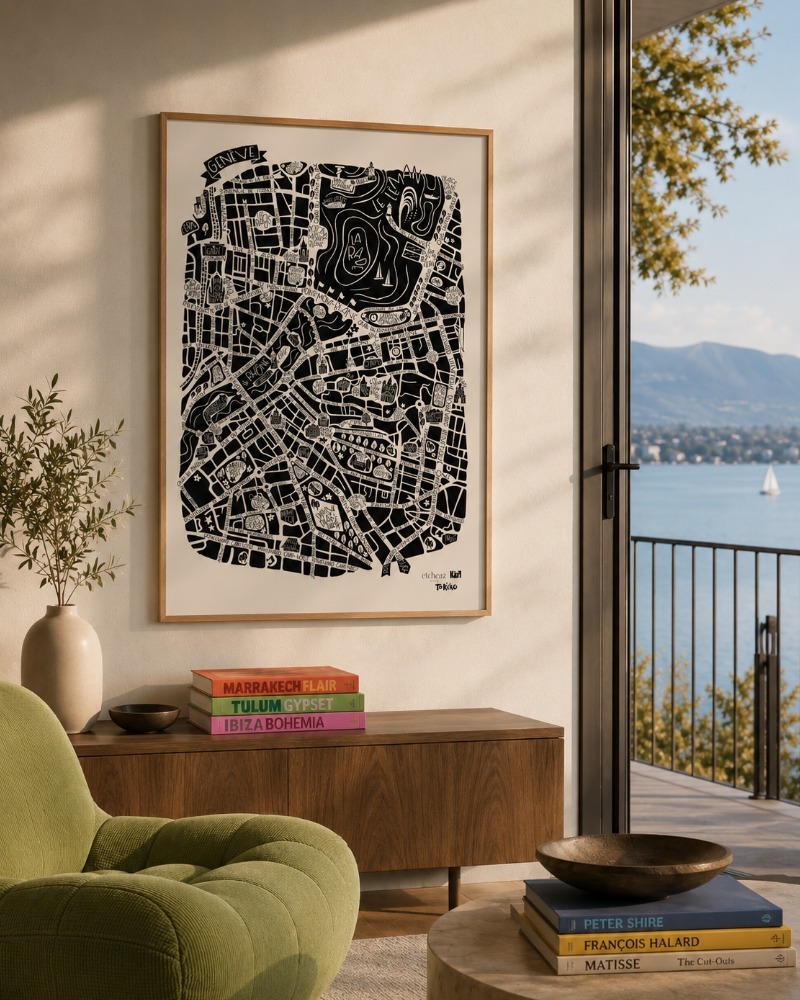
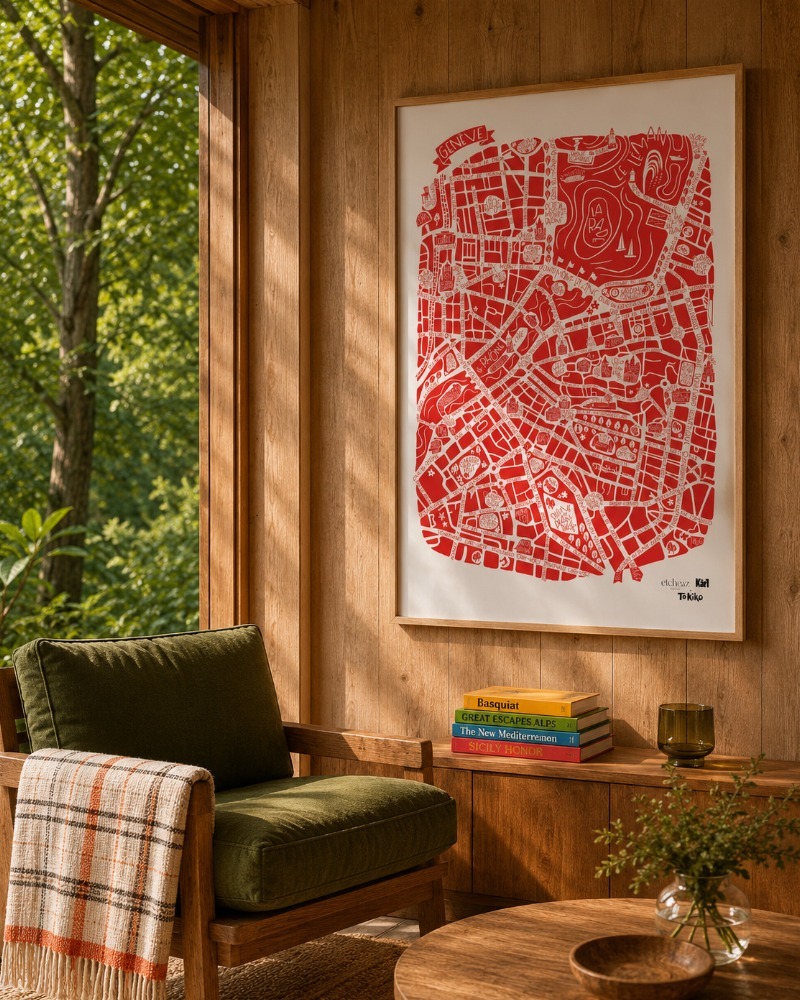
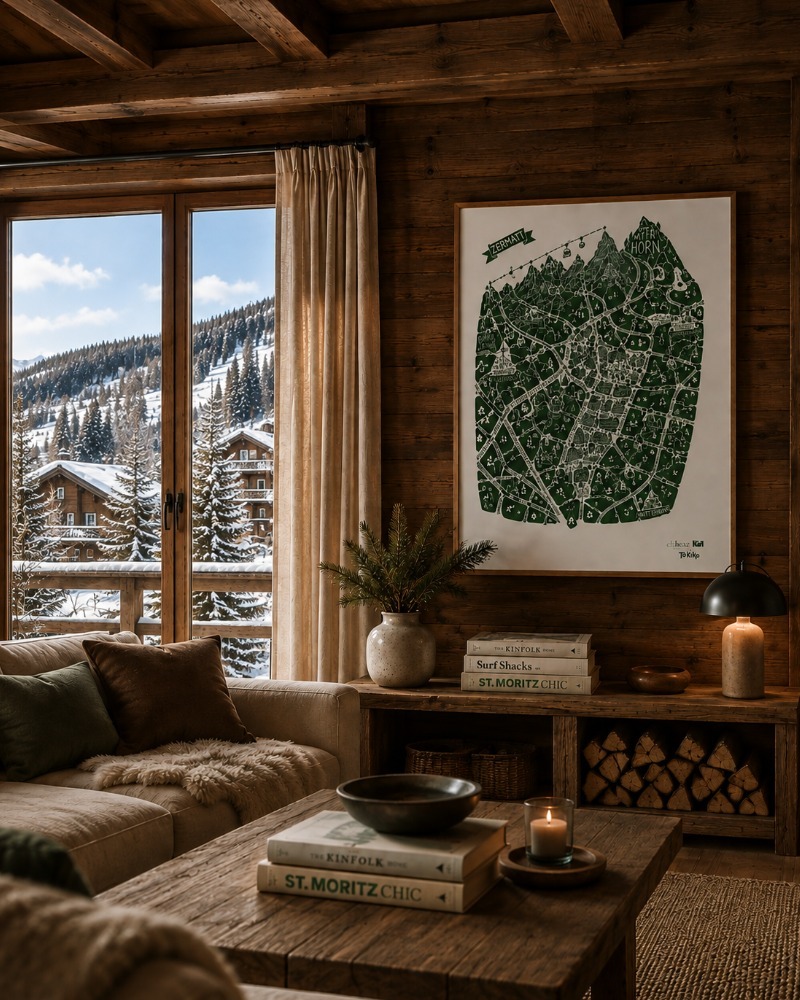
That recognition is what led to a shared, exclusive collaboration with artist duo Tokiko: a series of hand-drawn city maps, released one city at a time, starting with Zürich and Fribourg and now extending to Bern, Zermatt, and Geneva.
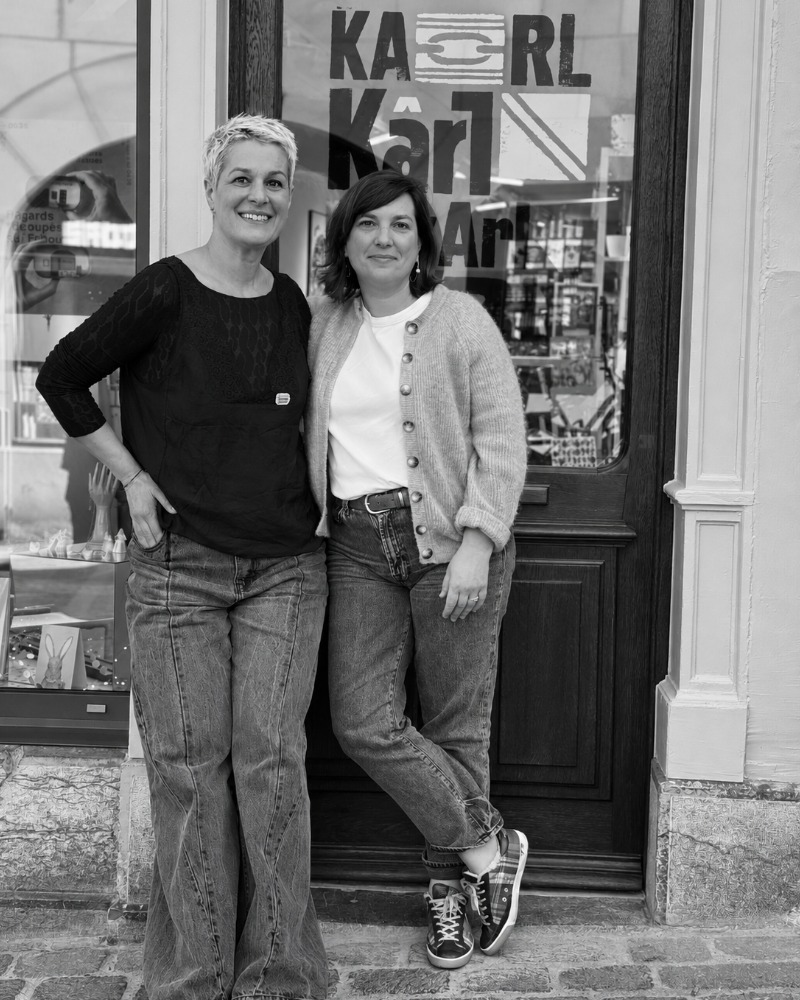
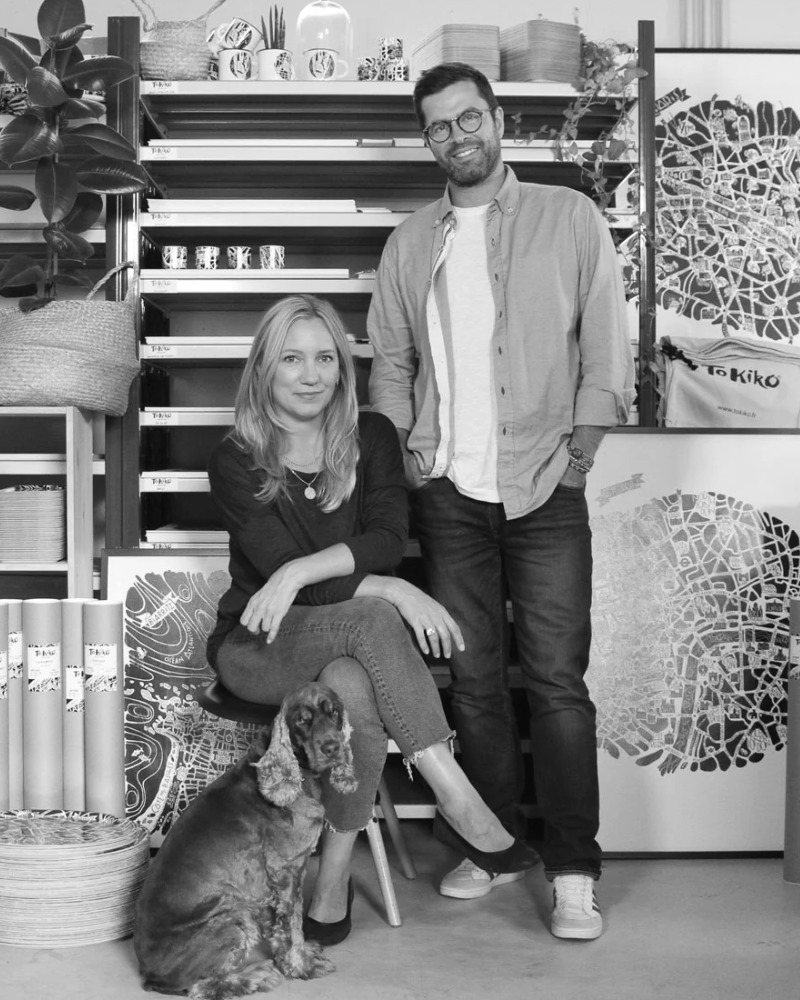
We sat down with Nicole (Karl), Aurelie (Etcheaz), and Anna and Benoit (Tokiko) to talk about why they chose to work together,
The interview
Q: Karl is in Fribourg, Etcheaz is in Zürich. What made you want to work together in the first place?
Nicole (Karl): We noticed each other before we ever spoke — the kind of shops that pay attention to independents tend to be independents themselves. When Aurelie reached out, it wasn’t a pitch. It was closer to “we think alike, let’s see what we can create together.”
Aurelie (Etcheaz): Exactly. Karl and Etcheaz aren’t the same business, but we’re both sharing the same intention: staying small and specific in a market that rewards scale. That shared instinct mattered more to me than any commercial logic.
Q: Why Tokiko for this project specifically?
Nicole (Karl) : Anna’s work already had the restraint we look for — it doesn’t try to show everything about a city, it chooses. That’s rare, and it’s exactly the opposite of a tourist map.
Aurelie (Etcheaz) : I’ve followed Tokiko’s work since their very beginning, and their universe has always seemed like an obvious choice to me. Their aesthetic and the way they create stand out by their true singularity.
Anna & Benoit (Tokiko): For us, a city map is a portrait, not a document. We walk the streets we’re drawing, then decide what’s worth the ink and what isn’t. Zürich and Fribourg came first because we knew them through Karl and Etcheaz themselves — the collaboration itself shaped which places we chose to draw.
Q: What does ‘independent’ mean to each of you in practice?
Nicole (Karl): The freedom to choose what I carry — selecting pieces I believe in, that convey an emotion and a kind of poetry.
Aurélie (Etcheaz): It means every piece has a person behind it — someone who decided what the object would be, how it would be made, and what it would say. That accountability changes everything. When you remove that layer, you remove the intention. And intention is exactly what makes an object worth having.
Q: The series started with Zürich and Fribourg. Why expand to Bern, Zermatt, and Geneva now?
Anna & Benoît (Tokiko): Each city is a new question. Zürich and Fribourg were familiar — walkable, human-scale, cities we knew by foot before we drew them. Zermatt is something else entirely: no cars, mountain logic, a completely different way of inhabiting a place. Geneva looks outward toward the lake and the world. Bern is the capital but still small enough to hold in your hand. Expanding the series is our way of testing whether what we do actually works — or whether it only worked because we knew the streets already.
Nicole (Karl): There is something quietly Swiss about this series: five cities, five different characters, all drawn by the same hand. That coherence matters a great deal.
Q: What makes each map “limited edition” rather than just printed to order?
Aurélie (Etcheaz): Each city is produced in small batches — not numbered, but genuinely limited. We reprint when demand justifies it, but always in the same small quantities. It never becomes a mass product. The decision to stop is always available to us — and to Anna and Benoît. That’s what keeps it closer to an artist’s edition than a poster.
Nicole (Karl): When a batch sells out, it’s gone until the next one. Our customers know that. It changes how they relate to the object — they don’t wait, because waiting means missing it.
Q: What’s next for the collaboration?
Aurélie (Etcheaz): More cities — but which ones depends on you, honestly. We’re paying attention to what people ask for, where the demand is coming from, which streets people want to see drawn. Beyond that, there are other formats we’re thinking about — different supports, different ways to present the maps — but we’re keeping that as a surprise for now 😊
Et en français, ca donne quoi ?
Dans les coulisses d’une collaboration : KARL, Etcheaz et Tokiko présentent leurs plans de villes suisses en édition limitée
Q : KARL est à Fribourg, Etcheaz à Zurich. Qu’est-ce qui vous a donné envie de travailler ensemble au départ ?
Nicole (KARL) : Nous nous étions remarquées avant même d’échanger. Les boutiques qui s’intéressent aux créateurs indépendants partagent souvent cette même indépendance. Quand Aurélie m’a contactée, elle ne cherchait pas à vendre un projet ; c’était plutôt : « Nous sommes sur la même longueur d’onde, voyons ce que nous pouvons créer ensemble. »
Aurélie (Etcheaz) : Exactement. KARL et Etcheaz sont des structures distinctes, mais portées par la même intention : rester petites et spécialisées dans un marché qui valorise surtout la taille. Pour moi, cette intuition commune comptait davantage que toute logique commerciale.
Q : Pourquoi avoir choisi Tokiko précisément pour ce projet ?
Nicole (KARL) : Le travail d’Anna avait déjà la sobriété que je recherchais : il ne prétend pas tout montrer d’une ville, il choisit. C’est rare et c’est précisément l’inverse d’une carte touristique.
Aurélie (Etcheaz) : Je suis le travail de Tokiko depuis ses débuts et son univers m’a toujours semblé évident pour ce projet. Son esthétique et sa manière de créer se distinguent par une vraie singularité.
Anna & Benoît (Tokiko) : Pour nous, un plan de ville est un portrait, pas un simple document. Nous parcourons les rues que nous dessinons, puis choisissons ce qui mérite d’apparaître. Zurich et Fribourg se sont imposées en premier, car nous les connaissions à travers Etcheaz et KARL. La collaboration elle-même a guidé les lieux à représenter.
Q : Que signifie concrètement le terme « indépendant » pour chacune d’entre vous ?
Nicole (KARL) : La liberté de pouvoir choisir l’assortiment de ma boutique, en sélectionnant des articles auxquels je crois, qui transmettent une émotion et une forme de poésie.
Aurélie (Etcheaz) : Cela signifie qu’une personne se trouve derrière chaque pièce : quelqu’un qui a choisi ce qu’elle est, comment elle est fabriquée et ce qu’elle transmet. Cette responsabilité change tout. Lorsqu’on retire cette dimension, on retire l’intention — et c’est elle qui donne sa valeur à l’objet.
Q : La série a débuté avec Zurich et Fribourg. Pourquoi s’étendre désormais à Berne, Zermatt et Genève ?
Anna & Benoît (Tokiko) : Chaque ville pose une nouvelle question. Zurich et Fribourg nous étaient familières : des villes à taille humaine, que l’on parcourt à pied. Zermatt, en revanche, obéit à une autre logique : pas de voitures, un rythme de montagne, une autre manière d’habiter l’espace. Genève regarde vers le lac et le monde. Berne est une capitale, mais reste assez compacte pour tenir dans la main. En élargissant la série, nous voulons voir si notre approche fonctionne au-delà des rues que nous connaissions déjà.
Nicole (KARL) : La série a quelque chose de discrètement suisse : cinq villes, cinq personnalités, dessinées par la même main. Cette cohérence compte beaucoup.
Q : En quoi chaque carte est-elle une « édition limitée » plutôt qu’une simple impression à la commande ?
Aurélie (Etcheaz) : Chaque ville est produite en petites séries non numérotées, mais réellement limitées. Nous réimprimons si la demande le justifie, toujours en quantités restreintes. Le projet ne devient jamais un produit de masse. Nous pouvons arrêter la production à tout moment, tout comme Anna et Benoît. C’est ce qui rapproche ces cartes d’une édition d’artiste plutôt que d’une simple affiche.
Q : Quelle est la prochaine étape de cette collaboration ?
Aurélie (Etcheaz) : D’autres villes, sans doute — mais lesquelles ? Cela dépend aussi de vous. Nous écoutons les demandes, les lieux qui reviennent, les rues que les gens aimeraient voir dessinées. Nous réfléchissons également à d’autres formats, supports et façons de présenter ces cartes, mais nous gardons encore la surprise pour l’instant 😊