Every designer and artist at Etcheaz is independent. Every piece in our collection comes from someone who works outside the machinery of mass production — who has a studio, a method, a point of view that belongs to them, and who makes things in quantities that are defined by what their hands and their process can actually produce.
This is not a positioning statement. It is simply how we work, and it shapes everything else.
What Independent Actually Means
The word gets used loosely. It is worth being precise.
When we say independent, we mean an artist or designer who controls their own production — who has not licensed their work to a large manufacturer, who does not delegate the core of what makes their objects distinctive to a third-party factory, and who retains direct responsibility for the quality and integrity of every piece that leaves their studio.
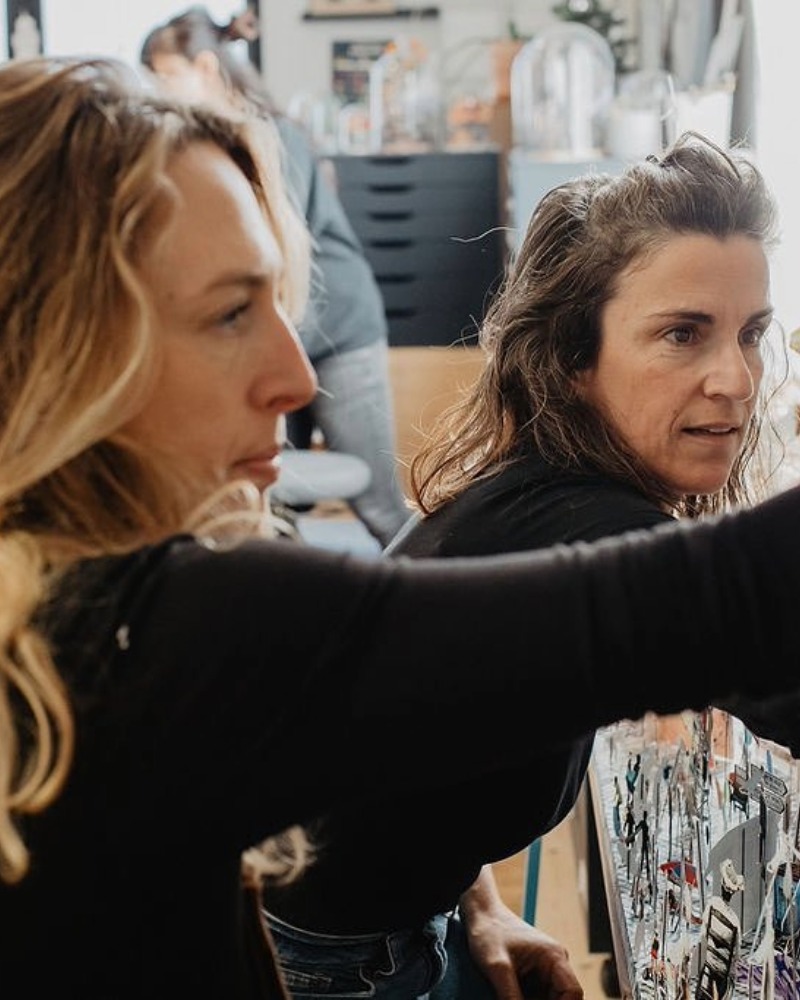
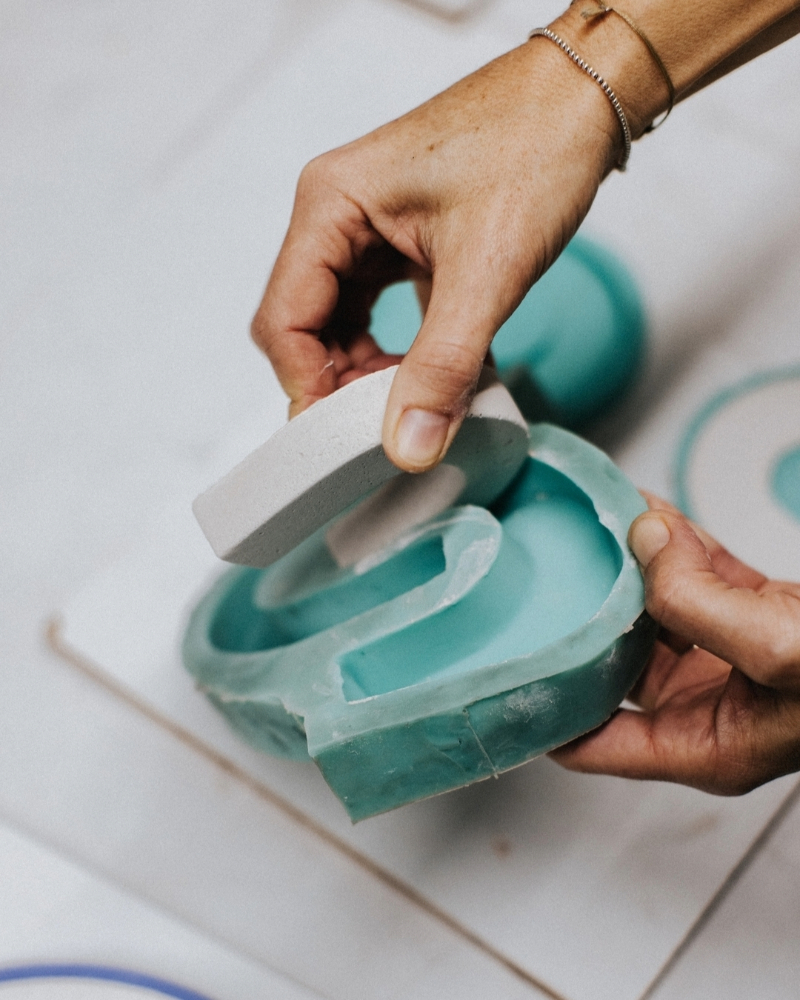
Charlotte Bourrus’s globes are made by hand, in her studio in Bidart, by a small dedicated team she leads. The Taquin collection comes from a creative designer who has spent time perfecting a puzzle mechanism that no one else produces. Marie-Cerise shapes each of her Zuri concrete objects by hand — giving the concrete material the freedom to express its own irregularities, which make every piece singular.
In each case, there is a person — or a small, dedicated team — behind the object. That is what independent means, in practice.
Why It Matters for the Objects
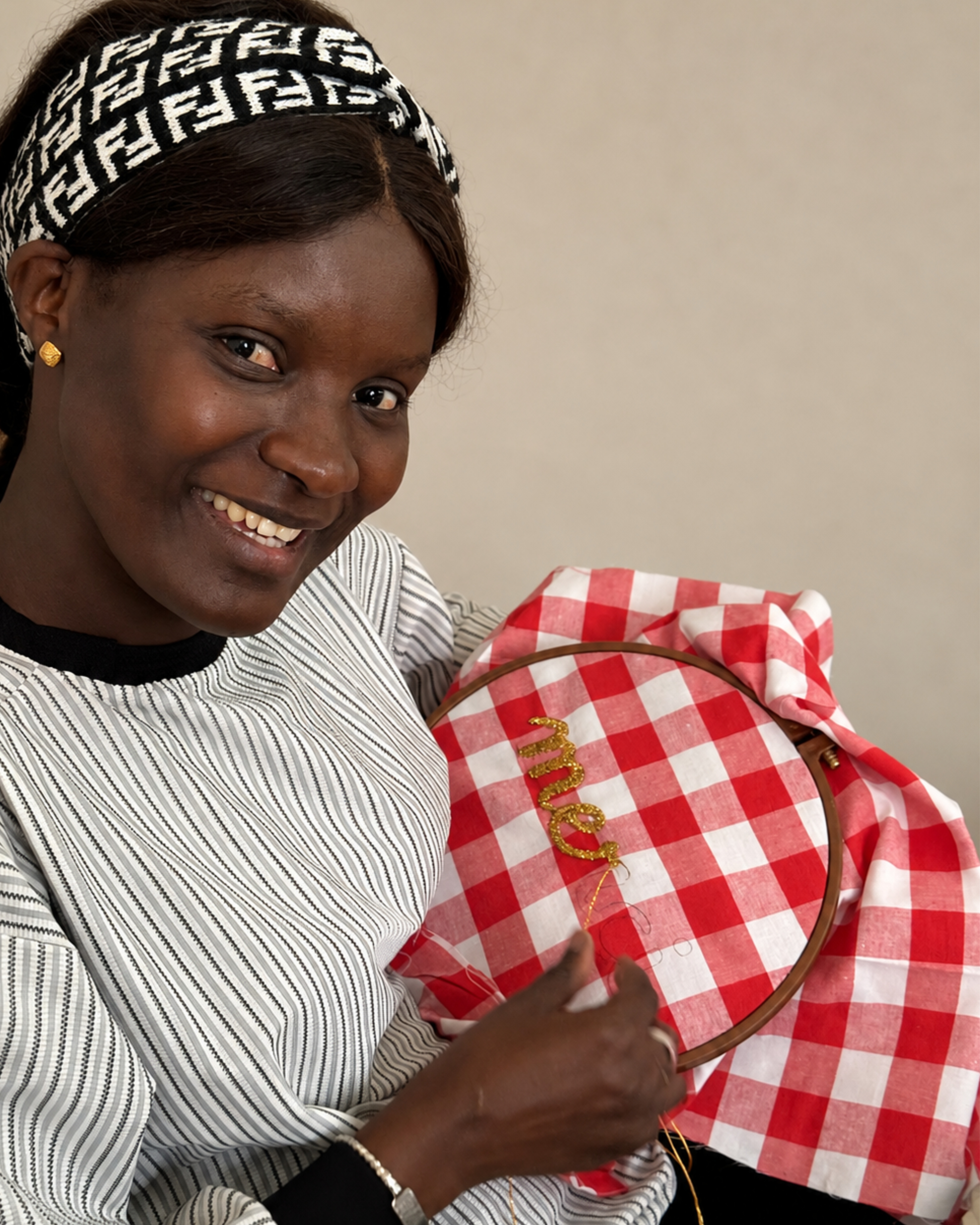
Objects made by independent designers have a quality that is difficult to describe precisely but easy to recognise. It is partly material — the texture of hand-laid paper, the weight of mouth-blown glass, the density of hand-embroidered thread — things that feel different from objects produced at scale.
But it is also something harder to name. A consistency of intention, perhaps. When one person is responsible for an entire object, from concept to completion, the decisions that shape it are all made by the same sensibility. There are no handoffs, no compromises between a designer’s vision and a manufacturer’s constraints, no value engineering at the end of the process.
The result is objects that hold together in a particular way. You can feel it when you hold them.
Why It Matters for the Makers
Mass production has been very efficient at driving the value of craft downwards. When an object can be reproduced at volume for almost nothing, the person who makes it by hand faces a structural disadvantage that has nothing to do with the quality of their work.
Working exclusively with independent artists is, in part, a response to this. We pay fair prices. We buy in quantities that are meaningful to a small studio without being volumes that would compromise their process. We do not ask artists to scale up in ways that would change what makes their work worth carrying.
Several of our relationships have developed into formal collaborations — exclusive pieces designed specifically for Etcheaz and our customers. The Globe Zürich and Globe Switzerland with Charlotte Bourrus. The Schweizerdeutsch cushion capsule with CSAO. These collaborations exist because trust has been established in both directions, and because the artist feels secure enough in the relationship to invest creative energy in something new.
That does not happen with a brand you picked from a catalogue.
Why It Matters for You
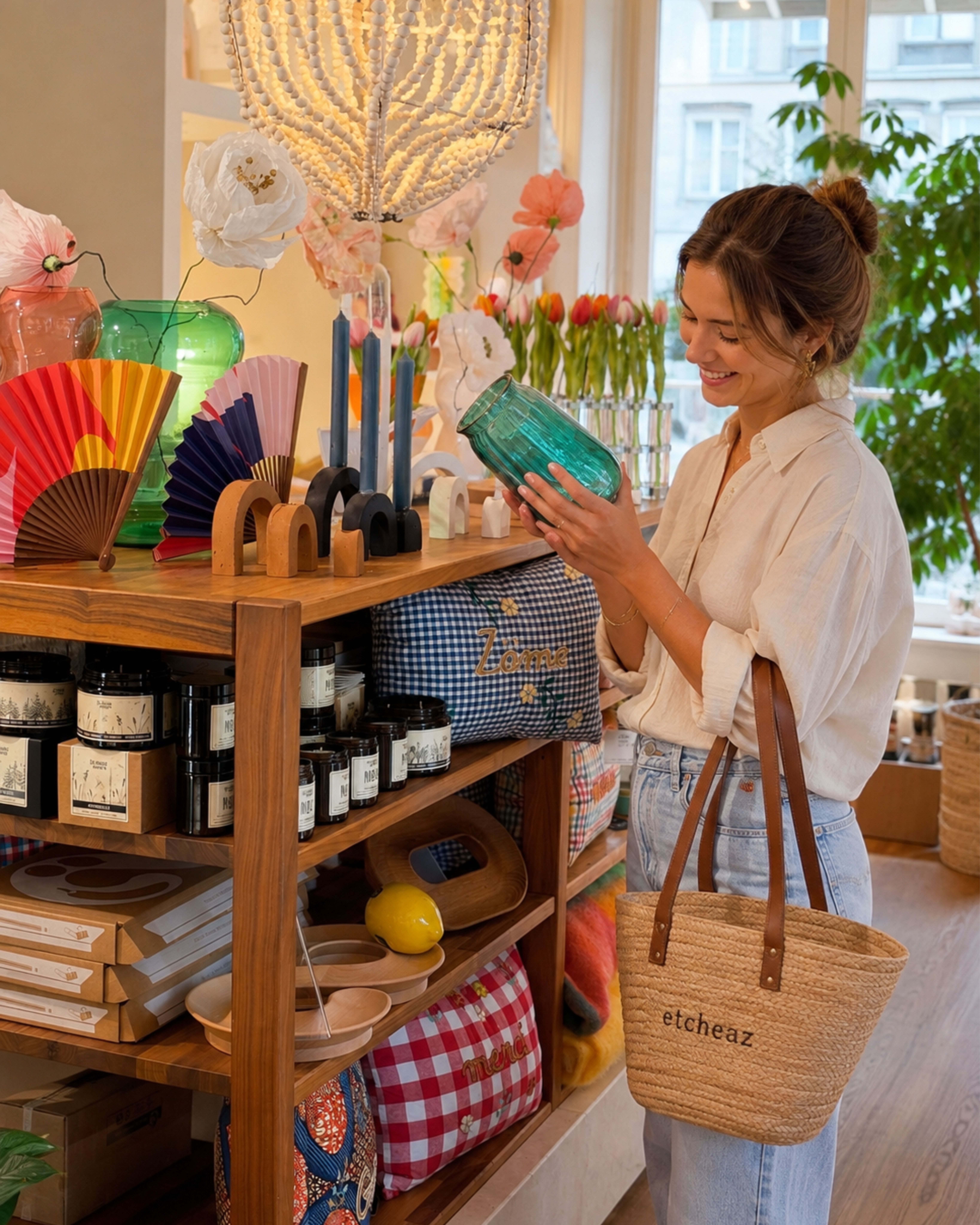
There is a practical dimension to this. When you buy a piece from an independent artist through Etcheaz, you are buying something that exists in limited quantity. When the edition closes, it closes. The object you own will not be reproduced, repriced, and sold in a chain store next season.
This is not scarcity as a sales tactic. It is scarcity as a natural consequence of how the object was made. One person, one studio, a finite amount of time.
There is also something less transactional. Knowing the story behind an object changes how you experience it. Charlotte Bourrus’s globes look different when you know that the cartographic detail was assembled, by hand, in her studio in Bidart. A Tokiko print looks different when you know that every city map was drawn by hand by Anna, the illustrator behind every single Tokiko design — each line a careful reading of the streets she loves.
Objects carry their histories. The histories of independent artists are worth carrying.
How We Choose Who We Work With
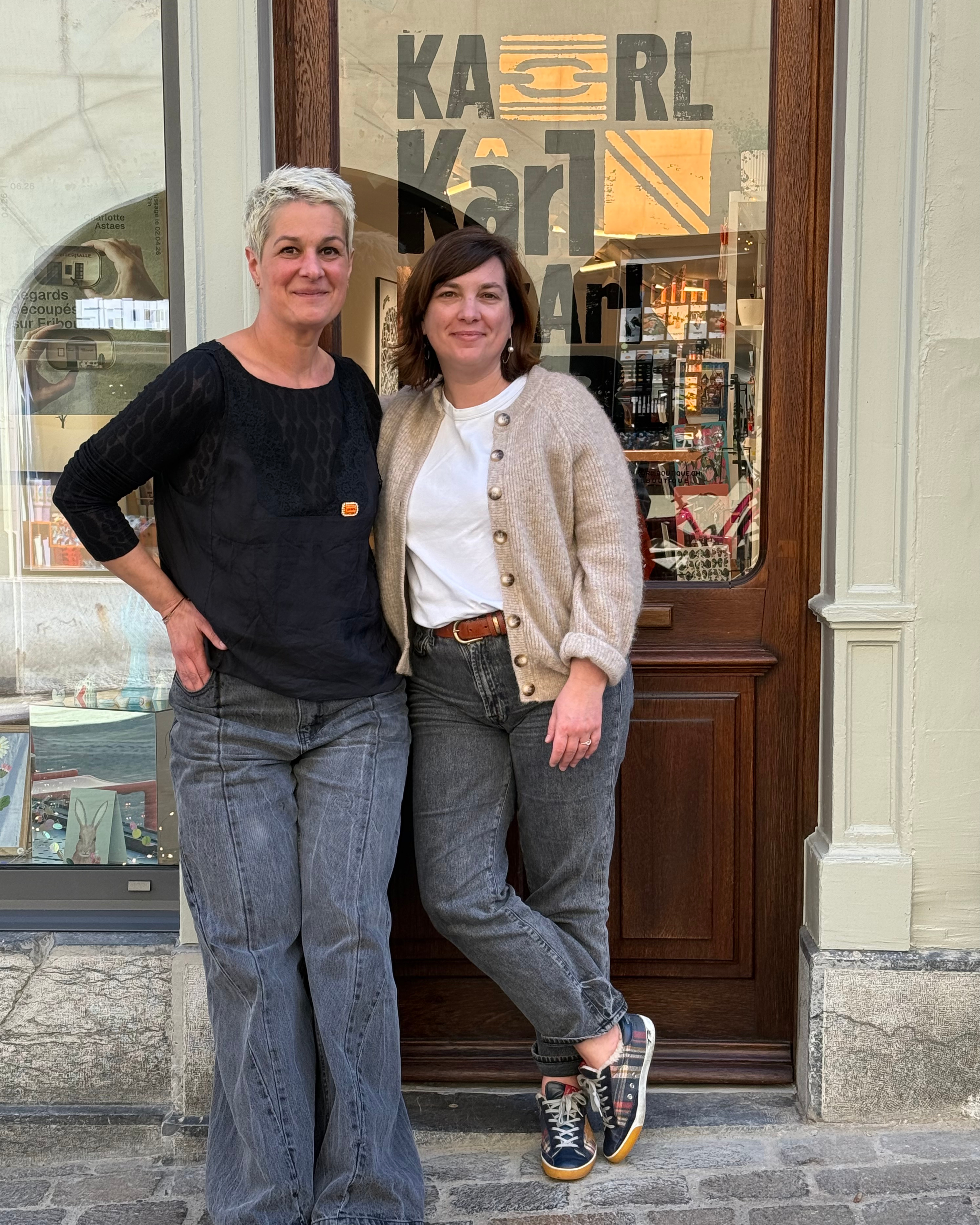
We do not have a formal checklist. The selection process at Etcheaz is curatorial rather than procedural — which means it depends on looking carefully, asking good questions, and being honest about whether a piece belongs in the collection.
A few things are consistent across every artist we work with: genuine craft at the core of the process, a point of view that is clearly their own, a commitment to limited production that reflects the real constraints of making things well, and a willingness to stand behind their work over time.
We also look for alignment with the values that run through the Etcheaz collection as a whole — an aesthetic that is warm without being decorative, considered without being cold, rooted in European craft traditions without being nostalgic about them.
When all of that is present, we have a conversation. Some of those conversations become long relationships.
What This Means in Practice
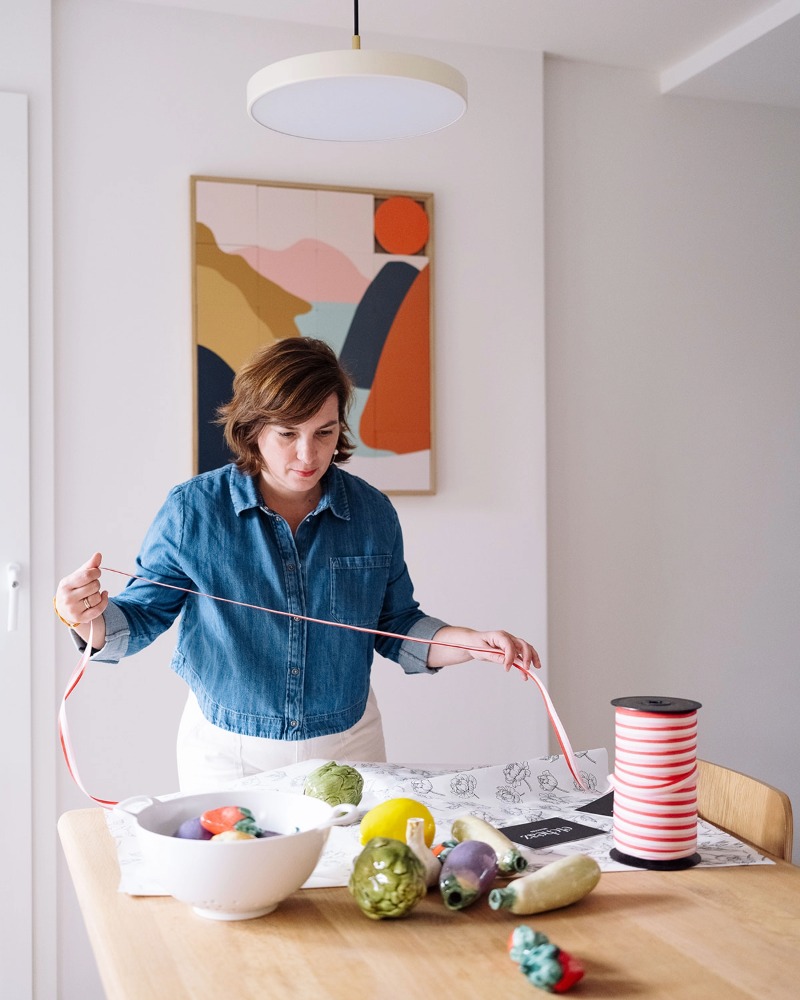
Shopping at Etcheaz is a different experience from shopping at a retailer who carries hundreds of brands and thousands of SKUs. The selection is smaller and more deliberate. The pieces take longer to turn over. New arrivals are genuinely new — not seasonal refreshes of the same categories.
If you are looking for something fast, something generic, something that fills a space without asking much of it, we are probably not the right place.
If you are looking for an object that will still feel like the right decision in ten years — something made by someone who cared, that exists in the world in limited numbers, that carries a story worth knowing — then this is where to look.
Discover the full collection of independent European designers at etcheaz.ch. Our showroom is at Seestrasse 155, Küsnacht ZH — fifteen minutes from Zurich, on the lake.*
Frequently Asked Questions
- Why does Etcheaz only carry independent designers?
Because the quality, integrity, and story of an object are inseparable from the conditions in which it was made. Independent designers retain full control of their process, which produces objects that hold together differently — materially and aesthetically — from mass-produced alternatives. This is the foundation of the Etcheaz curatorial approach. - What is slow design, and why does it matter?
Slow design is a philosophy of making that prioritises craft, intention, and limited production over speed and volume. Objects made in this way take longer to produce, exist in smaller quantities, and tend to carry a coherence that is difficult to achieve at scale. Etcheaz works exclusively within this framework. - Where can I buy ethical home décor in Switzerland?
Etcheaz carries a curated selection of home décor from independent European designers, favouring sustainable materials, limited production, and fair working conditions. The full collection is available at etcheaz.com, with shipping across Switzerland and personal pickup at the Küsnacht showroom. - What makes a design object worth collecting?
Scarcity, craft, and provenance are the three qualities that tend to define collectible design objects. Limited-edition pieces made by hand by independent artists — like the Charlotte Bourrus globe collection or the Taquin wall art series — meet all three criteria. They exist in finite numbers, are made with genuine skill, and come from makers with a distinct and traceable point of view. - How does Etcheaz select its designers?
The selection process is curatorial: based on direct experience of the work, extended conversations with the maker, and an assessment of alignment with the values that define the Etcheaz collection — craft-first production, limited editions, and a European design sensibility that is considered without being cold.
 We are discovering new creations and working on exciting collaboration - including some exclusive new pieces just for you. Stay tuned !
Please note that the delivery times may be slightly longer than usual during this period. We will be back to our normal delivery time from October 19th.
Thank you for your understanding.
We are discovering new creations and working on exciting collaboration - including some exclusive new pieces just for you. Stay tuned !
Please note that the delivery times may be slightly longer than usual during this period. We will be back to our normal delivery time from October 19th.
Thank you for your understanding.